
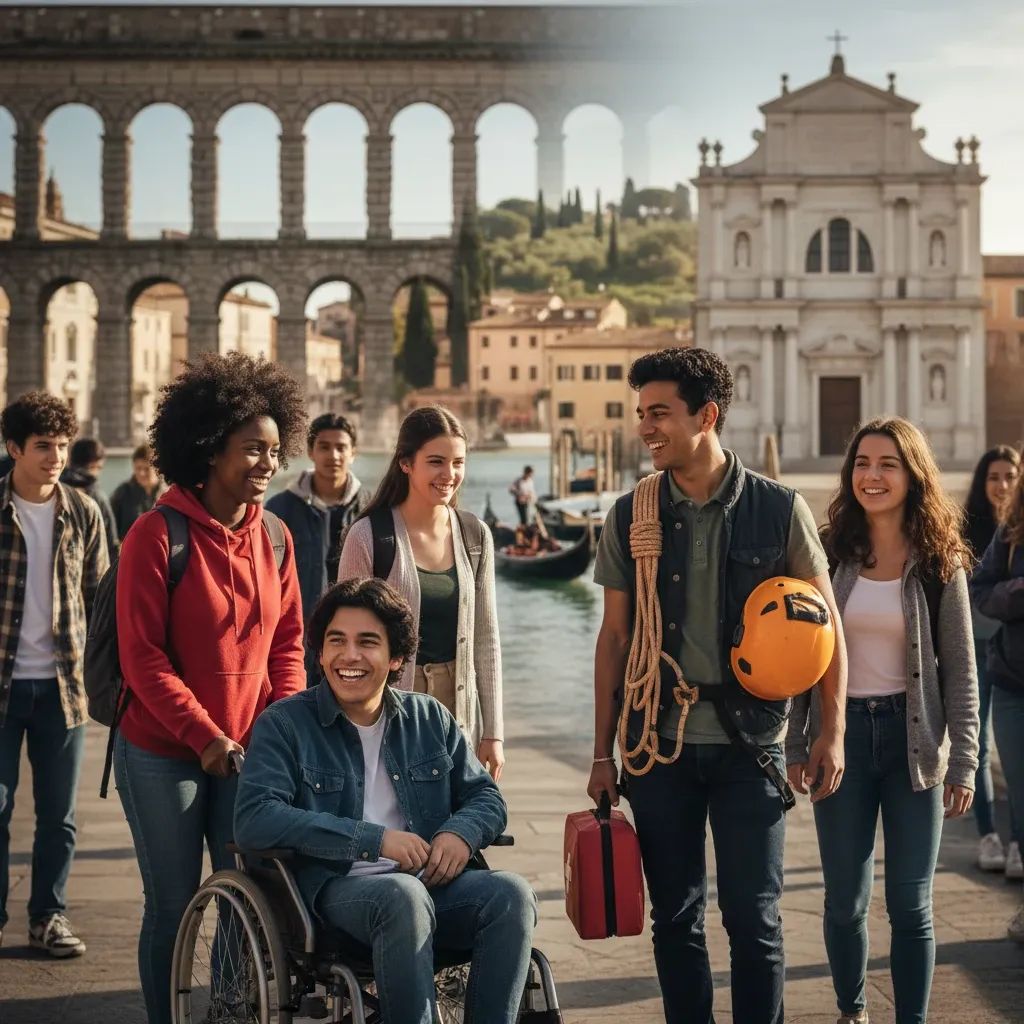
Italy's President Sergio Mattarella has handed out 28 honorary badges to teenagers and young people whose acts of courage, generosity, and civic duty in 2025 embody what the Italian Presidency calls "experimenting and communicating solidarity." The announcement from the Quirinale Palace confirms a tradition that, since 2017, has spotlighted minors—both Italian citizens and foreign residents—who defy the stereotype of disengaged youth.
Why This Matters
• Recognition for Action: The "Alfiere della Repubblica" (Standard-Bearer of the Republic) awards celebrate minors under 18 who rescued lives, supported disabled classmates, or launched apps to combat food waste.
• Four Class Plaques: Entire school classes received plaques for collective inclusion projects, proving solidarity scales beyond individual heroics.
• Visibility Boost: Winners gain national media exposure, often inspiring copycat initiatives in schools and youth groups across Italy's regions.
From Rescue Dives to Food-Waste Apps
The Italy Presidency's 2025 cohort reads like a primer in grassroots problem-solving. In Roccella Jonica (Calabria), 12-year-old Rocco Antonio Commisso pulled a Caretta caretta turtle from fishing-net debris during a boat trip with his father; his school promptly adopted a plush turtle mascot to anchor marine-conservation lessons. Meanwhile, Viola Menichetti from San Donato Milanese (Lombardy) spent two hours trudging through snow and darkness—minus one boot—to summon rescuers after her father fell 100 meters into an icy ravine on January 4, 2025. Her stamina and problem-solving under hypothermic conditions earned her a spot on the list.
Technology meets altruism in Massa Lubrense (Campania), where childhood friends Matteo Morvillo and Amedeo Valestra coded "Cucinalo," an app that scans fridge photos, suggests recipes, and cuts household food waste. The pair merged their passions for programming and cooking into a single sustainability tool now circulating among peers. In Tarcento (Friuli-Venezia Giulia), 10-year-old Nicolas Treppo dove into a torrent, dragged an unconscious friend to shore, and administered mouth-to-mouth resuscitation until paramedics arrived—demonstrating courage from someone who only recently left primary school.
Disability as Shared Strength
Several awards spotlight peer-to-peer inclusion. Emanuele Amodio from Ostuni (Puglia) has been the daily companion of Karol Pastore, a wheelchair-using classmate, since childhood; the Quirinale noted that Amodio's "small daily gestures" build inclusion more effectively than policy mandates. Karol himself also received an Alfiere badge for his "contagious love of life" and participation in a powerchair football squad. In Nichelino (Piedmont), 15-year-old Mariasole Di Biase volunteers with the A.I.R. Down Association, coaching teenagers with Down syndrome through homework sessions and summer camps. Over in Carbonera (Veneto), Marco Mazzariol—who has Duchenne muscular dystrophy—serves as a Parent Project APS ambassador and acts in inclusive theater workshops, demonstrating that accessibility strengthens entire communities.
Other honorees transformed personal medical journeys into advocacy. Sara Pignatelli from Castello d'Agogna (Pavia) juggled chemotherapy for primary mediastinal lymphoma with her final-year high-school exams, maintaining gratitude toward hospital staff while refusing to pause her engineering studies. Dalila Brocculi in Rimini (Emilia-Romagna) was herself a premature baby; now she volunteers with "La Prima Coccola," offering support to NICU families and running craft workshops for hospitalized children—a feedback loop of resilience turned service.
Practical Lifesaving and First Aid
Riccardo Cremonesi of San Martino Siccomario (Pavia) executed the Heimlich maneuver on a choking classmate mid-math lesson; his calm under pressure reflects Italy's push to embed first-aid training in school curricula. In Arbus (Sardinia), Inerio Vacca hauled an unconscious friend from the sea after a dive went wrong, then performed CPR until the boy revived. Both teens show that formal Red Cross courses—several honorees are Italian Red Cross volunteers—translate directly into life-or-death outcomes.
Cultural Expression as Civic Glue
Poetry and music appear alongside rescue tales. Jasmeen Kaur from Fabbrico (Emilia-Romagna) uses verse to articulate adolescent loneliness and inadequacy, winning public awards and opening emotional dialogues in classrooms. Claudia Savarino in Agira (Sicily) tackles ethics and social justice through her poems, while Tommaso Lavecchia from San Miniato (Tuscany) distributed free astronomy pamphlets comparing his Moon photos to 17th-century sketches by Ludovico Cardi and Galileo Galilei—proof that science communication can be a teenager's side hustle.
Quirky ingenuity shows up in Turin, where Leonardo Feigello turned his red Apecar three-wheeler into "CondividApe" (ShareApe), parking it outside school with a sign inviting passers-by to take what they need or leave donations. The mobile swap-meet underscores how low-tech, high-visibility projects can seed neighborhood solidarity.
What This Means for Schools and Communities
The Quirinale's four class plaques reward collective action: entire groups that dismantled discrimination, welcomed Ukrainian refugees, or ran anti-bullying campaigns. This pivot from solo heroics to team effort reflects European Union frameworks like the European Solidarity Corps, which fund group volunteering across member states. Italian educators now see the Alfiere program as a blueprint; schools nominate candidates through local associations or municipal offices, feeding a virtuous cycle of recognition and imitation.
The Italy Ministry of Education coordinates nominations with schools and community organizations, ensuring the honor remains accessible yet credible.
Broader Context: Europe's Youth-Recognition Landscape
While Italy's Alfiere badges date to 2017 in their current form, parallel schemes exist continent-wide. The EU's European Youth Goals Awards offer €300–€900 cash prizes for projects aligned with policy targets; Volonteurope and the European Civic Forum co-sponsor the European Citizenship Awards for democratic activism. Yet Italy's model is unusually narrative-driven: each honoree gets a 300-word biographical sketch published by the Presidency, turning abstract "civic virtue" into concrete, relatable stories. This storytelling muscle matters in a country where regional identity often trumps national symbols; a Sicilian teen's rescue dive resonates more vividly than a Brussels-issued certificate.
Internationally, UNICEF and UNDP focus youth engagement on governance and sustainable-development goals in the Global South, while private outfits like International Volunteer HQ charge fees for placements abroad. Italy's zero-cost, domestically rooted structure avoids the "voluntourism" critique and keeps beneficiaries—disabled classmates, NICU families, drowning friends—within arm's reach of the volunteer.
The "So What?" for Residents
If you live in Italy and know a minor doing extraordinary community work, the nomination window typically opens in early autumn for the following year's cohort. Candidates must be under 18 on the date of the act; municipalities, schools, NGOs, and individual citizens can all submit dossiers to the Segretariato Generale della Presidenza della Repubblica via certified email. A dedicated commission vets entries, cross-checking police reports for rescue claims and school records for tutoring initiatives.
Winners receive no cash—just the Attestato d'Onore parchment and national media coverage. Yet that visibility often unlocks doors: universities waive entrance fees, youth councils recruit Alfieri as spokespeople, and Croce Rossa Italiana chapters fast-track them into leadership training.
President's Prague Walk and Student Enthusiasm
Even as the Alfiere list went live, President Mattarella was in Prague for an official state visit. On the morning of the announcement, he strolled across the Charles Bridge under light snowfall, pausing to greet Italian tourists. A school group from Caltanissetta (Sicily) spontaneously sang the national anthem; the President wished them "a good walk in the snow" before heading to meetings at the Czech Chamber of Deputies. The juxtaposition—teenagers honored at home, teenagers celebrated abroad—underscores Mattarella's emphasis on youth as Italy's practical, rather than rhetorical, future.
A Pattern of Civic Contribution
The Alfiere program reflects a broader European trend toward recognizing youth civic engagement. Similar recognition schemes across the continent demonstrate that when young people are publicly acknowledged for community contributions—whether rescue operations, inclusion initiatives, or innovation projects—local networks tend to amplify those efforts. Italy's model, by publishing detailed biographical narratives of each honoree, creates accessible examples for other young people considering how they might contribute to their own communities.
Final Thought
The Alfiere della Repubblica initiative bets that visibility breeds virality—that publicizing a Turin teen's food-donation Apecar or a Friuli boy's river rescue will spark imitation nationwide. In an era when Italian youth unemployment hovers near 20% and political cynicism runs high, the Quirinale's message is straightforward: civic contribution need not wait for a university degree or a paycheck. A first-aid card, a poetry notebook, or simply showing up for a disabled classmate can qualify as nation-building. Whether that optimism survives contact with Italy's bureaucratic inertia is the real test—but for now, 28 teenagers have government-stamped proof that someone noticed.


