
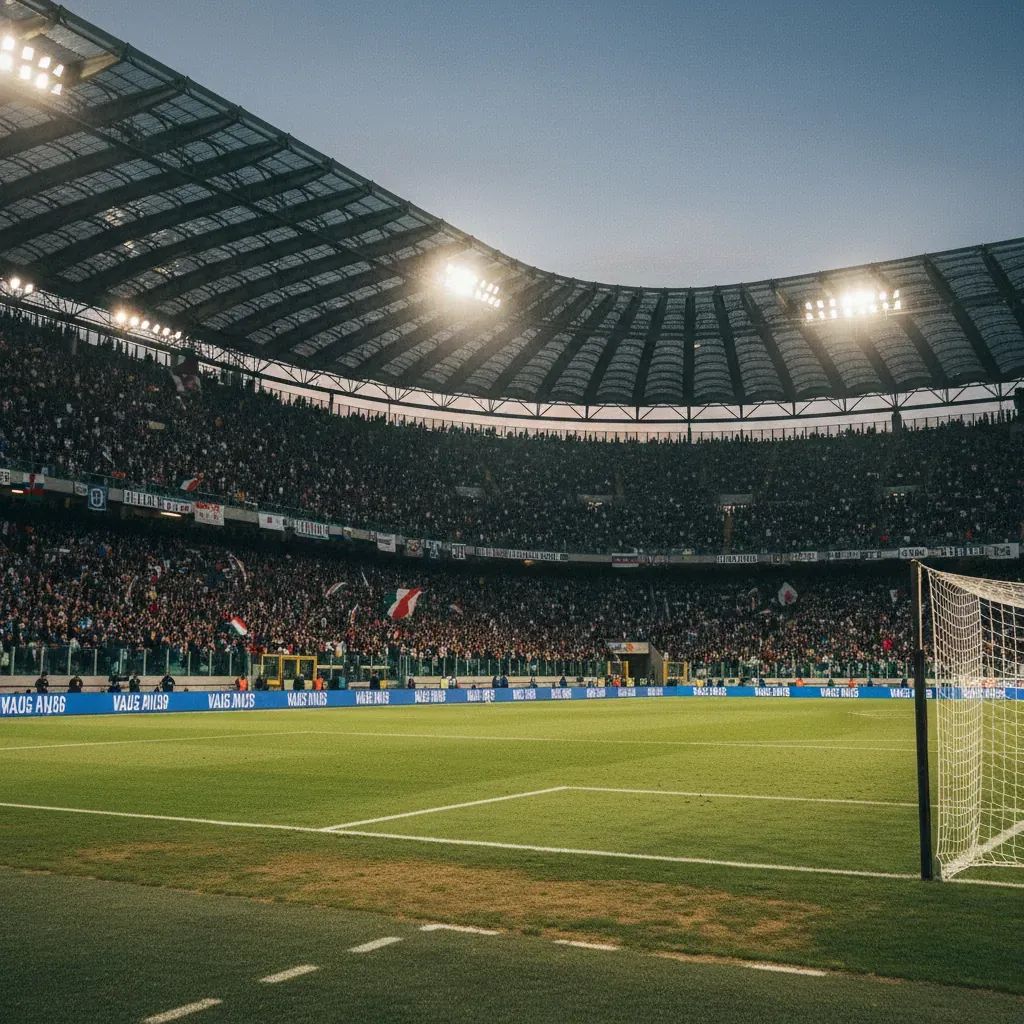
The Italian Football Federation (FIGC) has entered a 40-day sprint toward critical elections on June 22, a race that could reshape the governance structure of Italian football after the national team's third consecutive failure to qualify for the World Cup. With candidate nominations due by May 13, the stakes involve not just personnel changes but a fundamental reckoning with systemic decline in Italian football.
Why This Matters:
• Election timeline: Nominations close May 13; voting occurs June 22 with a weighted system giving the Amateur League 34% of votes.
• Commissariamento threat: Sports Minister Andrea Abodi continues pressing for government-appointed oversight (commissariamento), risking UEFA sanctions that could exclude Italian clubs from Champions League and Europa League competitions or bar the national team from Euro 2028.
• National team limbo: The coaching position remains vacant after Gennaro Gattuso's resignation, with debate raging over whether appointment should precede or follow presidential elections.
• Structural crisis: Italy's failure extends beyond one match—stagnant infrastructure, over 65% foreign players in Serie A, and deteriorating youth development systems drive the malaise.
The Electoral Battlefield
The FIGC presidential race has crystallized around several prominent figures, each carrying distinct advantages and liabilities for Italy's football establishment. Giovanni Malagò, outgoing president of the Italian Olympic Committee (CONI), emerges as a heavyweight contender with credibility from successfully managing major sporting events. Serie A clubs, particularly Napoli president Aurelio De Laurentiis, have publicly endorsed his candidacy, though his reportedly strained relationship with Minister Abodi complicates his path.
Giuseppe Marotta, currently CEO and board president of Inter Milan, represents the opposite profile—a football insider with decades of operational experience in Italy's top division. Some analysts consider him "the most competent person in Italy" for the role, though his active involvement with Inter creates obvious conflicts that would need resolution before candidacy.
Giancarlo Abete brings institutional memory as FIGC president from 2007 to 2014, now leading the Lega Nazionale Dilettanti (Amateur League) that controls the largest voting bloc at 34%. His candidacy would signal continuity rather than rupture, appealing to those who view the crisis as primarily one of execution rather than fundamental structure.
The candidacy of former players remains largely symbolic territory. Alessandro Del Piero, Paolo Maldini, and Demetrio Albertini circulate as aspirational names that could energize public sentiment, yet none has mounted a serious campaign with clear governance proposals. Gianni Rivera has publicly announced his intention to run on a renewal platform, while Matteo Marani, current president of Lega Pro (third division), offers a lower-profile administrative option.
The Government's Shadow
Minister Abodi's repeated calls for commissariamento—government-appointed administration that would place professional management and governance decisions under state oversight—hang over the electoral process like a sword. The government position argues that structural failures demand external intervention, not merely reshuffling internal actors. Abodi reportedly consulted with CONI president Luciano Buonfiglio regarding legal grounds for pre-election commissariamento, though Buonfiglio rebuffed the suggestion.
Italian football operates within strict UEFA autonomy principles that prohibit government interference in federation governance. Any commissariamento risks triggering sanctions ranging from exclusion of Italian clubs from Champions League and Europa League competitions to barring the national team from the 2028 European Championship. Italy is scheduled to co-host Euro 2032 with Turkey—a commitment that could evaporate if UEFA determines political interference has compromised federation independence.
What this means for residents in Italy: If UEFA sanctions take effect, Italian supporters would be unable to watch Serie A clubs compete in Europe's premier club competition, and national team participation in major tournaments would be jeopardized. Television broadcasters would lose premium content, and the economic damage would ripple through clubs and local communities that depend on European competition revenue.
The immediate crisis was defused when Gabriele Gravina resigned as president on April 2, activating statutory succession procedures and temporarily closing the door on emergency measures. Yet government pressure persists, with parliamentary majorities signaling determination to force systemic overhaul rather than accept cosmetic change.
What This Matters for Italian Football and Your Vote
For Serie A clubs, the election represents a power struggle decades in the making. Italy's top division holds just 18% of voting power in the federation despite generating the vast majority of revenue through television rights and commercial partnerships. Serie A has operated without a permanent president for years, weakening its ability to speak with unified voice. The league scheduled an internal meeting for April 13 to attempt consensus on a single candidate, though historical divisions make agreement uncertain.
## Senator Claudio Lotito and Political Complications
Senator Claudio Lotito, who combines roles as Lazio president and Forza Italia parliamentarian, exemplifies the political complications. Sources suggest Lotito would resist a Malagò candidacy unless securing significant concessions, illustrating how club-level rivalries and political alignments intersect in federation governance.
The players' association controls 20% of votes but carries scars from previous campaigns when former internationals Albertini and Damiano Tommasi failed to gain traction. Player representatives may wait for other factions to nominate an ex-player rather than risk another failed push.
Amateur football's dominance in the voting structure—34% controlled by Abete's organization—reflects Italian football's unique weighting system, reformed in November 2024 to require 275 delegates casting 516 weighted votes. First-round victory demands three-quarters majority, dropping to two-thirds in round two and simple majority by round three. This creates incentive for coalition-building rather than frontal campaigns.
The Coaching Question Nobody Wants to Answer
The national team operates in administrative limbo following Gattuso's resignation alongside Gianluigi Buffon, who had served as team delegation chief. Franco Carraro, FIGC president across multiple terms and CONI chief from 1978-1987, broke the silence surrounding the coaching vacancy by urging the federal council to immediately appoint a replacement rather than wait for presidential elections.
Carraro argued the council holds legitimate authority to name a representative coach for a three-year term, emphasizing the need for someone capable of "creating the right environment and appropriate tension in days, not weeks." His intervention challenges the prevailing assumption that coaching decisions should await the new president.
Other Serie A coaches deflected questions about potential national team roles, with Atalanta's Gian Piero Gasperini framing the situation as "not about one coach or president but a systemic crisis requiring vision."
A controversy erupted over reports that qualification bonuses for reaching the 2026 World Cup had been established after Italy's victory over Ireland, following standard practice given the substantial revenue FIGC would earn from tournament participation. News that bonuses were discussed in the hours before the disastrous loss to Bosnia sparked fresh waves of supporter anger across social media platforms.
Daniele De Rossi, part of Italy's 2006 World Cup-winning squad, dismissed the cacophony of instant analysis: "Everyone talks—butchers, grocers—each with a magic recipe." Luciano Spalletti offered a more reflective diagnosis: "I'm convinced mothers like those of Totti and Del Piero still exist; we just need to know how to develop their sons."
What Needs to Change: Practical Reforms for Italian Football
Youth development investments distinguish successful federations from declining ones. Countries that weathered talent droughts implemented mandatory infrastructure standards for youth academies, training certification programs for coaches, and revised competitive structures to maximize playing time for domestic prospects. Italy's Serie A currently fields over 65% foreign players, among the highest ratios in Europe, severely limiting pathways for Italian talent.
National licensing systems adopted across Europe impose strict requirements on clubs regarding salary payments, debt management, and tax compliance to prevent financial collapses that damage competitive integrity. Italy introduced similar reforms through enhanced sporting justice mechanisms, though enforcement remains inconsistent.
Stadium infrastructure lags decades behind European competitors. Television revenue dependence creates vulnerability to market shifts. The pipeline producing creative, technically skilled Italian players has constricted to a trickle. Whoever wins the June 22 election inherits these systemic challenges.
The 40-Day Countdown: What Happens Next
As Italy's domestic league season resumed following the Bosnia debacle, the political maneuvering shifted from public spectacle to backroom negotiation. The May 13 candidacy deadline creates natural urgency, yet the multi-round voting system and fragmented power structure suggest the June 22 election could easily produce stalemate rather than decisive mandate.
Timeline for residents to follow:
• May 13: Candidacy deadline—confirmed candidates announced
• June 22: Presidential election—new federation leadership determined
• By summer 2025: New president begins implementing governance changes
• 2026 World Cup qualifying cycle: First test of federation's reform capacity
• Euro 2032: Italy's co-hosting commitment—dependent on UEFA sanctions being avoided
A deadlocked assembly would vindicate Minister Abodi's commissariamento arguments while potentially triggering the UEFA sanctions Italy's football establishment desperately seeks to avoid. The federation operates under prorogatio—a provisional continuation of existing administrative structures without permanent leadership—with figures like Abete positioning themselves as steady hands through transition.
Whether the eventual winner emerges from football's operational ranks like Marotta, Olympic administration like Malagò, or the amateur leagues like Abete, they inherit challenges requiring more than personnel decisions. The question is not merely who leads, but whether Italian football can rebuild its talent pipeline and structural capacity before the next World Cup cycle begins.


