
Atalanta's last-minute penalty save on Wednesday night prevented Italian football from its most humiliating European collapse in decades, but the broader damage is already done. With Inter eliminated by unfancied Bodø/Glimt, Juventus knocked out by Galatasaray despite a heroic second-half fightback, and Napoli unable to even survive the group stage, Serie A now faces hard questions about its structural competitiveness at the continental level. Only Atalanta remains standing in the Champions League Round of 16—the second consecutive season just a single Italian club has advanced that far.
Why This Matters
• Financial consequences are real: Missing the Champions League Round of 16 costs Italian clubs tens of millions in prize money and broadcasting revenue, widening the wealth gap with English and Spanish clubs already outspending Serie A sides by multiples.
• One survivor strategy: Atalanta's success doesn't mask systemic decline—it masks how dependent Italy has become on a single well-run organization to carry the entire league's continental credibility.
• Employment and talent flow: Without regular European revenue and prestige, Serie A clubs lose capacity to retain stars and attract world-class reinforcements, accelerating a brain drain that feeds the advantage of richer leagues.
• Domestic competitiveness remains strong: The Italian domestic league is remarkably balanced and tactical—but that excellence increasingly doesn't translate to European knockout football, a gap that demands investigation.
The Mechanics of Italian Collapse
To understand what happened across four days of playoff desperation, consider the geography of failure. Inter Milan, the Serie A leader and holder of three European Cup trophies, traveled to Bodø in Norway and lost 3-1. Returning to San Siro on Tuesday for what should have been a controlled elimination, the Nerazzurri conceded two more goals—from Jens Petter Hauge and Hakon Evjen—before Alessandro Bastoni pulled one back too late. Aggregate 5-2. One of European football's most storied institutions, knocked out by a side from a nation of 5.5 million.
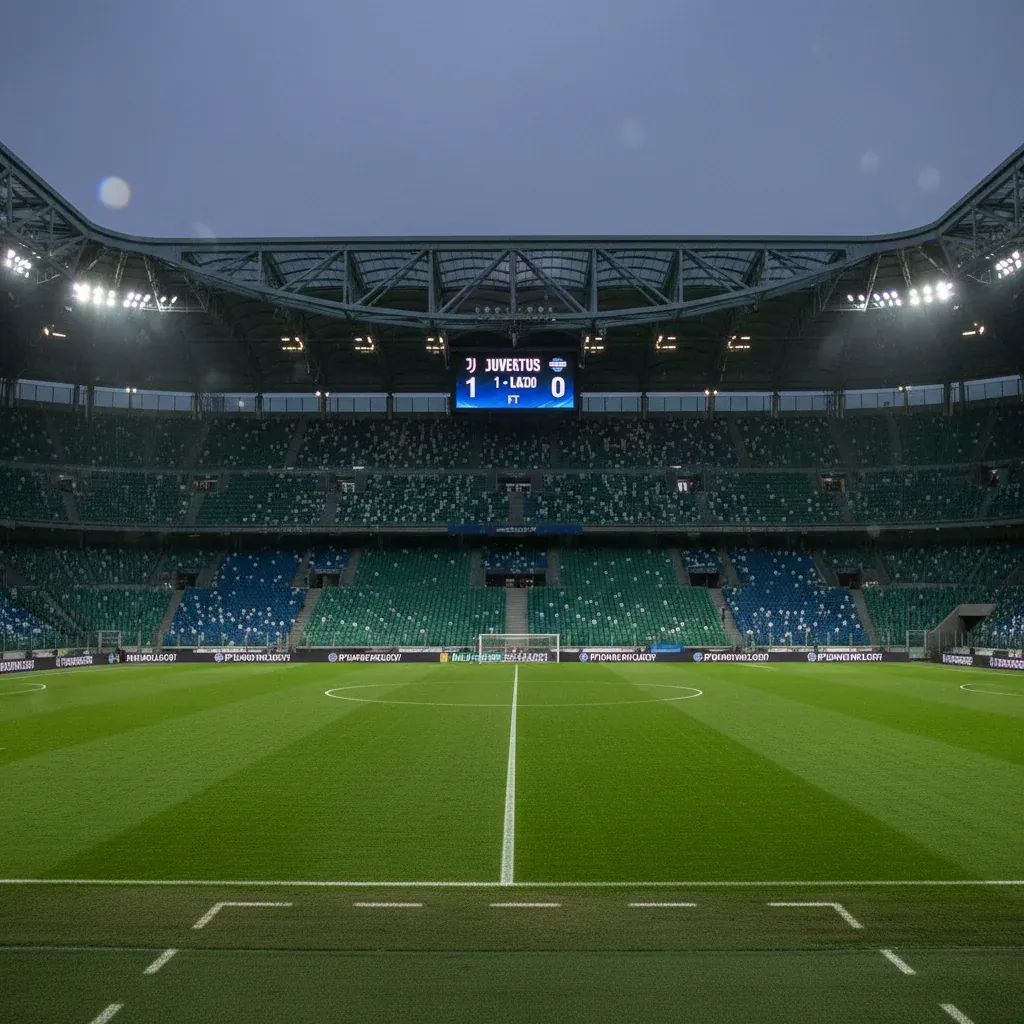
The following evening in Turin told a similar if slightly less stark story. Juventus entered needing to overturn a 5-2 first-leg deficit. For 45 minutes and into the second half, they succeeded. Manuel Locatelli opened the scoring early. Then came the fracture: defender Lloyd Kelly received a red card for dangerous play in the 47th minute. What followed was a counterintuitive arithmetic—Juventus, playing with 10 men, equalized the tie through goals by Federico Gatti and Weston McKennie. But numerical disadvantage eventually corrodes. Victor Osimhen, the Galatasaray forward on loan from Napoli, and Baris Yilmaz scored twice in extra time to send the Turkish club through 7-5 on aggregate. The two-time European champions exhausted, unable to maintain intensity against a team with a full complement of players.
Napoli's exit had come weeks earlier, barely noticed because it occurred without drama—the reigning Serie A champions finished 30th out of 36 teams in the league phase and didn't even reach the playoff tier. That quiet humiliation, a byproduct of a home defeat to Chelsea, cost them more than sporting prestige. The financial toll compounds.
Atalanta's Defiant Exception
What separates Atalanta's Tuesday night from Inter's is not tactical brilliance or squad composition alone—it is the difference between a club operating at the edge of possibility and one drowning in expectation. Coach Gian Piero Gasperini's Bergamo side entered the Stadio di Bergamo trailing 2-0 from their away fixture. The required comeback was not merely difficult; it violated the basic arithmetic of playoff football.
In the opening half, Gianluca Scamacca and Davide Zappacosta scored to level the aggregate. Momentum tipped. Mario Pašalić then edged Atalanta ahead on aggregate, only for Karim Adeyemi of Borussia Dortmund to equalize once again. The match seemed destined for extra time—a further 30 minutes of attrition in which physical fatigue becomes a deciding factor.
Instead, in the 94th minute, Dortmund defender Ramy Bensebaini miscalculated while clearing. His boot connected with the face of Nikola Krstović in the penalty area. Lazar Samardžić stepped to the spot and converted with the final meaningful action of regulation time. 4-1 Atalanta. Aggregate 4-3. The Bergamo team advanced not through sustained superiority but through the kind of precision at critical moments that separates survivors from casualties.
Atalanta's presence in the Round of 16 carries weight beyond the immediate fixture. The club earned its playoff berth by winning the UEFA Europa League in 2024, then advanced directly to these knockouts based on Serie A performance. They represent a model—profitable recruitment, tactical coherence, managed ambition—that the rest of Italian football observes but rarely emulates.
The Structural Problem Beneath
The cascade of Italian eliminations obscures what might be the more troubling reality: Serie A remains domestically fierce but increasingly isolated in European performance. The Italian Serie A championship fight is genuinely unpredictable. Four different clubs have won the Scudetto in the past six years. Tactical sophistication is real—Italian coaches and defensive systems remain admired across Europe. Yet excellence at the domestic level does not inoculate against continental failure.
The financial disadvantage is concrete. English Premier League clubs generate roughly triple the revenue of their Italian counterparts. That disparity creates cascading effects. Elite players command wages Italian clubs cannot afford. Squad depth, essential for managing injuries and rotation across a 60-match season, becomes impossible when transfer budgets are constrained. Even selling a young talent like Rasmus Højlund from Atalanta to Manchester United for €75 million—money most Italian clubs would deploy to solve multiple roster gaps—solves nothing for the broader league ecosystem.
Domestic television revenues have stagnated. While international broadcasting deals have grown, the Italian television market that funds 37% of Serie A's aggregate income has plateaued. Contrast this with England, where the Premier League commands fees that dwarf Serie A's domestic deal. The financial asymmetry is neither subtle nor temporary.
What Happens When Only One Italian Club Advances
For residents and business stakeholders in Italy, Champions League underperformance carries tangible consequences. Commercial sponsorships depend on European visibility. A club that reaches the Round of 16 generates more media attention, attracts higher-tier sponsors, and increases stadium revenue from potential European matches. Players develop international reputations through European competition; without it, talent recruitment becomes more difficult and less competitive.
Italian football's intellectual reputation—its tactical discipline, its strategic innovation—remains intact. But reputation and competitive success are increasingly disconnected. A league can be admired as a tactician and still marginalized as a commercial player.
For supporters in Italy, the pattern compounds frustration. Serie A's unpredictability and balance are celebrated as strengths, yet they coexist with repeated European disappointment. The Italian system produces competitive domestic football while simultaneously failing to translate that competence into continental results.
The Coefficient and Future Qualification
The Italy UEFA coefficient secured the league an extra Champions League berth for the 2024-25 season, reflecting earlier seasons of stronger European performance. That provision expires if Italian clubs continue underperforming. The cascade is self-reinforcing: fewer European places mean fewer revenue opportunities, which compounds investment constraints, which further undermines competitive capacity.
Atalanta's qualification provides temporary respite but no systemic solution. One Italian club reaching the Round of 16 for a second consecutive season indicates not recovery but normalization of decline.
The Path Forward Remains Unclear
For the immediate future, Atalanta carries Italian football's remaining European hopes. They will face one of Europe's remaining elite clubs with less preparation time and a thinner resource base than their opponent likely possesses. Success is possible—Atalanta has proven that much—but unlikely to be repeated.
The broader challenge demands institutional response. Stagnant domestic television revenues require either negotiation with broadcasters for higher fees or acceptance of permanent financial disadvantage. Youth development systems require investment that most Italian clubs defer because of immediate competitive pressure. Strategic patience—the kind that allowed Atalanta to build incrementally—is difficult when quarterly financial statements and fan expectations demand immediate results.
For Italian football residents and observers watching from the peninsula, Wednesday's drama masks a quieter, more persistent problem: competence without sufficient resources is a formula not for dignity but for managed decline. Atalanta's penalty conversion was thrilling. The ecosystem that forces Italy to depend on such miracles is, by contrast, unsustainable.


