
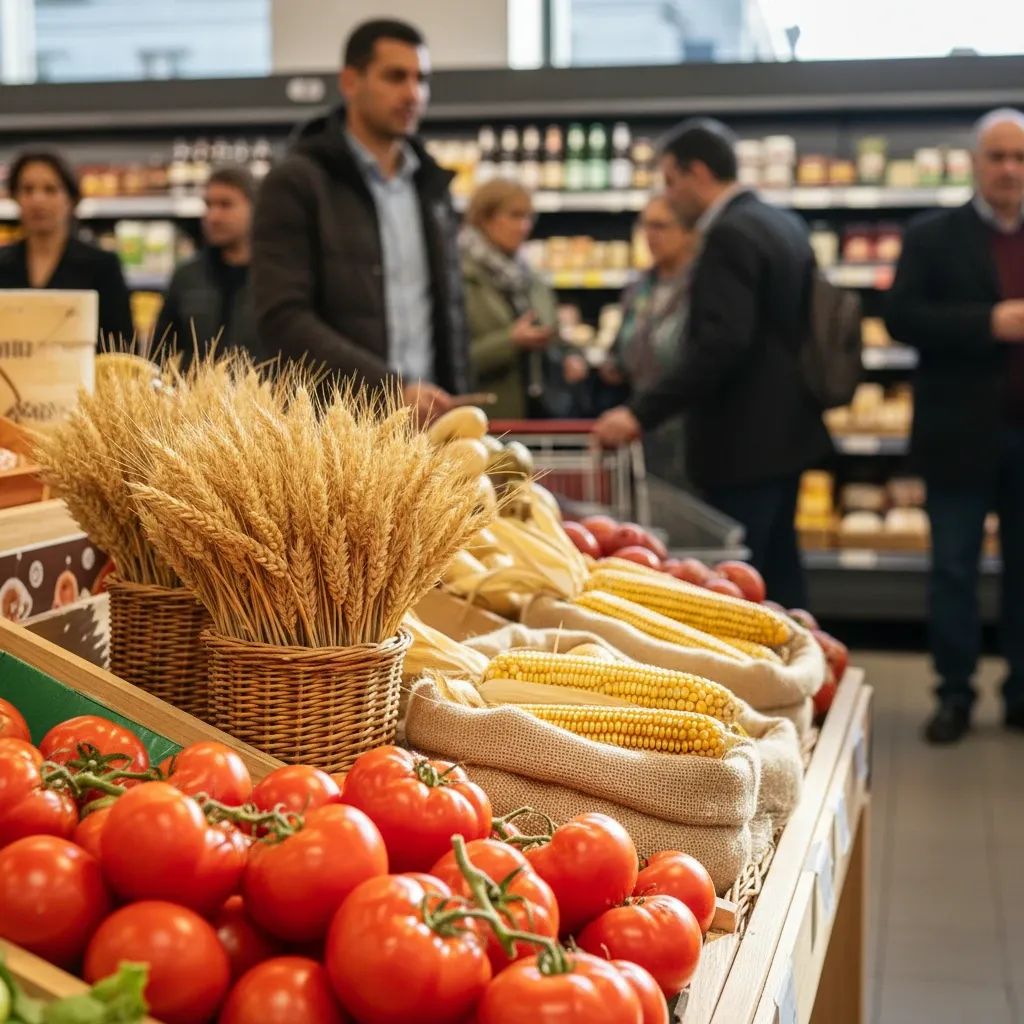
Italy has backed a decisive pivot in EU agricultural law that will allow gene-edited crops to become legally available starting mid-2028. The Italy Council representative joined 17 other member states in approving a deregulatory framework for plant genomic techniques on April 21-23, 2026, a move designed to turbocharge innovation but one that strips away the labeling transparency Italians have grown accustomed to over two decades of GMO debate. This represents a significant shift from Italy's historically restrictive stance on GMO cultivation, which has kept gene-modified crops largely off Italian farms despite decades of import approvals.
Why This Matters for Your Plate and Wallet
• Transparency gap widens: Starting mid-2028, when the regulatory framework takes effect, gene-edited tomatoes, wheat, and maize could begin reaching Italian markets without mandatory product labeling, though seeds themselves must still carry identification. The actual availability of these products will depend on seed approvals, cultivation cycles, and supply chain development that occur after 2028. Consumers will lose their ability to distinguish edited crops from conventional ones on store shelves.
• Costs may fall: Supporters argue that drought-resistant and pest-resistant NGT varieties will reduce pesticide use, potentially lowering food prices over time while improving yield stability during climate stress.
• The organic sector gets protection—for now: All gene-edited crops remain banned in certified organic farming, preserving a clean regulatory divide for producers and shoppers willing to pay the premium.
• Patent concentration risk: An EU study mandated by the new regulation and due in 2027 will examine whether agrochemical giants are locking up seed innovation through intellectual property, a test that could reshape the sector or entrench corporate control.
A Two-Speed Regulatory Approach
The approved framework splits gene-edited plants into two legal buckets, each carrying different compliance burdens.
NGT-1 varieties—those with up to 20 genetic edits achievable through targeted mutagenesis or cisgenesis—effectively dodge the traditional GMO rulebook. These modifications stay within the biological realm of what could theoretically happen through natural breeding or spontaneous mutation. Italian farmers will receive NGT-1 seeds, plant them, and harvest subsequent generations without triggering fresh regulatory approvals or mandatory traceability records. The technique CRISPR/Cas9 exemplifies this tier: it surgically edits DNA without inserting foreign genetic material from sexually incompatible species. However, two specific traits remain off-limits even for NGT-1: herbicide tolerance and insecticide-producing genes. These continue to face full GMO scrutiny.
NGT-2 plants—those involving more elaborate genetic rearrangements—remain tethered to the EU's existing GMO apparatus. They require formal authorization, complete traceability through the supply chain, and mandatory labeling. Member states, including Italy, retain the right to ban cultivation of NGT-2 crops and impose coexistence protocols to prevent genetic drift into neighboring non-GMO fields. This two-tier design aims to distinguish precision editing from legacy genetic engineering while maintaining a firewall for skeptical producers and consumers.
The dividing line hinges on scientific feasibility: could this edit plausibly occur through traditional selective breeding? If yes, it lands in NGT-1. If no—because it involves genes from distantly related species or highly complex modifications—it lands in NGT-2.
What Italians Actually Need to Know
For Italian agriculture, this represents a genuine economic opportunity. The Italy farming lobby Confagricoltura has championed the move as essential for climate adaptation and food security, emphasizing that gene-edited crops could deliver drought-resistant wheat, flood-resistant maize, and pest-resistant tomatoes without the administrative burden that has crippled GMO adoption since 2001. Fewer synthetic pesticides mean lower production costs, reduced environmental footprint, and more stable yields amid volatile weather.
Yet the regulatory shift creates a transparency blind spot. Bread made from gene-edited durum wheat—Italy's signature crop for pasta production—will arrive in supermarkets indistinguishable from conventional varieties. A shopper scanning for "GMO-free" labels or seeking to avoid gene-edited ingredients will find no legal obligation to inform them. This erasure of disclosure has mobilized fierce resistance from 52 European organizations spanning organic, biodynamic, and environmental sectors, including Demeter Italia, Friends of the Earth Europe, and NaturaSì, Italy's leading organic retailer. Their "Blacked-out Ingredients" campaign argues that consumers forfeit the right to make informed choices—a principle embedded in EU consumer protection law.
Italy's €4 billion organic market—a crown jewel of the nation's agricultural brand—faces subtle but real pressure. If NGT-1 crops proliferate without labeling, "GMO-free" supply chains lose their ability to guarantee purity. Retailers and producers relying on organic certification will depend entirely on seed-level labeling and contractual obligations to avoid NGT-1 inputs. For large operations, that's manageable; for smaller producers, it risks becoming a compliance headache and competitive vulnerability.
The Italy Ministry of Agriculture will now face the task of establishing verification procedures for NGT-1 submissions starting in early 2028. Seed companies must publish patent information in a public database—ostensibly to prevent monopoly control—but critics question whether transparency on paper can offset market consolidation in practice.
The Geographic Divide: Who Voted How
When the Italy Council cast its ballot, the EU's agricultural ambitions exposed deep geographic fractures. Italy, alongside 17 others, supported the framework. Six countries—Austria, Croatia, Hungary, Romania, Slovenia, and Slovakia—opposed outright. Belgium, Bulgaria, and Germany abstained, with Berlin's hesitation reflecting internal friction between its agriculture and environment ministries.
Within Italy, regional enthusiasm varies sharply. Lombardy, a powerhouse of agricultural research and agribusiness, actively promoted NGT research and hosted industry conferences, viewing the technology as a competitive moat. Smaller producers and regions with strong organic pedigrees—Tuscany, parts of Emilia-Romagna—worry that coexistence measures may prove inadequate to prevent genetic drift into non-GMO fields. The risk is that a farmer growing organic tomatoes downwind from an NGT producer might unwillingly cross-pollinate, contaminating the organic designation and destroying years of certification work.
Timeline and What's Next
The European Parliament votes on final approval between May 18-21, 2026. If it passes—and industry backing suggests it will—the text enters force within 20 days of publication in the Official Journal. But the real action doesn't begin until mid-2028, after a 24-month transition window that allows member states and companies to prepare.
During that phase, Italian authorities must draft technical standards, train inspectors, and align with the European Food Safety Authority on verification protocols. Seed producers will simultaneously prepare NGT-1 application dossiers and patent declarations. The clock is ticking for organic producers to renegotiate supply contracts and reinforce traceability measures.
The Industry Cheerleaders vs. The Science Skeptics
Supporting the framework are vocal constituencies. Copa-Cogeca, representing European farmers and cooperatives, hailed the agreement as a "turning point" for adapting to climate extremes. Euroseeds, the continent's seed industry federation, pledged implementation support and highlighted the potential for water-efficient, disease-resistant varieties. Italy's CREA (Agricultural Research Council) expressed "great satisfaction," calling it a "decisive passage" that revives innovation momentum.
ALLEA, the federation of European science academies, welcomed the framework as reflecting current genomic science and offering clearer conditions for research.
On the opposite bank, a coalition of scientists released a joint statement cautioning that the legislation "ignores key differences between new genetic engineering and conventional breeding, as well as associated risks, including dangers to health and the environment." They advocate for mandatory risk assessment across all NGT categories, not exemptions for NGT-1. The FUGEA agricultural union in Belgium warned that patent-intensive development inherently favors multinational seed firms over public breeders and small-scale farmers—a structural inequality the regulation doesn't address.
Concurrent EU Shifts Reshaping Agriculture
The NGT approval arrives amid other tectonic movements in EU farm policy. The European Parliament Agriculture Committee preliminarily approved reforms to the Common Market Organization (CMO) regulation designed to strengthen farmers' bargaining leverage against processors and retailers. The package mandates written contracts with review clauses that account for cost swings, inputs inflation, and market volatility. Critically, it restricts the term "meat" to "edible parts of animals," excluding lab-grown and plant-based alternatives—a symbolic victory for conventional producers, though "veggie burgers" won off-stage negotiations and escaped the ban.
Simultaneously, EU budget wrangling for 2028-2034 is exposing a North-South financial divide with implications for Italy. The Netherlands and Germany demand "leaner, modern budgets" and resist new own-resource mechanisms; Italy's Prime Minister Giorgia Meloni has flagged cohesion funds and Common Agricultural Policy allocations as immovable red lines. Spain's Pedro Sánchez is pushing for a six to twelve-month extension of Recovery Fund disbursements and exemption of energy investment from deficit rules—echoing the carve-out granted defense spending. These budget battles will determine how much EU money flows back to Italian agriculture over the next seven years.
The Practical Roadmap for Italian Stakeholders
Farmers eyeing NGT-1 seeds should prepare for potential market entry starting mid-2028, though actual availability will depend on seed approvals and cultivation cycles. Seed suppliers will begin taking applications in early 2028; approvals could begin rolling in by summer. For organic producers and GMO-free retailers, the window to tighten supply contracts and verify seed suppliers is now through mid-2028. Relying on voluntary certification—organic status, private "GMO-free" schemes—becomes the sole defense against unmarked gene-edited ingredients.
Consumers who want to avoid NGT crops must align purchasing decisions with certified organic or explicit "GMO-free" labels. The seed-level traceability requirement provides a backstop for concerned producers, but the final product carries no legal obligation to disclose its genetic lineage.
The European Commission's patent impact study, due in 2027, will be a critical juncture. If it documents market concentration accelerating toward a handful of seed giants, political pressure may trigger corrective legislation. If it shows competitive resilience, the framework likely stands as-is.
For now, Italian agriculture stands at a crossroads between innovation opportunity and transparency loss—a trade-off that few in the sector anticipated negotiating, but all must now navigate.


