
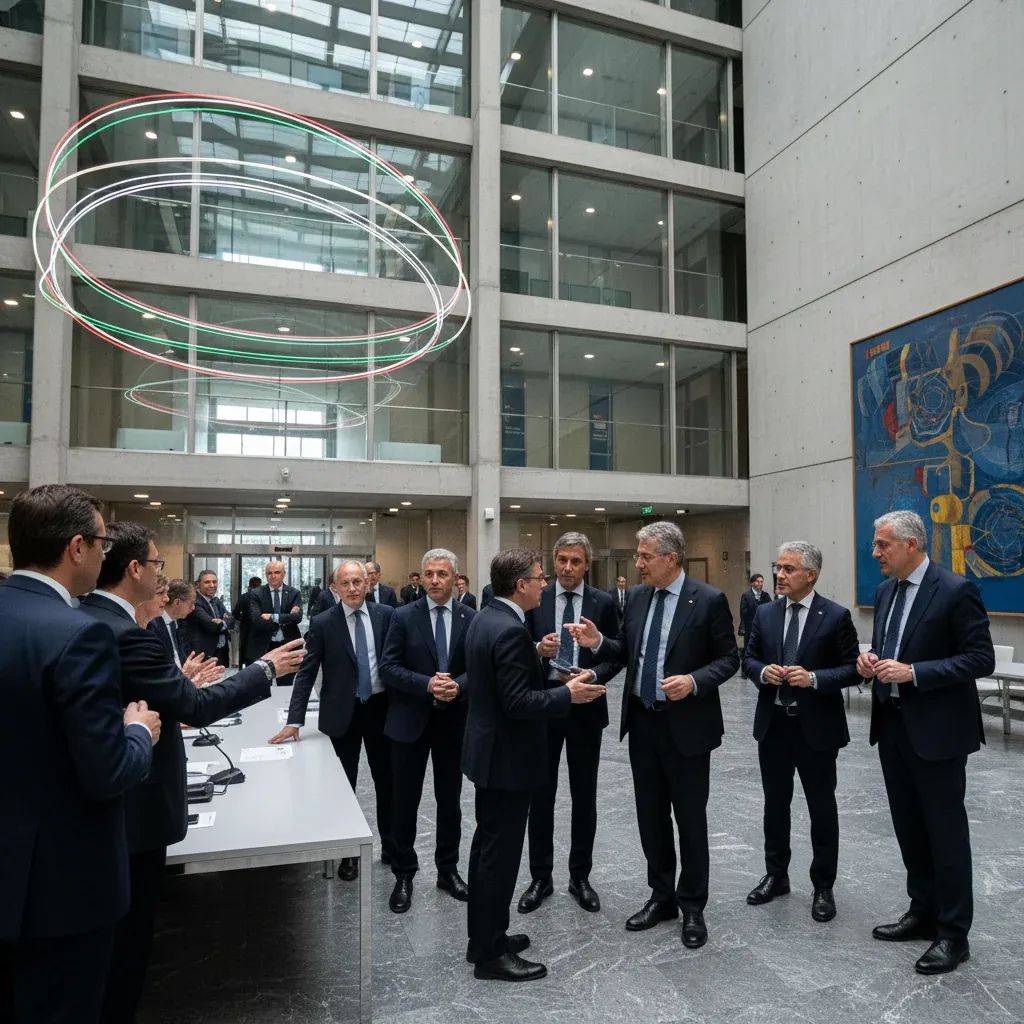
The Italian Football Federation (FIGC) heads toward its most consequential election in years, with former Olympic chief Giovanni Malagò now deep in consultation with the nation's football power brokers but still refusing to commit to a candidacy that could reshape Italian football governance. The June 22 vote will determine who inherits a federation grappling with economic fragility, repeated World Cup failures, and a youth development crisis that threatens the national team's future.
Why This Matters
• Election deadline approaching: Candidates must formalize their bids by May 13, complete with a four-year program and support from at least half the delegates of one league or technical component.
• Serie A backing substantial: While 19 of 20 top-tier clubs have signaled support for Malagò, his hesitation leaves the door open for Giancarlo Abete, who commands the 34% voting bloc controlled by amateur football's governing body.
• Structural overhaul at stake: The next president will decide whether Italian football prioritizes club autonomy and financial reform or maintains the federation's traditional centralized control.
Malagò's Calculated Hesitation
Giovanni Malagò, 67, spent the day shuttling between meetings at the Serie A headquarters and informal discussions with league officials, yet emerged with no firm decision on whether he will actually run. "It seemed right to start these discussions with those who thought of me for this candidacy, especially considering the unusual consensus from this component," Malagò told reporters after the Serie A session. "I haven't decided whether to continue with the candidacy. I'll make that decision after speaking with everyone."
His caution stems from the federation's Byzantine electoral math. The 516 weighted votes are distributed across six components, with Serie A controlling just 18% despite generating the overwhelming majority of Italian football's revenue. The Lega Nazionale Dilettanti (LND), representing amateur clubs, holds 34% — a structural imbalance that has fueled years of resentment among professional clubs. Malagò needs 51% to win, meaning he must bridge the gulf between Serie A's commercial priorities and the grassroots football establishment.
The former CONI president (2013–2025), who now chairs the Milano-Cortina 2026 Foundation, plans additional consultations this week with Serie B president Paolo Bedin, Serie C chief Matteo Marani, and representatives from the Italian Footballers' Association (AIC) and Italian Football Coaches Association (AIAC). "I won't make a final decision this week," Malagò said. "We'll get close to May 13, but not quite there."
What Serie A Wants — and What It's Willing to Trade
The 19 clubs backing Malagò are not offering unconditional support. They arrived at the meeting with a list of demands that will form the basis of any electoral platform: fiscal incentives for clubs that develop homegrown talent, elimination of betting advertising bans with revenue redirected to youth systems, and incentives to attract foreign stars to Serie A. The clubs also want a voice in hiring the next national team coach, a role that remains vacant after Italy's failure to qualify for consecutive World Cups.
Notably absent from the endorsement was Lazio. Lazio president Claudio Lotito, a longtime federation insider, has called for "radical change to the entire system" and criticized the Serie A bloc for prioritizing personalities over policy. His abstention signals a potential fracture within the league that could complicate Malagò's math.
The clubs' frustration is rooted in years of perceived marginalization. Serie A generates roughly €3 billion annually, yet its clubs complain they have minimal control over federation policy. The outgoing president, Gabriele Gravina, resigned April 2 after mounting pressure from government officials and club owners, who blamed his leadership for Italy's sporting decline. His resignation followed the men's national team's elimination from World Cup qualification — the second consecutive World Cup Italy will miss, an unprecedented drought for a four-time champion.
The Abete Alternative
While Malagò courts Serie A, Giancarlo Abete, 75, enjoys the structural advantage of LND support. A former FIGC president (2007–2014), Abete positions himself as the continuity candidate, a federation insider who understands the delicate balance between professional and amateur football. His platform emphasizes youth development, reduction of professional league sizes, and dialogue with government officials on betting regulations and infrastructure investment.
Abete's LND backing gives him a built-in 34% base, but he faces skepticism from Serie A clubs who view him as emblematic of the old guard that presided over Italy's decline. The election will likely hinge on the smaller blocs — Serie B (5%), Serie C (17%), AIC (20%), and AIAC (6%) — and whether Malagò can convince them he represents genuine reform rather than a power grab by elite clubs.
What This Means for Italian Football's Future
The next FIGC president will inherit a federation in crisis. Italy's Serie A fields the oldest squads in Europe, with an average age of 27 and foreign players consuming 67.9% of total minutes played. The result is a shallow talent pool for the national team and a generation of Italian prospects relegated to the bench or lower divisions. Economic sustainability remains elusive: clubs hemorrhage cash on player salaries and agent commissions, leading to chronic indebtedness and periodic exclusions from professional competition due to financial non-compliance.
Infrastructure lags far behind European peers. While England, Germany, and Spain have modernized their stadiums, Italy's venues remain largely unchanged since the 1990 World Cup. The federation also faces pressure to finalize its role in organizing Euro 2032, which Italy will co-host, despite concerns that its stadiums fail to meet UEFA standards.
Malagò's supporters argue his Olympic credentials and government connections uniquely position him to secure public investment and negotiate regulatory relief. Skeptics counter that his lack of football-specific experience and ties to Serie A's wealthiest clubs — particularly Napoli president Aurelio De Laurentiis, a vocal backer — make him poorly suited to represent the federation's diverse constituencies.
The Road to May 13
Malagò has scheduled meetings with Sports Minister Andrea Abodi and candidate Giancarlo Abete before making his final decision. "I need to speak with the ministry, of course," Malagò said. "But I must prioritize the sporting world. If the other components disagree, I'll thank Serie A and stop."
His deliberate pace reflects the high stakes. A loss would embarrass Serie A and entrench the amateur-professional divide. A victory would empower the clubs but risk alienating the grassroots networks that underpin Italian football's social fabric. The June 22 vote will determine not just who leads the FIGC, but whether Italian football can reconcile its fractured power structure and reverse a decade of decline.


