
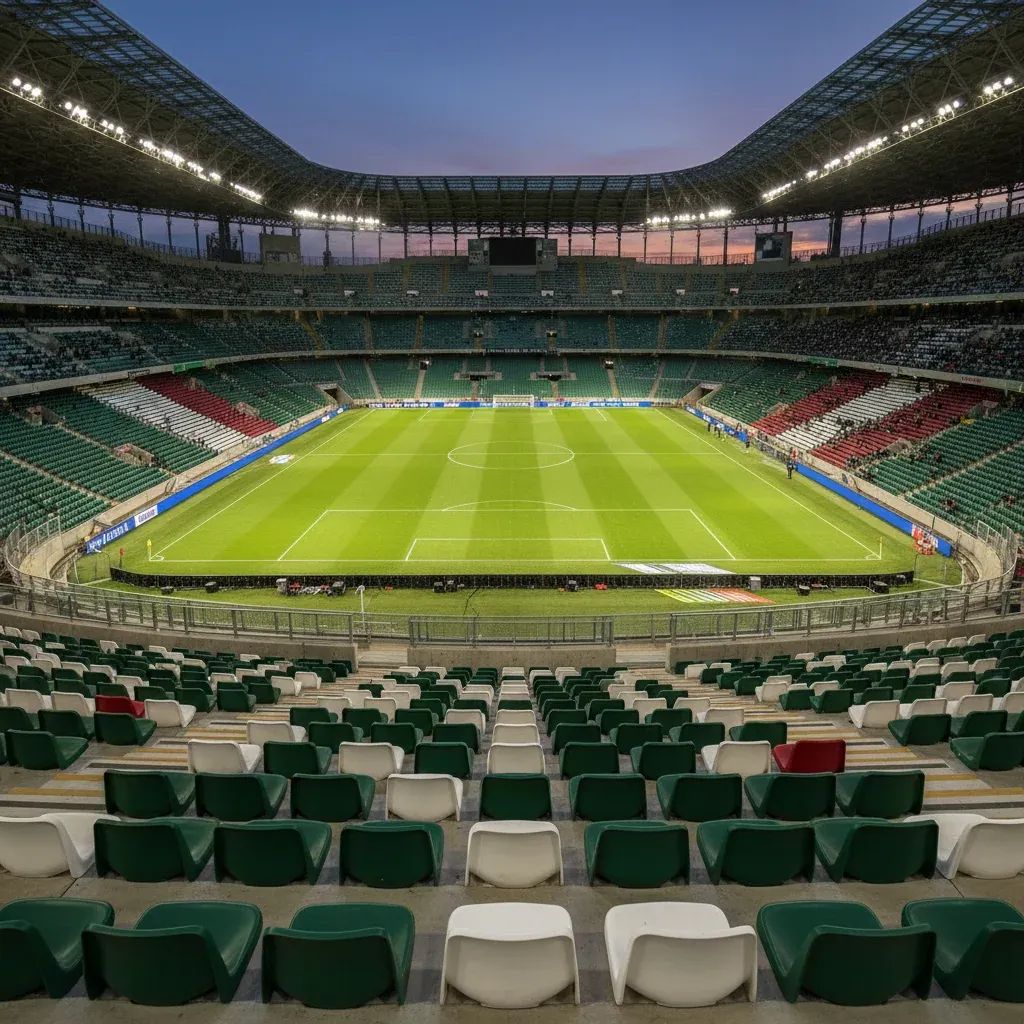
A Crowded Race for Italy's Football Future Begins to Take Shape
Eighteen of Italy's top-flight clubs have rallied behind Giovanni Malagò, the former Olympic Committee chief, as their preferred choice to restore order to the Italian Football Federation (FIGC) ahead of elections scheduled for June 22 in Rome. Yet the endorsement masks deeper fractures within the sport itself. Two prominent teams—Lazio and Hellas Verona—pointedly withheld their signatures, signaling that no single name will fix the systemic rot beneath Italian football's deteriorating foundation. For residents paying attention to calcio, this election carries real consequences for national competitiveness, club finances, and the employment of thousands within the sport.
Why This Matters
• Leadership vacuum: Gabriele Gravina stepped down as FIGC president, while national team coach Gennaro Gattuso resigned following Italy's third consecutive World Cup qualification failure—most recently a March loss to Bosnia and Herzegovina.
• Financial hemorrhaging: Professional football loses over €730M annually with aggregate debt exceeding €5.5B, while agent fees alone reached €300M in 2025.
• Talent crisis: Italian players under 21 comprise just 1.9% of Serie A playing time, while foreign players occupy nearly 68% of minutes—strangling the national team's youth pipeline.
• Voting power mismatch: Series A holds only 18% of FIGC electoral votes, while the amateur league federation (LND) controls roughly 33%, giving lower-tier interests disproportionate influence.
The Malagò Momentum—And Its Limits
The Lega Serie A assembly in Milan conveyed clear messaging: the league's dominant economic force wants stability and centralized decision-making. Malagò, who led the Italian Olympic Committee (CONI) through three mandates and currently helms the Milano Cortina 2026 Olympic Foundation, represents organizational competence and high-level diplomacy. His track record suggests someone capable of navigating Italian bureaucracy and international sports politics without stumbling.
Yet capability does not automatically translate to vision. Giovanni Carnevali, the Sassuolo CEO, articulated the community's cautious ambivalence during the assembly itself. He praised Malagò as "certainly a person suited to managing a federation" while immediately adding the necessary caveat: "But we need to understand if there are other candidates." That hedging—respectful yet pointed—captures the real anxiety: Malagò may be a safe pair of hands, but what exactly does he intend to do with them?
The Malagò camp has yet to unveil a comprehensive reform platform. This absence is consequential. Italian football faces age-old structural problems that transcend personnel: crumbling youth academies, atrophied stadium infrastructure (Italy ranks outside Europe's top 10 for modernization projects completed since 2007), overlapping organizational fiefdoms, and financial controls that reward recklessness. None of these resolve themselves through charm or administrative competence alone.
Lazio and Verona's Structural Rebellion
When Lazio's Claudio Lotito and Hellas Verona declined to sign the endorsement—without formally voting "no," since there was no ballot—they were not registering personality objections to Malagò. Instead, they mounted a procedural protest rooted in political economy. Both clubs argue that selecting a president before conducting a foundational examination of the legal and governance framework is premature and, frankly, counterproductive.
Their grievance centers on Law 91 of 1981, the landmark statute that abolished the old vincolo sportivo (indefinite sports bond) and established professional footballers as legally protected employees. The law was progressive for its time, ensuring pension rights, health coverage, and labor dignity. But Lazio and Verona contend that its current application—or perhaps its obsolescence—perpetuates systemic dysfunction in a modern, globalized football marketplace.
The deeper complaint concerns governance fragmentation. The Lega Nazionale Dilettanti (LND), which administers Italy's amateur and semi-professional pyramids, wields disproportionate voting power within FIGC elections relative to Serie A's dominance of television revenue and global brand recognition. This imbalance has historically enabled lower-tier interests to block reforms favored by the professional leagues, creating what Carnevali termed an "ingessato" system—rigid, encased, essentially immobilized by competing veto points.
Before anointing anyone, Lazio and Verona argue, the federation must recalibrate power distribution and address the underlying rules that permit financial chaos, youth neglect, and infrastructure stagnation. Their refusal to sign was, in essence, a demand that the larger conversation shift from who runs the place to how should the place actually function.
The Opposition Takes Shape: Abete, Alternatives, and Dark Horses
Malagò is running in a field, not unopposed. Giancarlo Abete, the former FIGC president (2007-2014) and current LND chief, represents the most formidable rival. His control of amateur federation votes provides structural advantage—a built-in coalition. He also carries institutional memory of navigating Italian football's baroque political architecture, credentials that matter in an environment where backroom coalition-building often determines outcomes more than policy substance.
Matteo Marani, president of Lega Pro (Serie C), occupies a middle position, controlling votes among third-tier clubs without the heavyweight status of either Abete or Malagò. Demetrio Albertini, the former AC Milan midfielder backed by the Italian Footballers' Association (AIC), brings player-side legitimacy but limited electoral infrastructure.
The speculation surrounding other candidates underscores the genuine uncertainty. Names circulating in media include former stars Roberto Baggio, Paolo Maldini, Gianni Rivera, and Alessandro Del Piero—figures who carry national prestige but lack federation experience. Giuseppe Marotta, the Inter Milan executive credited with modernizing the Nerazzurri's operations, appeals to those seeking an outsider with corporate discipline. Each possibility carries different signals: choosing a playing legend might energize youth development efforts; selecting a club executive might prioritize financial accountability.
This proliferation of potential candidates is not an embarrassment of riches—it is symptomatic of institutional vacuum. The federation lacks a clear ideological center around which candidates naturally coalesce.
The Calendar and the Test Ahead
The deadline for formal candidacies is May 13. Between now and then, prospective frontrunners will work to consolidate support among the Lega Pro and Serie B clubs, cultivate relationships with the AIC, and court the referees' association. Malagò's team can leverage Serie A's endorsement and his Olympic prestige. Abete can mobilize his LND base but must convince the top flight that he represents more than amateur football's parochial interests.
The June 22 assembly in Rome will be high-stakes theater. The electorate is fragmented: professional leagues, amateur organizations, players, coaches, referees, and regional authorities all cast votes. Malagò's Serie A backing provides momentum, but Italian football's history is littered with frontrunners who seemed inevitable until the votes were counted and alliances mysteriously realigned.
What This Election Means for People Living in Italy
For anyone who follows football—whether as passionate supporter, casual observer, or someone whose livelihood depends on the industry—this election will determine tangible outcomes:
A president committed to youth development could reverse the foreign-player glut and restore Italian depth to the national squad. Conversely, inaction on academies guarantees more World Cup absences and international irrelevance.
Financial reform—stricter spending controls, agent commission caps, revenue-sharing mechanisms—would directly affect club survival rates, especially outside Italy's wealthy triangle of Milan, Rome, and Turin. Smaller clubs could stabilize or collapse depending on whether federation rules encourage fiscal discipline or reward recklessness.
Infrastructure investment creates jobs, improves fan experience, and generates local economic activity. A president pushing stadium modernization through public-private partnerships could unlock European construction standards and associated benefits for cities and communities.
Labor stability within professional football has ripple effects across hospitality, tourism, broadcasting, and hospitality. A healthier federation means more predictable employment and fewer sudden club collapses that strand workers without severance.
National team success—or its absence—shapes Italian identity and morale in ways difficult to quantify but impossible to dismiss. The federation president shapes that trajectory through coaching appointments, talent development strategy, and international credibility.
The Unresolved Question
Between now and June, the conversation will intensify. Expect Malagò and his rivals to begin articulating reform visions. Expect negotiation over structural change. And expect, as always in Italian sports politics, unexpected defections and late-hour pivots that reorder apparent certainties.
The Serie A endorsement gives Malagò a genuine edge, but edges are not outcomes. Whether he emerges from the June 22 assembly capable of dialoguing with all federation components while delivering the "radical changes" the sport desperately needs remains the central unanswered question hanging over Italian football as spring progresses.


