
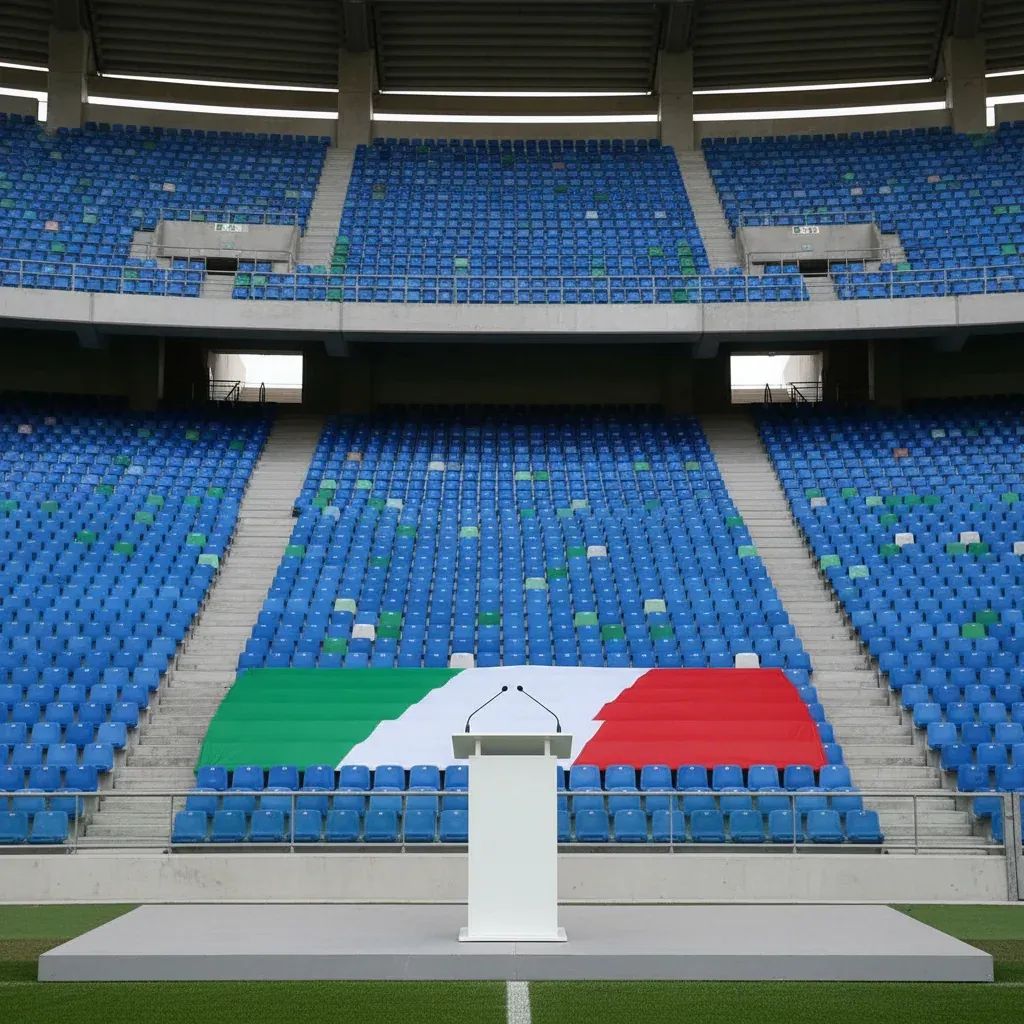
Italy's top football clubs are preparing to nominate their preferred candidate for the next president of the Italian Football Federation (FIGC), with Giovanni Malagò—the former longtime head of Italy's Olympic Committee (CONI)—emerging as the front-runner despite vocal resistance from the government and a faction of clubs wary of structural reforms.
Why This Matters
• Serie A clubs meet on April 14 to formally endorse a candidate ahead of the June 22, 2026 FIGC presidential election.
• Malagò has backing from most major clubs, including Inter, Napoli, Juventus, and Roma, positioning him as the likely nominee.
• Government officials, including Deputy PM Matteo Salvini, have publicly opposed Malagò, preferring either a "fresh face" or a direct federal commissioner to replace the outgoing leadership.
• The outcome will shape Italian football governance after a turbulent period marked by a third consecutive World Cup failure and administrative scandals.
A Leadership Vacuum After Gravina's Exit
Gabriele Gravina, who led the FIGC through years of controversy, is stepping down following mounting pressure from both sporting circles and the government. His tenure was marred by Italy's repeated failure to qualify for the World Cup—a crisis that has had profound economic and social repercussions for a football-obsessed nation. The federation's presidential election, set for June 22, 2026 in Rome, represents a critical juncture for Italian football, and the Serie A clubs are determined to put forward a unified candidate to maximize their influence in the process.
On April 14, the Lega Serie A will convene at 11:30 a.m. to discuss federal matters, with the central agenda item being the endorsement of a FIGC presidential candidate. This makes the top-tier league the first major football component to formally announce its choice, a month before the May 13 deadline for submitting candidacies. To be official, any candidate must secure support from at least half plus one of the delegates from a league or technical component and submit a comprehensive program document.
Malagò's Appeal: Experience and International Clout
Giovanni Malagò, who served as president of CONI for over a decade, brings a wealth of experience in managing Italy's sports bureaucracy and navigating high-stakes negotiations with government officials and international sporting bodies. His track record includes overseeing multiple Olympic cycles and maintaining stability within the Italian sports ecosystem, qualities that have won him admirers among the country's biggest football clubs.
Urbano Cairo, president of Torino FC, publicly endorsed Malagò in comments to Sky, stating: "I hold him in high regard and know him well. Malagò is a very capable person who did well at CONI. He could be someone to bet on." Even Adriano Galliani, the legendary former CEO of AC Milan and current executive at Monza, declined consideration for the post himself, telling Corriere della Sera: "I thank those clubs that thought of me as a candidate, but I will not accept. I believe the best possible FIGC president, and not just as an expression of Serie A, is Giovanni Malagò."
The endorsements from heavyweights like Inter, Napoli, Juventus, and Roma suggest that Malagò's candidacy enjoys broad consensus among the clubs that wield the most commercial and sporting power in Italian football. The strategy is clear: Serie A wants to present a united front heading into the federal elections, demonstrating that the top league is not fragmented and can steer the federation's future direction.
Internal Dissent and the Lotito Factor
Not everyone is on board. Claudio Lotito, president of Lazio, has been a persistent voice for an entirely different solution: commissariamento—the appointment of a federal commissioner to temporarily manage the FIGC rather than electing a new president. Lotito and a minority bloc of smaller and mid-sized clubs are skeptical of Malagò, in part because his close ties to the major clubs could accelerate controversial reforms, particularly a reduction in the number of Serie A teams—a proposal long championed by the league's biggest sides as a way to enhance competitiveness and revenues, but fiercely opposed by smaller clubs fearing relegation or exclusion.
Udinese and other minor clubs share these concerns, viewing Malagò's candidacy as a potential vehicle for structural changes that could disadvantage them. This internal tension underscores the broader challenge facing Serie A: achieving consensus in a league where economic disparities and divergent strategic priorities often lead to bitter disputes.
Government Pushback: Salvini Calls for "Fresh Faces"
Perhaps the most significant obstacle to Malagò's ascent is the skepticism emanating from Italy's government. Matteo Salvini, Deputy Prime Minister and leader of the Lega party, made his position clear in remarks to journalists in Milan on April 12: "If Italian football needs a change, I would like to see some new faces. Honestly, I would prefer to look forward."
Salvini's comments reflect a broader government stance that has been critical of Malagò's tenure at CONI and wary of recycling familiar figures in Italian sports administration. Minister for Sport Andrea Abodi has called for a "radical refoundation" of the FIGC, invoking the possibility of direct government intervention through commissariamento. This position is echoed by Prime Minister Giorgia Meloni, whose party, Fratelli d'Italia, has formally proposed evaluating a federal commissioner to ensure transparency and accountability after years of perceived mismanagement.
The government's critique centers on what officials describe as systemic inefficiencies, opaque decision-making, and a failure to implement necessary reforms. The repeated World Cup absences—an unprecedented humiliation for a footballing nation of Italy's stature—have amplified calls for sweeping change. For many in Rome's political corridors, Malagò's candidacy represents continuity rather than the rupture they believe is needed.
What This Means for Residents
For Italians, the battle over the FIGC presidency is more than a bureaucratic squabble—it will shape everything from the Azzurri's prospects on the international stage to the financial health of local clubs and the future structure of Serie A. If Malagò prevails, expect accelerated discussions on league reform, including possible reductions in team numbers, which could impact ticket prices, local rivalries, and the accessibility of top-tier football in smaller cities.
Conversely, a government-imposed commissioner could lead to a period of uncertainty and institutional paralysis, as political appointees navigate the complex web of football stakeholders—leagues, clubs, players' unions, referees, and amateur federations—all with competing agendas.
For Serie A fans, the immediate impact will be felt in the quality and competitiveness of the league. If the major clubs consolidate power through Malagò, investment and international prestige may increase, but at the potential cost of reduced inclusivity and higher barriers for smaller provincial clubs. The outcome will also influence Italy's ability to secure hosting rights for major tournaments and its standing in UEFA and FIFA governance structures.
Other Candidates in the Mix
While Malagò dominates the conversation, other names are circulating. Giancarlo Abete, who served as FIGC president from 2007 to 2014 and now leads the Lega Nazionale Dilettanti, represents another experienced option. Matteo Marani, current president of the Lega Pro, is also mentioned, as is Demetrio Albertini, a former midfielder backed by the players' union. Speculation has even touched Alessandro Del Piero and Paolo Maldini, though both are considered more suited to operational or strategic roles than the federation's top job.
The field remains fluid, and while no official candidacies have been lodged as of mid-April, the Serie A meeting on April 14 will send a powerful signal. A decisive endorsement of Malagò could solidify his position as the overwhelming favorite, making it difficult for rivals to mount effective campaigns before the May 13 deadline.
The Political Tightrope
Ultimately, the next FIGC president will have to navigate not only the internal politics of Italian football but also the external pressures from a government intent on asserting control over a sector it views as both economically vital and structurally dysfunctional. Malagò's deep relationships within CONI and international sports bodies could prove invaluable—or they could become liabilities if perceived as part of an old guard resistant to change.
As the clock ticks toward June 22, the question is whether Serie A's united front can overcome government skepticism, internal dissent, and the broader demand for transformational leadership. For now, Malagò remains the man to beat, but in Italian football, nothing is ever straightforward.


