
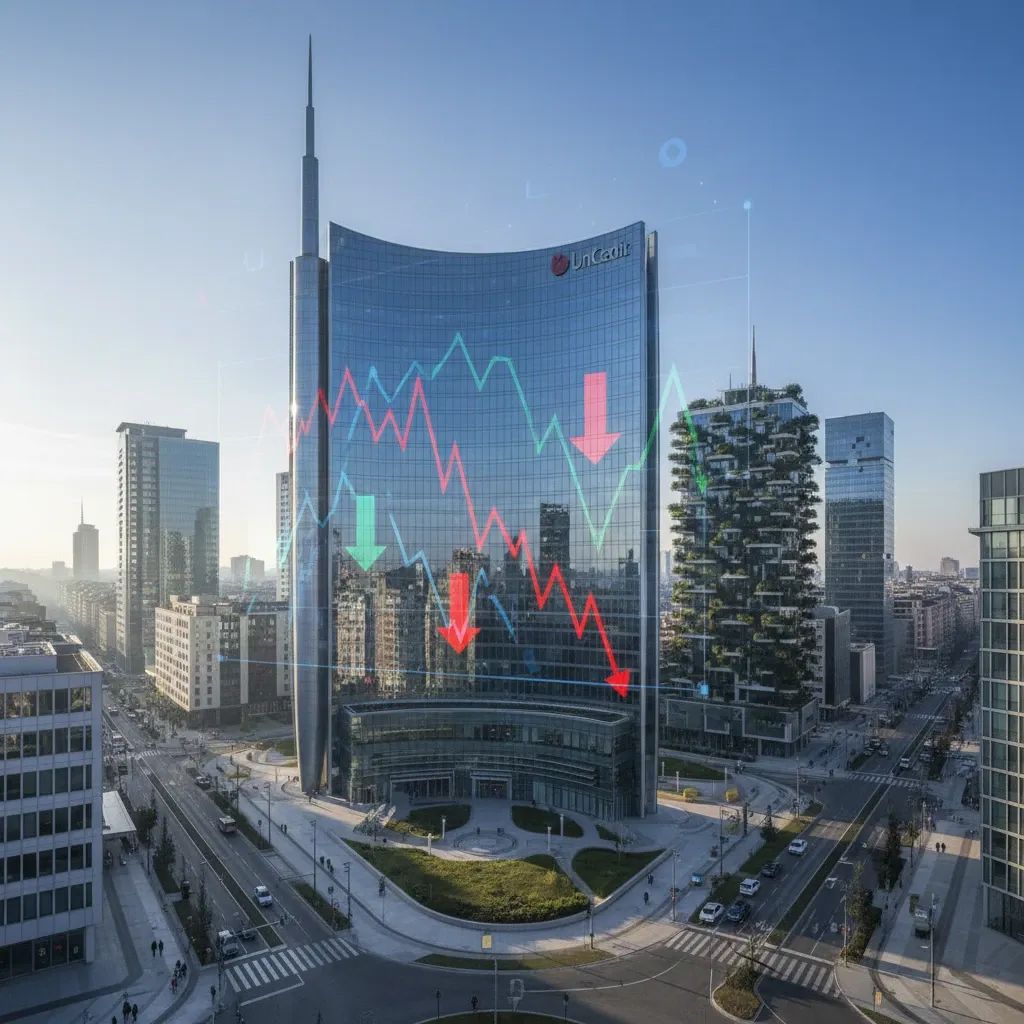
The Italy Ministry of Economy is staring down a potentially extended economic stall as energy shocks tied to the Iran conflict slash 2026 growth forecasts nearly in half, according to a fresh assessment by Confesercenti and the Centro Europa Ricerche (CER). Even if a ceasefire materializes, the analysis warns that normalizing energy markets would require seven to eight months—enough to cripple the year's economic trajectory and push meaningful recovery into 2027.
Why This Matters
• GDP growth cut by 0.3 percentage points: Italy stands to lose €9.7B in economic output compared to pre-conflict projections, even with government fuel tax relief in place.
• Investment freeze: Businesses are pulling back €7.7B in planned capital expenditures, spooked by spiking costs and geopolitical uncertainty.
• Consumer squeeze: Household spending is projected to slow by €3.9B, with families dipping into savings just to cover essentials.
• 5.3M Italians in energy poverty: Rising electricity and heating bills are locking millions into a cycle of financial stress, especially in the South.
The Arithmetic of Disruption
The Iran-linked energy crisis, now two months deep, has delivered a body blow to Italy's economic expansion. The Italy Revenue Department and the CER calculate that despite emergency measures on fuel excise taxes—which have cushioned the direct hit at the pump—the cumulative damage is severe. National GDP is expected to clock in at 0.3 percentage points lower than the January baseline, a shortfall equivalent to nearly €10B in foregone economic activity.
Consumer expenditure, historically the backbone of Italian growth, is forecast to decelerate by €3.9B. That contraction will partly be absorbed by households burning through savings—an additional €3.9B drawdown—rather than cutting spending entirely. But investment decisions, the forward-looking barometer of business confidence, tell a bleaker story: companies are postponing or canceling €7.7B in capital projects. The culprits are twofold: margin erosion from energy cost inflation and a pervasive uncertainty that makes long-term commitments untenable.
Industrial Output Offers Mixed Signals
Separate data from Istat, Italy's national statistics agency, shows industrial production edged up 0.1% month-on-month in February 2026, and 0.5% year-on-year. At first glance, the figures suggest resilience. Dig deeper, however, and the picture fragments. The quarterly average for December 2025 through February 2026 fell 0.4% compared to the preceding three months, signaling momentum is fading.
Capital goods (machinery and equipment) posted a robust 1.1% monthly gain and a 4.4% annual jump, buoyed by exports of transport equipment, which surged 10% year-on-year. Electronics and optical products climbed 7.8%, while general machinery rose 5.2%. Yet the energy sector itself contracted sharply, down 4.8% month-on-month and 2.1% year-on-year, reflecting both reduced demand and supply constraints. Consumer goods output slipped 0.4% monthly and 2.1% annually, while intermediate goods barely stayed flat at 0.1% annual growth. The chemical industry dropped 6.8%, and refined petroleum products—a bellwether for energy stress—fell 6.4%.
What This Means for Residents
Energy poverty is no longer an abstract risk. The CGIA of Mestre calculates that 5.3M Italians, grouped into 2.4M households, are struggling to cover basic electricity and heating bills, excluding transport fuels. The crisis is regionally asymmetric: Puglia leads with nearly 303,000 vulnerable families (18% of regional households), followed by Calabria (143,400 families, 17.4%) and Molise (22,650 families, 17%). The relatively insulated regions—Marche, Friuli Venezia Giulia, and Lazio—still face rising stress.
The 2026 energy bill shock is projected to extract an additional €5.4B from household budgets nationwide, climbing to €6.6B when benchmarked against 2024. Lombardy shoulders the heaviest absolute burden at €1.1B, with Veneto (+€557M), Emilia-Romagna (+€519M), and Lazio (+€453M) close behind. Smaller regions like Basilicata (+€45M), Molise (+€25M), and Valle d'Aosta (+€10M) see proportionally significant impacts given their population size.
Electricity and gas prices rose 6.7% and 6.3%, respectively, in 2025—and the trajectory for 2026 is steeper. For families already teetering on the financial edge, these increments mean impossible trade-offs: heat or food, power or medicine.
Tourism and Hospitality Under Pressure
Italy's restaurant and food service sector, tracked by Fipe-Confcommercio, generated €100B in consumer spending in 2025, up a modest 0.5% from 2024 but still 5.4% below pre-pandemic levels. The industry's 324,436 registered businesses contracted by 1% year-on-year, with bars taking the hardest hit (-2.2%) while banqueting and collective catering grew 3.5%. Menu prices rose 3.2% in 2025, a lagged response to post-pandemic inflation shocks—and 2026's energy spiral threatens to steepen that curve further.
Labor remains a chokepoint: one in two operators reports hiring difficulties, with searches for cooks, waiters, and bartenders stretching up to five months. Paradoxically, while 61.6% of workers are under 40, the only age cohort expanding is the over-60s, reflecting demographic contraction and older workers delaying retirement. Productivity, meanwhile, has slipped a full percentage point year-on-year and remains far below the decade-ago benchmark.
The Confesercenti-CER report flags that the energy shock is already prompting businesses to defer or cancel modernization projects: only 28.4% of firms invested in upgrades in 2025, and just 25.8% plan to do so in 2026, weighed down by renewed uncertainty.
Export Pillars Hold—for Now
Italy's wine industry, the world's largest producer at 47.3M hectoliters (22% of global output), notched €7.8B in export revenue in 2025, according to Sace, the government export credit agency. The sector's 79 DOCG certifications (as of 2026) anchor its reputation for quality and diversity. Veneto, Tuscany, and Piemonte dominate shipments, with the United States, Germany, and the United Kingdom absorbing nearly half of all Italian wine exports. Yet consumption patterns are shifting toward premium, lower-volume purchases—a trend that could insulate margins even as macroeconomic headwinds intensify.
Still, the broader Made in Italy brand faces a modernization imperative. A survey by TP Infinity for Made in Italy Community, conducted early in 2026, found that 79% of young Italians consider working for a Made in Italy manufacturer stimulating, and 92% view it as a source of social and family pride. But respondents identified critical gaps: 40% demand more competitive salaries, 37% want genuine meritocracy, 33% seek structured career paths, and 28% call for tighter links between industry and universities. Internationally, 45% of consumers admit to purchasing "Italian sounding" fakes at least once, and 28% actually preferred them to authentic originals—a stark reminder that brand strength is not automatic.
Confindustria's Call for Institutional Alignment
Lorenzo Bagnoli, vice president of Confindustria's Young Entrepreneurs, speaking at the group's annual Voci gathering in Borgo Egnazia, characterized the current environment as one of "cadenced emergencies"—from COVID-19 to successive wars. He urged Italian businesses to respond with "saggezza e coraggio" (wisdom and courage), qualities he argued must reinforce each other.
Bagnoli also pressed for a unified national strategy, calling on government and industry to align on long-term priorities rather than cycling through short-term reactive measures. "Democracy cannot be sterile debate," he said. "We need to measure outcomes, adjust, and move forward together as a system."
His message echoed a broader frustration among industrialists: without regulatory clarity, simplified rules, and sustained institutional support, Italy risks ceding global market share at precisely the moment when competitiveness matters most.
A Fragmented Property Market
One bright spot for household budgets—if only relative—is housing. Eurostat data covering the decade ending in Q4 2025 shows Italy among the EU's slowest movers for both home price and rent inflation, with gains under 20% for both indices. Only Greece and Finland (where home prices fell 3%) lagged further. By contrast, Hungary saw home prices surge 290%, Portugal 180%, Lithuania 168%, and Bulgaria 157%. Rent hikes were similarly extreme in Hungary (+109%), Lithuania (+88%), and Ireland and Poland (both +76%).
In the EU-27 aggregate, home prices rose 64.9% over the decade, while rents climbed 21.8%. Italy's comparatively muted trajectory reflects stagnant wage growth, demographic decline, and regional economic disparities—factors that dampen affordability crises but also signal weak domestic demand and limited wealth accumulation.
Spring Arrives at the Market
Amid economic turbulence, seasonal rhythms persist. Borsa Merci Telematica Italiana (BMTI) and Italmercati report that spring produce is flooding wholesale channels, with strawberry prices easing after the Easter peak. Premium Matera Inspire varieties trade at €5.00–5.50/kg, while Candonga has slipped below €5.00/kg. Common Sicilian and Campanian strawberries hover between €3.50–4.00/kg, pressured further by Spanish imports at €2.00–2.50/kg. Sicilian lemons hold steady at €1.50/kg.
Conversely, vegetables are expensive, hit by planting delays from weeks of heavy rain. Cherry tomatoes spiked to €4.50/kg, and datterino now exceeds €6.00/kg. Potatoes remain a bargain at €0.65–0.75/kg, and Roman artichokes range from €0.60 to €1.00 per head. In seafood, robust catches in the Upper Adriatic have driven squid prices from €18/kg to €9–13/kg—a 13.4% weekly drop—while the reopening of swordfish season promises further declines as fleets scale up.
Luxury Faces the Reckoning
Italy's luxury sector, anchored by brands under LVMH and Kering, confronts earnings season amid market jitters. Kering, which releases Q1 results on Tuesday and hosts a Capital Markets Day in Florence on Thursday, is the object of intense scrutiny. Analysts at UBS note investor skepticism over the group's 2026 guidance, which assumes revenue growth and margin expansion despite Gucci's ongoing struggles and a deteriorating global backdrop.
Bloomberg Intelligence estimates Kering's net debt should hit the target range of 1–1.5 times adjusted EBITDA by year-end, supported by the €4B sale of its Beautè division to L'Oréal and a €729M down payment from the Al-Mirqab Group for the Via Montenapoleone building in Milan (with a further €432M due in 2031). The influx could cover near-term bond maturities, fund operational investments, and position Kering for a potential €4B acquisition of the remaining 70% of Valentino by 2028 or 2029—assuming geopolitical and macroeconomic winds don't shift further.
LVMH, scheduled to report Monday, faces similar headwinds: slowing demand in China, currency volatility, and the specter of prolonged conflict-driven uncertainty weighing on discretionary spending globally.
The Path Forward
Italy's economy is navigating a narrow corridor. The Iran-linked energy shock has condensed what might have been a gradual 2026 recovery into a holding pattern, with measurable gains now deferred to 2027 at the earliest. Policymakers face a delicate balancing act: targeted fiscal support for vulnerable households and strategic sectors must coexist with long-term structural reforms—simplified regulations, accelerated renewable energy buildout, and tighter industry-education linkages—that can insulate the economy from future external shocks.
For residents, the message is clear: budget tightly, expect continued price pressure on essentials, and watch for government interventions that may ease but not eliminate the squeeze. The road back to normalcy will be measured in quarters, not weeks.


