
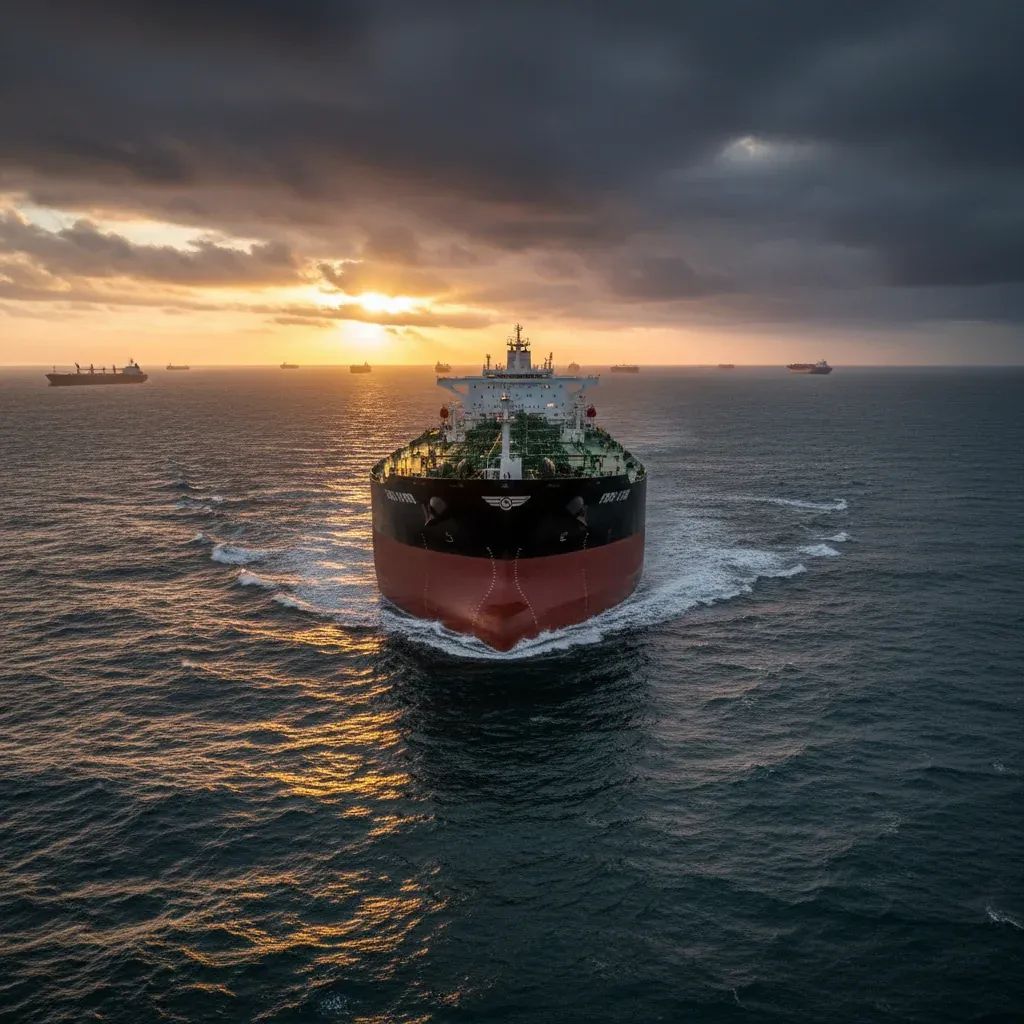
The Italian stock exchange closed modestly higher on Tuesday, gaining 0.2% as diplomatic progress in the Strait of Hormuz negotiations between Iran and Oman gave European markets a cautious boost, though the rally faded from midday peaks as investors digested mixed signals from Washington and Tehran.
Why This Matters
• Energy costs: Natural gas prices dropped 3.5% to €58.65/MWh as traders bet on a Hormuz reopening—lowering the direct cost of electricity and manufacturing for Italian businesses.
• Bond yields down: Italy's 10-year BTP yield fell to 3.93% (down 2.8 basis points), reducing government borrowing costs and offering relief to public finances.
• Volatility ahead: The Hormuz corridor handles 20% of global oil traffic; any breakdown in talks could push Brent crude past $90 and trigger renewed inflation.
Italy's FTSE MIB Mirrors Cautious European Tone
Milan's benchmark index climbed as high as 0.3% in afternoon trading before settling at a 0.2% gain, mirroring moves in Frankfurt (+0.2%), Madrid (+0.2%), and London (−0.1%). Paris ended flat. The pullback came after reports that a U.S. helicopter fired on a Panamanian-flagged vessel near Iranian waters, casting doubt on the durability of any diplomatic détente.
Wall Street offered little direction, with the Dow Jones up 0.28% and the Nasdaq down 0.17%, as traders awaited U.S. inflation data expected later this week.
European markets had opened with greater optimism after Qatar and Pakistan separately indicated that Iran–Oman negotiations on a Hormuz transit framework were nearing completion. The draft agreement proposes a 60-day ceasefire and the creation of Iranian- and Omani-administered shipping lanes, along with a new "service fee" to fund security and personnel costs.
Yet Tehran has made clear that any full reopening hinges on U.S. concessions, including an end to what Iran calls a naval blockade of its ports. Ship traffic through the strait—currently running at just 5 to 10 vessels per day, down from a pre-conflict norm of 140—remains far below levels needed to stabilize global oil supply chains.
Energy Stocks Lead, Stellantis Rises on Market Optimism
Italian energy giant Eni was the session's standout performer, surging 2.05% to close above €24 per share. The advance reflected both the prospect of easing supply disruptions and higher crude prices; West Texas Intermediate (WTI) oil ended the day +0.3% at $82.39 per barrel, recovering from earlier losses.
Other European oil majors followed suit: BP rose 1.85%, TotalEnergies added 1.55%, and Shell climbed 1.35%. Oilfield services provider Tenaris gained 1.4% in Milan trading.
The technology sector also found support from demand for artificial-intelligence infrastructure. Dutch chipmaking equipment manufacturers ASML and ASM International jumped 3.3% and 3.2% respectively, benefiting from renewed investor appetite for semiconductor exposure.
By contrast, the Italian–French automaker Stellantis gained 2.35%, despite earlier headwinds from mixed analyst commentary on competitive positioning in electric vehicles. Luxury peer Ferrari managed a modest 0.77% gain, insulated by its premium brand pricing power.
Italian Banks Trade Mixed as Yield Curve Flattens
Italian financial stocks closed without a clear pattern. Credit Agricole edged up 0.6%, Commerzbank added 0.4%, and BPER Banca rose 0.18%. UniCredit—Italy's second-largest lender—gained 0.2%.
On the downside, Banco BPM dropped 0.7%, Mediobanca rose 0.22%, Intesa Sanpaolo slipped 0.26%, and Monte dei Paschi di Siena closed fractionally lower (−0.02%). The divergence reflects uncertainty over the European Central Bank's next policy move; lower energy costs could ease inflation pressure and delay any further rate hikes, compressing net interest margins for banks.
Bond Spreads Tighten as Investors Seek Safety
The spread between Italian 10-year BTPs and German Bunds narrowed to 78.7 basis points, down from the previous session's 79 points. Italy's benchmark yield retreated 2.8 basis points to 3.93%, while the German Bund yield fell 2.9 basis points to 3.15%. France's 10-year OAT yield dropped 1.4 basis points to 3.96%.
The compression signals that investors see reduced near-term risk of a European energy shock, though analysts caution that the situation remains fluid. Goldman Sachs had forecast Brent crude at $90 per barrel for the fourth quarter of 2026; a prolonged Hormuz closure could drive prices toward $130 or even $200, according to scenario modeling by JPMorgan and the International Energy Agency.
Commodities and Currencies: Gas Drops, Gold Edges Higher
Natural gas futures on the Dutch TTF hub fell 3.53% to €58.65 per megawatt-hour, reflecting trader confidence that Iranian and Omani officials are close to finalizing a shipping corridor. European gas prices had doubled earlier this year when the Hormuz crisis first erupted in February 2026; any sustained reopening could push prices back toward pre-conflict levels near €40/MWh.
Gold rose 0.1% to $4,387 per troy ounce, maintaining its appeal as a hedge against geopolitical uncertainty. The U.S. dollar held steady at 1.15 against the euro and 1.35 versus the British pound; the pound traded at €1.17.
What This Means for Residents
For Italians, the Hormuz situation has direct implications for household budgets and economic growth. Lower natural gas prices translate into cheaper electricity bills and reduced input costs for manufacturing—a critical factor for Italy's small and medium-sized enterprises, which rely heavily on gas-fired power generation.
At the same time, the modest bond-yield decline eases pressure on public finances. Italy's government debt stands at roughly 140% of GDP; every 10-basis-point drop in borrowing costs saves the Treasury hundreds of millions of euros annually.
However, the risk of renewed escalation remains. If Hormuz traffic does not normalize within weeks, shipping costs will rise—container freight rates have already increased 14% since February—and inflation could reignite. The European Central Bank has signaled readiness to act if energy-driven price pressures resurface, which could mean higher mortgage rates for Italian homeowners.
Outlook: Markets Await Clarity on Hormuz Framework
European equity strategists remain divided. Hani Redha of MetLife Investment Management said he expects a "constructive environment for risk assets, particularly equities," albeit with more moderate returns than earlier in 2026. Fawad Razaqzada at City Index warned that "any sign of de-escalation would be good news for risk assets and bad news for oil," but added that the inverse is equally true.
Key variables include the U.S. inflation report due later this week, second-quarter GDP data for the eurozone, and above all the final text of any Iran–Oman agreement. Tehran has insisted on compensation for alleged breaches of an earlier memorandum of understanding and has indicated it will impose mandatory transit tolls after an initial two-month grace period—a detail that could complicate ratification.
For now, Italian investors are navigating a landscape of tentative optimism tempered by geopolitical fragility. The FTSE MIB's performance—rising early, fading late—captures that ambivalence. Until ship traffic through Hormuz returns to pre-conflict levels and the U.S.–Iran standoff cools, European markets are likely to remain hostage to headlines from the Gulf.


