
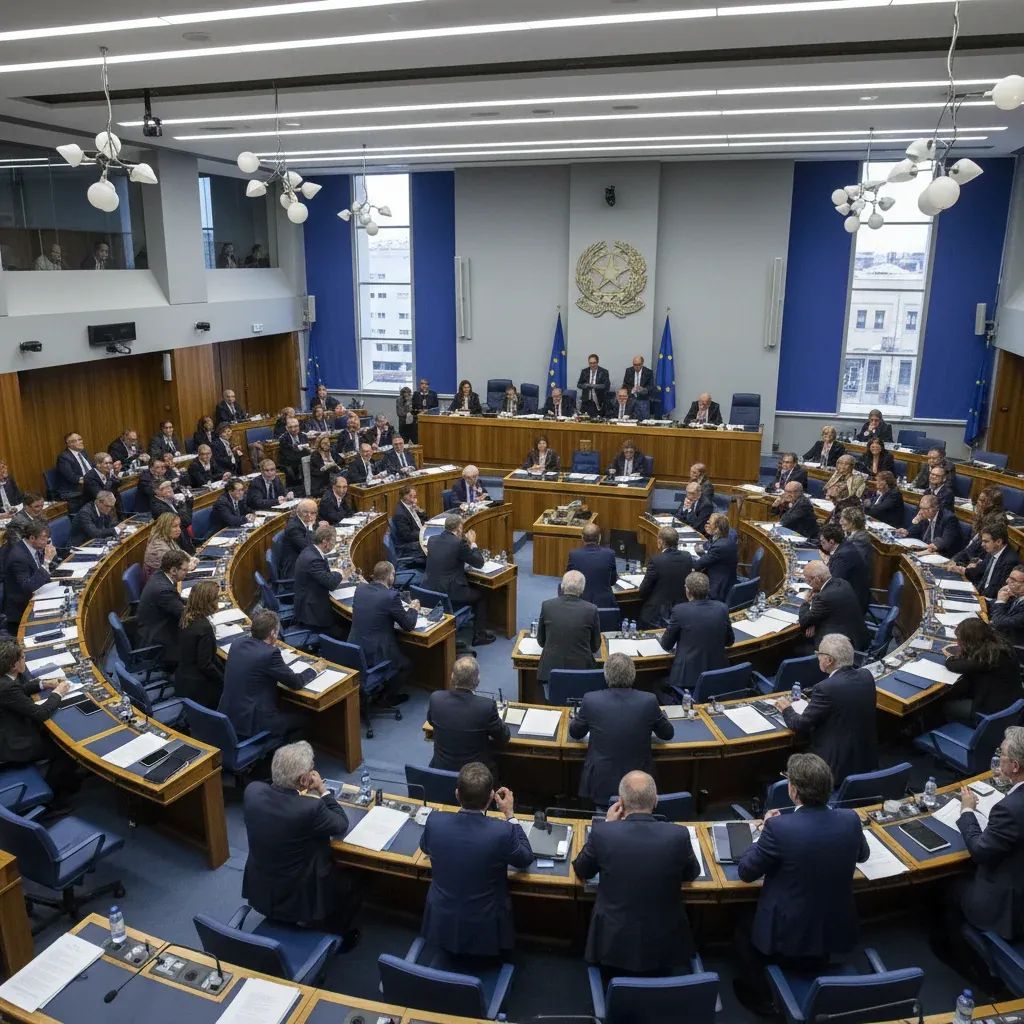
Italy's Più Europa party is locked in a governance standoff after a simple majority of its assembly voted to dissolve the leadership and convene an early congress—only to have the assembly president declare the motion invalid. The clash, which played out over the weekend, lays bare internal fractures over strategy, alliances, and party rules just months before critical electoral tests.
Why This Matters
• Dueling authorities: Despite 52 assembly members (out of 100) backing a reset motion, statutory rules require a two-thirds supermajority to force an early congress through a no-confidence vote.
• Leadership stays put: Secretary Riccardo Magi, recently elected to a three-year mandate, has rebuffed calls for a snap congress, insisting conditions for an extraordinary session do not exist.
• Revision on the table: Magi announced an immediate review of congress rules, which critics across the party's internal factions have called inadequate, signaling potential reforms ahead of the next electoral cycle.
A Motion Passed, Then Blocked
The motion, co-sponsored by Matteo Hallissey, the party president, and Benedetto Della Vedova, a senior figure in the party's liberal wing, called for the dissolution of the secretary's team and a new party congress to reset direction. It secured approval from a simple majority—52 votes—in an assembly session held today.
Within hours, however, Agnese Balducci, the assembly president, ruled the motion "not legitimate." According to Più Europa's statutes, an extraordinary congress can only be triggered by the secretary's resignation, death, incapacity, or a two-thirds no-confidence vote by the assembly. None of those circumstances apply. The regular congress cycle runs every three years, meaning the next scheduled congress would not fall until early 2028, following Magi's election mandate.
The ruling has created a procedural impasse: a majority of the assembly expressed a desire for change, but the party's constitutional architecture prevents that desire from translating into action.
What Magi Says—And What He Won't Do
In a statement released shortly after the vote, Magi framed the internal turbulence as "vivid and articulated debate" typical of democratic parties, particularly in the run-up to elections. He emphasized his intention to "listen to all positions and transform them into an element of political strengthening," language that suggests a conciliatory posture without yielding substantive control.
Magi was clear on one point: "Currently, the conditions for convening an extraordinary congress do not exist." He cited the same statutory framework invoked by Balducci—specifically, the absence of resignation or a qualified majority no-confidence motion.
Yet he did not dismiss the assembly's signal entirely. Magi pledged to "gather the invitation" from the body and develop internal tools to "enhance dialogue and reach clear synthesis on political alliances, agenda, and rules" in preparation for upcoming challenges, electoral and otherwise. He also committed to launching a review of congress regulations, which he acknowledged are viewed by many inside the party as outdated or insufficient.
What This Means for Residents
For observers tracking Italy's fragmented liberal and pro-European political space, this episode underscores the fragility of smaller parties navigating both ideological coherence and coalition arithmetic. Più Europa, which has positioned itself as staunchly federalist and pro-rule-of-law, has struggled to translate that clarity into electoral breakthrough. Its "Stati Uniti d'Europa" list failed to clear the 4% threshold in the 2024 European elections, a disappointment that still reverberates.
The current standoff reflects deeper tensions over alliance strategy. Just last month, in March 2026, the party's decision to invite Giuseppe Conte, leader of the populist Five Star Movement, to a Più Europa convention sparked internal uproar. Critics questioned whether forging ties with parties lukewarm on EU integration or Ukraine support risked diluting the party's core brand. That debate has not been resolved, and today's motion may be read, in part, as a proxy for broader frustration over the party's direction.
For expatriates and Italians considering which party to support in upcoming elections, understanding Più Europa's internal dynamics matters because this is one of the few parties explicitly advocating for stronger EU integration and rule of law—issues that directly affect visa policies, cross-border mobility, and EU-level protections that many residents rely on. The internal chaos raises questions about Più Europa's ability to stabilize, build alliances, and compete effectively to deliver on those commitments. The party's emphasis on "a federal Europe," direct election of the Commission president, and transnational electoral lists—all outlined in its "Una generazione avanti" platform—remains substantively distinct from larger center-left or center-right formations. But that platform requires a functional party apparatus to deliver results.
A Pattern of Internal Strife
This is far from Più Europa's first governance crisis. Since 2019, every party congress has been shadowed by accusations of irregular membership drives, with critics alleging that blocs of memberships were registered en masse to tilt internal power balances. The most notorious incident occurred in late 2024, when roughly 1,900 people—many from the Naples suburbs of Giugliano and Afragola—joined the party within days, just ahead of a major congress. The surge generated 61 delegates from a so-called "Campania faction," fundamentally reshaping the congress arithmetic.
Though a guarantee commission ruled the registrations formally compliant with party rules, the controversy prompted statute changes extending the window to contest memberships from two to six months. Critics interpreted the reform as either retrospective legitimation or future obstruction.
In December 2025, an assembly session degenerated into chaos, according to multiple accounts, with reports of physical altercations and members allegedly prevented from participating. The session's agenda centered on the suspension or expulsion of six internal opposition figures over allegedly irregular registrations—a move widely viewed as political purge dressed in procedural language. That episode, too, left wounds unhealed.
Following that congress, the party also extended the interval between regular congresses from two years to three and lowered certain decision thresholds from qualified to absolute majorities—reforms that dissidents argued entrenched the leadership's grip.
The Road Ahead
Magi's pledge to review congress rules suggests the party may attempt to update its internal governance framework before the next electoral test. Whether that review leads to genuine democratization or further consolidation will depend on how transparent the process is and whether opposition factions secure meaningful input.
For now, the immediate standoff is resolved by procedure: Balducci's ruling stands, Magi remains secretary, and the assembly's majority voice is symbolically acknowledged but legally inert. The party's statutes, designed to provide stability, have instead become a flashpoint—proof that constitutional architecture can freeze conflict rather than resolve it.
What remains unresolved is the underlying question: Can Più Europa reconcile its federalist ideals with the compromises required to build winning coalitions? The assembly's vote, however procedurally imperfect, signals that a significant faction within the party believes the current leadership has not answered that question convincingly. And absent a two-thirds supermajority willing to force the issue, that dissatisfaction will simmer beneath the surface—at least until 2028, or until someone resigns.


