
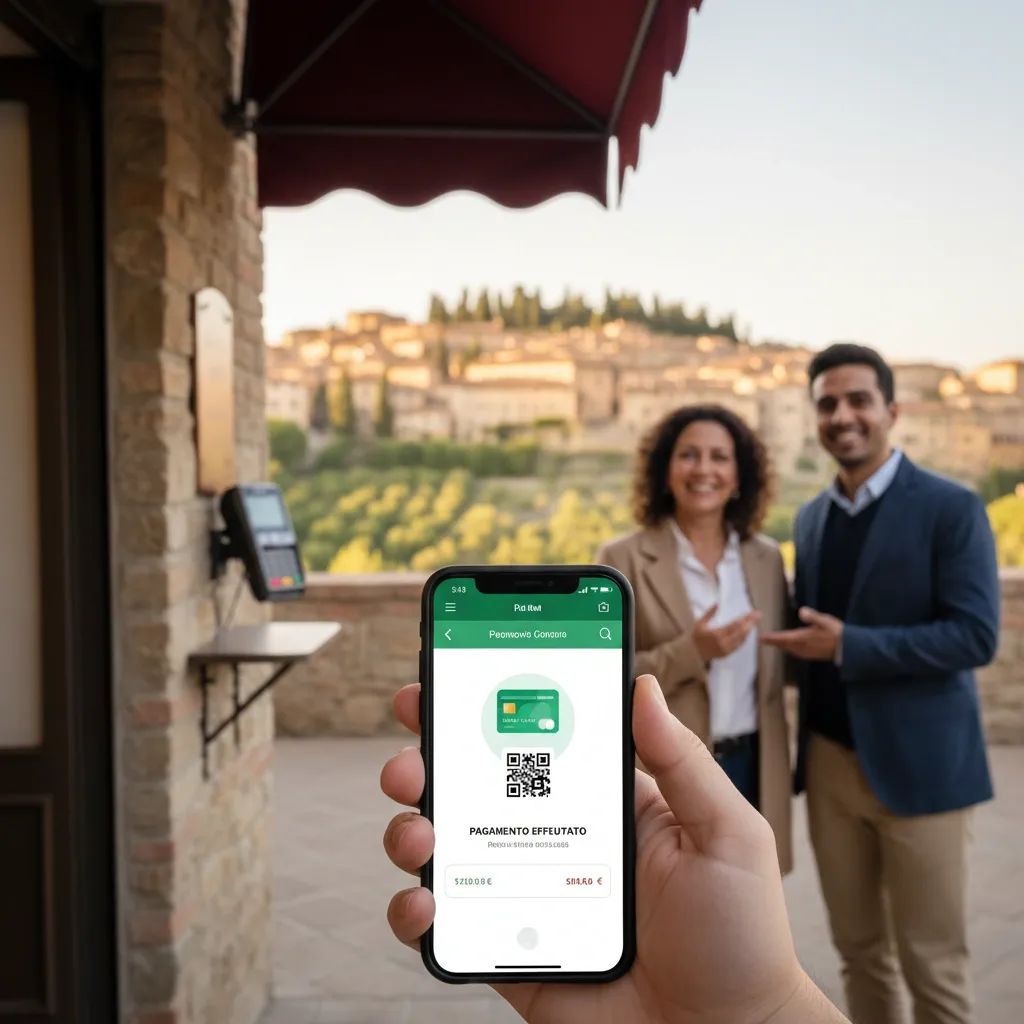
Iliad, the telecommunications giant that disrupted Italy's mobile market, is now bringing its low-cost, no-frills model to digital payments. The company has officially launched Stancer—its French-born fintech subsidiary—across Italy, targeting the country's vast network of small businesses, freelancers, and online merchants with a promise to undercut incumbents on price and simplicity.
Stancer's Italian debut marks the payment platform's first international expansion, positioning the country as a testing ground for a broader European rollout. Alberto Rescigno, the unit's Italy chief, will oversee operations as the firm attempts to replicate Iliad's telecom playbook: transparent pricing, no long-term contracts, and a direct challenge to legacy players bogged down by fixed fees and complex terms.
Why This Matters
• SME-focused alternative: Stancer eliminates monthly fees and binding contracts, appealing to businesses with irregular or seasonal revenue streams—a hallmark of Italy's retail and hospitality sectors.
• Data sovereignty: All payment data stays within European data centers, ensuring full GDPR compliance and avoiding the cross-border data flows that concern some merchants.
• Scale and capacity: The platform already processes over 250,000 transactions daily, handles 7.6 M recurring subscription payments monthly, and channels €1.7 billion annually for clients, mostly in France.
Built for Italy's Micro-Business Economy
Italy's business landscape is overwhelmingly small-scale: 99.9% of non-financial firms are classified as SMEs, and many operate on tight margins with fluctuating cash flow. Traditional payment processors—banks like UniCredit with its PagOnline gateway, or Banca Sella's Gestpay—typically bundle services with fixed monthly charges, multi-year commitments, or tiered pricing that penalizes low-volume merchants. These incumbent providers often charge between 1.5–3% per transaction plus monthly gateway fees, making them expensive for businesses processing fewer payments during off-season months.
Stancer's pitch is the opposite: variable-only pricing tied to transaction volume with per-transaction rates typically ranging from 1.2–2.8% depending on business category—undercutting traditional processors on cost while eliminating monthly overhead. The onboarding process the company describes as "simplified," and merchants get a single dashboard for managing online checkouts, payment links, and in-person "Tap to Pay" via smartphone—no dedicated terminal required. That smartphone-based point-of-sale capability, known as SoftPOS, is gaining traction among micro-retailers and market vendors who lack the capital or transaction volume to justify leasing traditional card readers.
"The current offers are designed for large operators, based on fixed commissions and long-term contracts, poorly suited to turnover volumes that can be irregular or linked to seasonality," Rescigno noted in the launch statement. "Stancer provides an alternative, with flexible, simple, and transparent services that respond concretely and effectively to the needs of the Italian business fabric."
Competing in a Crowded Field
Stancer enters a market already populated by entrenched domestic players and global platforms. Nexi, Italy's largest payments processor, commands significant share among brick-and-mortar merchants and has deep bank relationships. PayPal remains the go-to for e-commerce, embedded in the checkout flow of most Italian online shops and holding pole position among digital wallets. Stripe appeals to tech-savvy startups with customizable APIs, while Adyen serves enterprise clients seeking multi-currency, omnichannel solutions.
Italian consumers, meanwhile, have embraced alternative payment methods with enthusiasm. Satispay, a homegrown mobile payment app, has carved out a niche among younger users. PostePay prepaid cards—issued by Poste Italiane—are ubiquitous, especially among those without traditional bank accounts. BANCOMAT Pay and MyBank, which enable instant bank transfers, round out an increasingly diverse payments ecosystem.
Adding to the competitive pressure, international fintech rankings increasingly favor digital-native providers. UK-based Revolut has gained significant traction in Italy, ahead of digital-first domestic institutions like Fineco and Banca Mediolanum. The message is clear: Italian consumers and businesses reward simplicity, speed, and digital-native design—attributes Stancer hopes to leverage.
What This Means for Merchants and Freelancers
For Italy-based businesses evaluating payment providers, Stancer's model offers three potential advantages over incumbents:
Cost flexibility: Without fixed monthly fees or minimum-transaction thresholds, businesses that process few cards in lean months avoid paying for unused capacity. For a freelancer processing just 10–15 payments monthly, this structure eliminates overhead that traditional processors charge regardless of volume. This is particularly relevant for seasonal tourism operators, artisans selling at periodic markets, or freelancers billing occasionally via credit card.
Regulatory alignment: Stancer's infrastructure runs on Iliad Group data centers located in Europe, meaning payment data never leaves EU jurisdiction. This matters in the wake of tightening cross-border data-transfer scrutiny and provides a compliance edge for merchants wary of non-EU processors.
Integrated omnichannel: The platform combines online checkout modules, shareable payment links (useful for invoicing or social-media sales), and smartphone-based tap-to-pay. Merchants operating both a physical shop and an Instagram storefront, for example, can route all transactions through one back-end.
However, adopting any new payment provider carries switching costs. Merchants with existing integrations—especially those using e-commerce platforms like Shopify or WooCommerce—will need to assess plugin availability and API documentation. Prospective users should request formal quotes to compare Stancer's exact rates against their current provider, as pricing varies by merchant category and transaction profile.
Timing and Market Context
Stancer's arrival coincides with a recently enacted legislative push to digitize and formalize Italy's economy. Since January 2026, Italian law mandates that all point-of-sale terminals connect to electronic cash registers, linking fiscal receipts to card payments in real time. The regulation aims to close VAT-evasion loopholes by creating an auditable trail from transaction to tax filing.
That requirement accelerates the shift away from cash and creates an opening for new entrants offering integrated, compliance-ready solutions. Traditional banks are responding with their own digital investments: Italian financial institutions plan to spend roughly €1 billion over 2025–2026 on web-mobile platforms, artificial intelligence, and cloud infrastructure, according to industry surveys. Yet many still operate on legacy core-banking systems ill-suited to rapid product iteration, giving nimble fintechs a window to capture market share.
Meanwhile, Iliad's broader European strategy is coming into focus. The group acquired a 19.8% stake in Tele2 in 2024, extending its mobile footprint to Sweden, Estonia, Latvia, and Lithuania, and has declared an ambition to rank among Europe's top five telecom operators. Expanding Stancer beyond Italy—into Poland, the Nordics, or other markets where Iliad already has infrastructure and brand recognition—appears to be the logical next step, though no timeline has been confirmed.
Rollout Plans and Partnerships
Stancer's initial strategy centers on digital acquisition and targeted local partnerships. The company has signaled intent to collaborate with banks, trade associations, technology platforms, and other payment-ecosystem stakeholders to build distribution channels and credibility. In practice, this could mean white-label integrations with regional banks looking to offer merchant-acquiring services without building the tech stack in-house, or co-marketing deals with business-software providers serving Italy's SME segment.
The choice of Italy as the launchpad is strategic. The market combines large scale—60 M residents, millions of VAT-registered businesses—with relatively low payment-processor concentration outside the top tier, creating room for a challenger brand. And Iliad's telecom experience offers lessons in customer acquisition: the company famously grew its Italian mobile base by advertising transparent pricing and no-haggle terms, a narrative Stancer is now repackaging for payments.
Whether that formula translates remains to be seen. Payments infrastructure is more complex than mobile plans, with fraud risk, chargebacks, regulatory capital requirements, and the need to maintain 24/7 uptime. Iliad's backing provides capital and credibility, but Stancer will still need to prove it can match the reliability and support networks that incumbents have spent decades building.
For now, Italian merchants have a new option on the table—one that promises to strip out the fine print and align costs with actual usage. Whether Stancer becomes a household name or remains a niche alternative will depend on execution, pricing discipline, and the willingness of small businesses to trust a newcomer with their cash flow.


