
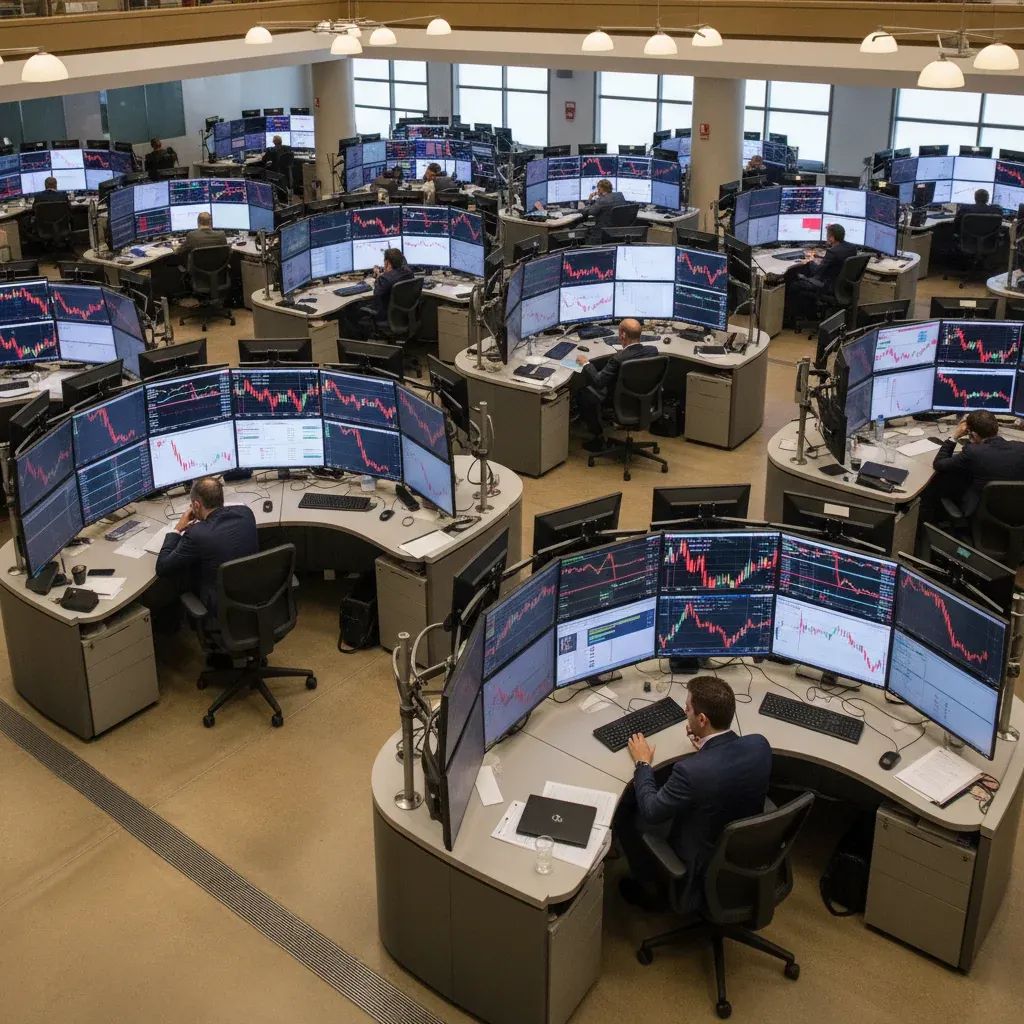
Italy's major stock indices opened modestly higher as investors digest conflicting signals from the Middle East, where Iran publicly denies negotiating with the United States over access to the Strait of Hormuz even as diplomatic sources suggest a breakthrough may be imminent. The cautious optimism in Milan reflects a broader European pattern, with energy security concerns competing against hopes for de-escalation in one of the world's most critical commercial chokepoints.
Why This Matters
• Energy costs: Any agreement on Hormuz transit could stabilize oil prices and prevent further inflation spikes affecting European and Italian households and businesses.
• Portfolio exposure: Italian banks like BPER are reporting earnings today, and the technology selloff in Asia could ripple through Europe's financial sector.
• Supply chain risk: Prolonged disruption at Hormuz threatens carriage of diesel and jet fuel—products Southern European importers source heavily from Gulf refineries.
Diverging Messages from Tehran
Diplomats across Europe are monitoring closely as the White House signals confidence in reaching a deal "within days" to restore commercial shipping through the strait, which handles 25% of global seaborne oil trade. US Treasury Secretary Scott Bessent has publicly expressed optimism about an imminent resolution.
Yet Iran's Foreign Ministry flatly denies any direct talks with Washington, instead confirming only that it is negotiating with Oman to establish a temporary navigation corridor lasting 2-4 months. Under the proposed arrangement, inbound vessels would use waters closer to the Iranian coast, while outbound traffic would pass through Omani-controlled lanes. Tehran insists the plan does not constitute a return to pre-crisis conditions and that full reopening depends on the absence of "third-party interference"—a clear reference to US naval presence.
The Omani mediation is reportedly down to "one or two" unresolved technical issues, raising the possibility of a partial reopening that could ease immediate supply concerns without addressing the underlying geopolitical standoff.
European Markets Navigate Dual Headwinds
On the Milan bourse, the FTSE MIB has climbed to historic highs above 53,600 points in early August, buoyed by strong performance in banking, defense, and energy stocks. The broader European market picture shows resilience tempered by caution, with investors waiting for concrete news before committing fresh capital.
More than 30 companies across major European indices are reporting quarterly results today, including BPER Banca, Germany's Commerzbank, and Switzerland's Swisscom. The earnings reports will test whether European financial and telecom firms can sustain momentum amid slowing growth and persistent inflation running near 3%.
Energy security remains a key concern for European policymakers. Any disruption at Hormuz could force liquefied natural gas tankers to reroute around Africa, adding two weeks and substantial freight costs to each shipment—expenses that would ultimately reach European households and industries dependent on imported fuel.
Asia's Chip Selloff Casts Shadow Over Tech Sector
European markets opened against a backdrop of heavy losses across Asian technology bourses, where semiconductor stocks suffered their worst session in months. South Korea's Kospi index—a bellwether for AI and memory chip producers—plunged 4.8%, dragged down by SK Hynix (-7.2%) and Samsung Electronics (-4.5%). Tokyo's Nikkei 225 shed nearly 1%, with memory manufacturer Kioxia tumbling 9.7%.
The selloff reflects mounting investor anxiety over whether the current AI infrastructure boom can justify the sector's elevated valuations. Global semiconductor capital expenditure is estimated at $800B this year, yet revenue growth is being driven more by rising prices than by proportional increases in production volume. High-bandwidth memory (HBM) chips used in AI servers are prioritized by manufacturers, creating shortages in conventional integrated circuits and squeezing margins elsewhere.
Adding to the uncertainty, a Chinese state-backed firm has begun mass production of deep ultraviolet lithography machines—technology previously monopolized by Netherlands-based ASML—intensifying competitive pressure and raising questions about Western export controls.
Gold, the traditional haven asset, surged 2.3% to $4,257 per troy ounce, its highest level since June, signaling that institutional investors are hedging against both geopolitical risk and potential earnings disappointments.
What This Means for Italian Investors and Businesses
For Italian equity investors, the immediate risk is contagion from the semiconductor correction. While Italy's economy is less exposed to chip manufacturing than Germany or the Netherlands, the technology sector represents a significant portion of European equity indices. A sustained downturn in semiconductors would pull down diversified portfolios and could prompt defensive rotation into utilities and consumer staples.
Energy-intensive industries across Europe—including manufacturing sectors in industrial regions and energy-dependent supply chains—face renewed input cost pressure if Hormuz negotiations collapse. Diesel prices, already elevated, could spike further. Logistics sectors across Europe are particularly vulnerable: any prolonged disruption could force flight disruptions during peak summer travel season, potentially affecting tourism revenues.
On the policy front, the European Commission has flagged energy market stress as a concern for growth forecasts. New EU-US trade regulations took effect in July, eliminating European tariffs on US industrial goods and granting preferential access for American agricultural products. However, the Trump administration simultaneously imposed 10-12.5% tariffs on imports from 60 countries, including several EU member states, citing forced labor concerns. This fragmented trade environment leaves European exporters, including Italian firms, navigating conflicting incentives and regulatory frameworks.
Outlook Hinges on Diplomatic Breakthrough
Markets are monitoring Hormuz negotiations closely. If Iran and Oman finalize the temporary corridor and commercial traffic resumes—even partially—oil prices could retreat toward $80 per barrel, relieving pressure on European inflation and supporting the European Central Bank's case for further rate cuts.
Failure to reach agreement would likely trigger a fresh wave of risk aversion. Alternative pipeline routes, including the dormant Iraq-Syria line and Saudi Arabia's Red Sea export terminal, can handle only a fraction of Hormuz volumes.
For now, European and Italian investors are watching two parallel narratives: the diplomatic chess game in the Gulf and the quarterly earnings parade in Europe. Both will shape market direction through the remainder of August, with energy security and corporate resilience serving as key pillars of portfolio strategy.


