
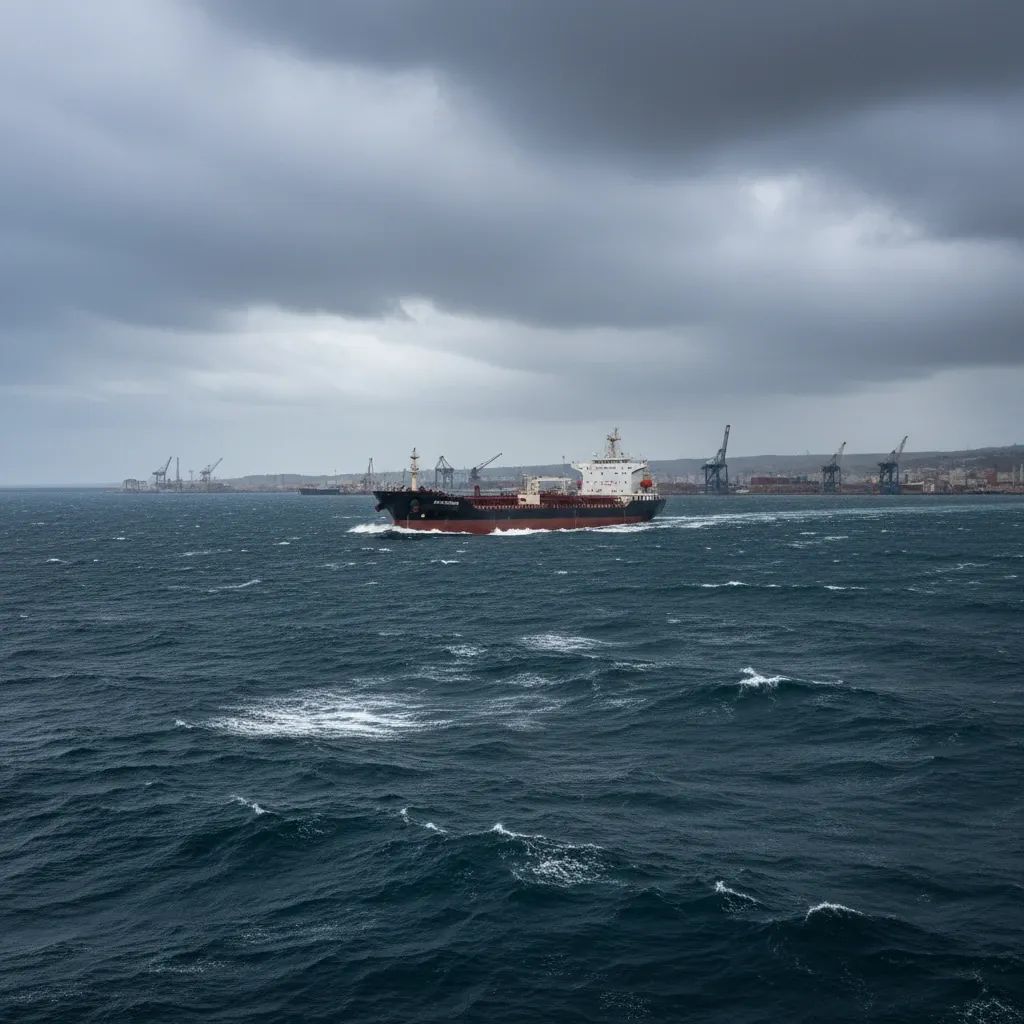
The Italian Ministry of Economy and Finance is tracking crude prices as Brent holds above $100 per barrel this morning, a threshold that signals continued pressure on Italian households and businesses already grappling with inflation. Meanwhile, European equity markets opened cautiously, with Milan's Piazza Affari showing mixed signals and the broader continental indices slipping into modest losses as investors digest the ongoing energy crisis.
Why This Matters:
• Energy costs: Brent crude at $102.9 translates to sustained pump price strain—Italian families face an estimated €1,500–€1,700 extra annually on fuel.
• Market volatility: Asian equities closed lower overnight, and European futures remain uncertain as the Persian Gulf standoff shows no signs of resolution.
• STMicroelectronics rally: The Franco-Italian chipmaker surged 9% in early Milan trading following strong quarterly results—a rare bright spot.
The Gulf Crisis Pressures Markets
North Sea Brent crude opened at $102.9 per barrel, up 0.95%, while the US benchmark West Texas Intermediate (WTI) climbed 1% to $93.9. These figures represent a slight deceleration from overnight gains but remain well above the psychological $100 threshold, a level not seen since early 2022. The sustained elevation reflects ongoing concerns about global energy security.
The Strait of Hormuz remains effectively closed following geopolitical tensions. Daily losses now total approximately 11 million barrels of crude and petroleum products—more than 10% of global consumption—alongside 300 million cubic meters of LNG.
Italy's Specific Energy Vulnerabilities
Italy imports roughly 85% of its crude oil, with significant volumes historically flowing through the Strait of Hormuz. While Italy has diversified suppliers following the 2022 Ukraine crisis, reducing dependence on Russian gas by shifting toward North African, Norwegian, and US suppliers, the country remains exposed to Persian Gulf disruptions. Approximately 40% of Italy's refined petroleum products traditionally source from Gulf refineries, making the current standoff particularly consequential for Italian consumers and industry.
Strategic energy reserves are lower than optimal, and competition for spot LNG cargoes is driving up import costs. The cascading effect hits Italian manufacturers, particularly in energy-intensive sectors like steel, ceramics, and chemicals.
Milan Opens Mixed as Europe Stumbles
European equity markets opened hesitantly, with Madrid's IBEX 35 leading declines at -0.8% and London's FTSE 100 shedding 0.5%. Frankfurt's DAX and Amsterdam's AEX both slipped around half a percentage point, while Paris bucked the trend with a modest 0.1% gain. Italian indices showed similar fragility, though one standout defied the gloom.
STMicroelectronics, the Geneva-headquartered semiconductor giant with significant Italian operations, surged as much as 9% to €40.8 in early Piazza Affari trading. The rally followed first-quarter results showing 23% revenue growth to $3.09 billion and gross profit up 24.3%. The performance underscores resilient demand for chips powering artificial intelligence applications, even as broader industrial sentiment weakens under energy cost pressure.
What This Means for Italian Consumers and Businesses
Italy's economic planners are watching crude price movements closely. With Brent holding above $100, Italian pump prices remain elevated, adding approximately €0.15–€0.20 per liter compared to February levels. For a household consuming 1,200 liters annually, that equates to the €1,500–€1,700 annual increase flagged by consumer groups.
Beyond the pump, the energy shock cascades through supply chains. The European Central Bank warned in March that eurozone inflation could hit 3.1% in the second quarter, driven primarily by energy price surges. Italy's inflation trajectory mirrors this, with energy inflation jumping 5.1% year-on-year in March—the sharpest monthly spike since February 2023.
Airlines are feeling acute pressure. Roughly 43% of Europe's jet fuel originates from Gulf refineries, and several airports have issued shortage warnings. Italy's tourism sector, a pillar of the national economy, faces a squeeze as carriers contemplate fuel surcharges or route reductions during the crucial summer season.
Asian Markets Close Lower, Tokyo Slips After Record
Overnight, Asian equity indices reflected the same unease. The Tokyo Nikkei 225 closed down 0.75% at 59,140.23 points, shedding 445 points after briefly surpassing the historic 60,000 threshold for the first time. Profit-taking dominated as traders digested broader market concerns.
Hong Kong's Hang Seng fell 0.8%, and mainland Chinese indices tracked similar losses. Seoul's KOSPI bucked the trend, rising 0.7% on strength in technology stocks benefiting from artificial intelligence demand. Sydney's ASX 200 closed down 0.5%.
Currency markets remained subdued: the Japanese yen traded at 159.60 per dollar and 186.80 per euro, showing minimal movement. The euro held steady at $1.1704, virtually unchanged from the previous close, though it edged 0.06% higher against the yen.
Commodities and Fixed Income: Gold Dips, Spreads Widen
Gold retreated slightly, with spot prices down 0.5% to $4,715.5 per ounce and the June futures contract slipping 0.48% to $4,730.1. The modest pullback suggests investors are rotating toward energy hedges rather than traditional safe havens.
On the Amsterdam TTF exchange, Europe's natural gas benchmark, the May futures contract jumped 3.3% to open at €45 per megawatt-hour. The rally reflects fears that the Gulf crisis could tighten global LNG supply.
Italian sovereign debt showed stress signals. The spread between 10-year Italian BTPs and German Bunds widened to 79 basis points from 77.5 at the previous close. The BTP yield climbed to 3.82%, reflecting investor caution about Italy's fiscal position in a stagflationary environment.
Italy's Policy Response and What Residents Can Do
The European Commission is drafting emergency measures, including short-term bill relief mechanisms and accelerated renewable energy deployment. The Italian Ministry of Ecological Transition has urged accelerated permitting for renewable projects and energy efficiency upgrades, framing the Gulf crisis as validation of the green transition strategy.
For residents facing higher fuel costs, consider these practical alternatives:
• Public transport: Regional train passes and city transit subscriptions often provide savings during price spikes
• Fuel efficiency: Carpooling, reducing unnecessary trips, and maintaining vehicle maintenance can lower consumption
• Government relief: Watch for announcements from the Italian government regarding consumer fuel assistance or tax adjustments
• Alternative energy: For home heating, explore local renewable energy incentive programs
The combination of elevated crude prices, equity market volatility, and inflationary pressures places Italy in a balancing act—managing growth expectations while containing the fiscal and consumer fallout from an energy shock beyond Rome's control. Unless diplomatic breakthroughs materialize, Italian consumers and industry face sustained higher energy costs through the summer season.


