
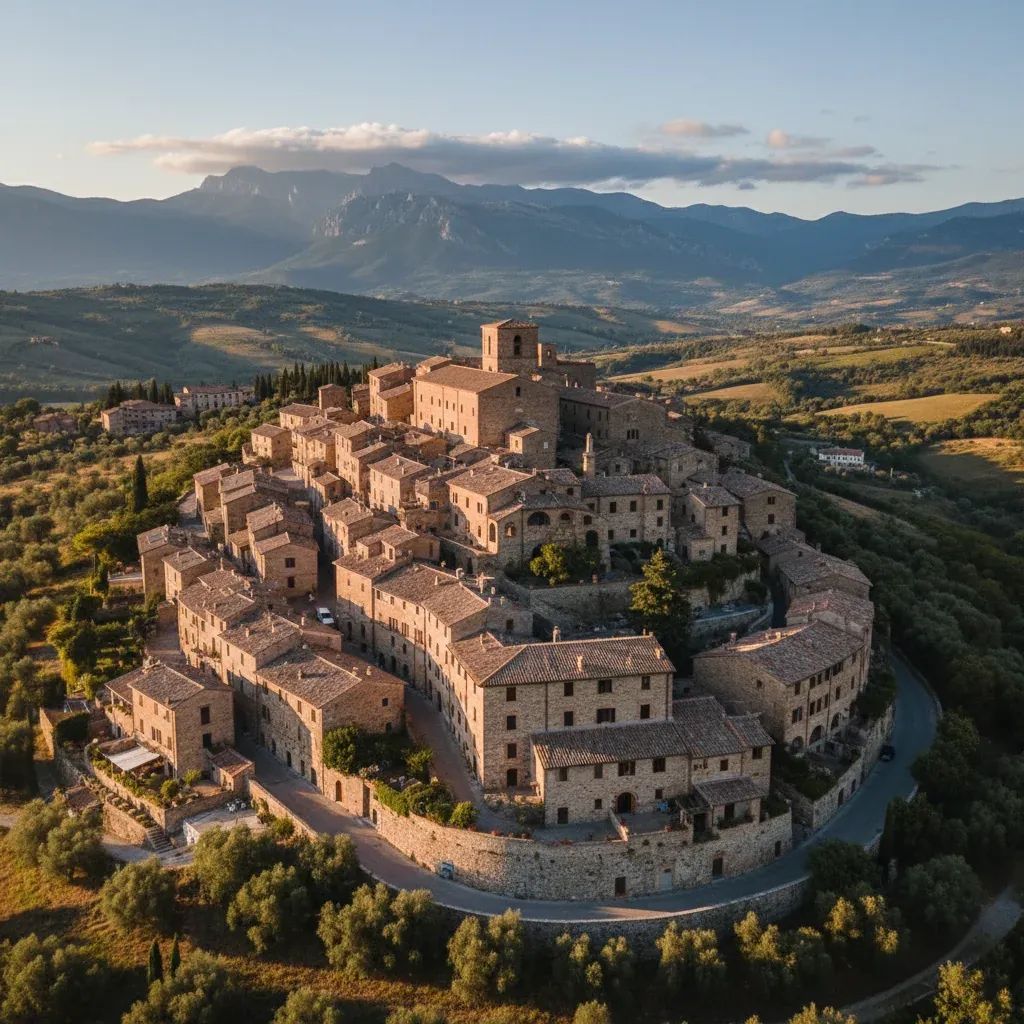
Italy's Open Fiber has wrapped up ultra-broadband deployment across 116 municipalities spanning the Salento peninsula – the southeastern heel of Puglia – a move that theoretically gives more than 213,000 addresses access to gigabit-speed internet, yet fewer than a third of those eligible are actually signing up.
Why This Matters
• Coverage complete: FTTH (Fiber-to-the-Home) infrastructure now reaches 213,000+ addresses across Brindisi, Lecce, and Taranto provinces, funded by EU recovery cash (PNRR).
• Low take-up persists: Despite the infrastructure being live, adoption rates remain around 30% – below the EU average of 55% – meaning most residents still use slower copper or mixed networks.
• Price parity overlooked: Fiber packages often cost the same as outdated ADSL or copper hybrid plans, yet households don't perceive the upgrade as urgent.
• Next-phase risk: National delays have already trimmed 700,000 addresses from Open Fiber's 2026 target, raising questions about funding continuity beyond mid-year deadlines.
The fiber rollout is part of the "Piano Italia a 1 Giga," a €3.86 billion PNRR-backed program designed to bring at least 1 Gbit/s download and 200 Mbit/s upload speeds to roughly 3.4 M under-served addresses nationwide by June 2026. In Salento, the bulk of the network uses FTTH technology, which threads optical cable directly into buildings, while a small share relies on FWA (Fixed Wireless Access) for hard-to-reach hamlets and rural zones.
What Open Fiber Has Built in the South
The Salento footprint adds to an earlier round of work under the Piano BUL (Banda Ultra Larga), which had already lit up 51,000 properties in the same three provinces. Taken together, the two programs now serve more than 264,000 addresses in what were once classified as "market-failure areas" – places where private telecoms refused to invest because population density made the business case unattractive.
Across the wider Puglia region, Open Fiber has cabled 74,000+ addresses in 63 municipalities as of late 2024, and by February 2026 the company reported finishing work in 46 towns in the Bari and Barletta–Andria–Trani provinces, covering another 58,000 addresses (more than 100,000 dwelling units). The combined regional tally now exceeds 270,000 live connections, with the technology stack split between FTTH and FWA depending on terrain.
At the national level, Open Fiber has laid 34,900 kilometers of fiber backbone for the Piano Italia a 1 Giga and switched on 1.11 M FTTH addresses and 137,000 FWA points as of January 31, 2026, completing infrastructure in 873 municipalities and making 1.54 M units available for retail sale by internet service providers.
Impact on Residents and Businesses
For households and small firms in Salento, the new fiber unlocks speeds up to 2.5 Gbit/s symmetric – enough headroom for simultaneous 4K streaming, cloud backup, video conferencing, and IoT devices without congestion. FTTH also delivers lower latency (under 10 milliseconds versus 30–50 ms for copper), which matters for online gaming, telemedicine consultations, and real-time collaboration tools used by remote workers.
On the enterprise side, studies estimate that every euro spent on ultra-broadband in white-zone municipalities generates €4.40 in GDP, driven by productivity gains, digital-service adoption, and reduced operational friction. Nationwide, the BUL program has contributed roughly 1% of total GDP in covered communes and 7.8% of the Information & Communication sector's output, translating to approximately 343,000 jobs created or supported over the program's life cycle.
Fiber infrastructure also carries environmental and maintenance advantages: optical cable consumes less power than copper, is immune to electrical interference, and requires fewer repair call-outs. For municipalities, high-capacity connectivity enables e-government platforms, cloud-based document management, smart street lighting, video surveillance with AI analytics, and telehealth hubs – all of which reduce per-capita service costs and help stem depopulation in smaller towns.
The Adoption Gap
Despite wall-to-wall availability in 116 Salento communes, actual subscription rates hover near 30%, in line with the national average but well short of the 54.9% EU benchmark. Valeria Carrozzo, Open Fiber's head of institutional affairs for Puglia, framed take-up as the critical next challenge: "The network is a consolidated reality, but getting people to switch from legacy copper to fiber remains the priority. Adoption means more stable, performant, and sustainable connections."
Several friction points explain the lag:
1. Lack of perceived value – Many households see their existing ADSL or fiber-to-the-cabinet (FTTC) link as "good enough" for email and streaming, even when fiber costs roughly the same.
2. Migration complexity – Switching operators or technology often involves weeks-long waits, coordination snags between wholesale network owners (Open Fiber) and retail ISPs, and occasional administrative errors that leave customers in limbo.
3. Digital literacy – Older residents and micro-businesses may not understand the difference between FTTH and FTTC, or how to verify which technology serves their address.
4. Infrastructure overlap – In some Salento towns, both Open Fiber (publicly funded) and FiberCop (TIM's commercial arm) have laid cable, creating confusion over which network offers the best deal.
5. Voucher under-utilization – The Italian government set aside subsidies to help SMEs cover activation costs for 1 Gbit/s plans, yet awareness campaigns remain patchy at the municipal level.
Other Italian regions have tackled similar bottlenecks through local-operator partnerships (for example, Open Fiber's November 2024 deal with Clio Fiber in Salento to reuse existing ducts and speed deployment), targeted awareness drives in town halls, and bundled public-service incentives – such as free gigabit connectivity for five years in the 183 earthquake-affected communes of Abruzzo, Lazio, Marche, and Umbria.
National Timeline Under Pressure
The Piano Italia a 1 Giga originally aimed to cover 2.2 M addresses assigned to Open Fiber by June 30, 2026. In September 2025, however, the Italy Cabinet agreed with the European Commission to cut the perimeter by 155,000 addresses and defer another 700,000 until 2030, salvaging roughly €700 M in PNRR funds that would otherwise have been forfeited for non-compliance. The trimmed addresses will likely be re-tendered under a new "Fondo Nazionale Connettività" or folded into subsequent procurement rounds.
For Salento residents, the immediate takeaway is that infrastructure in the 116 completed municipalities will remain operational and service-ready regardless of broader timeline shifts. The risk lies in future phases: smaller hamlets not yet cabled may face longer waits if national funding is re-allocated or if Open Fiber prioritizes denser urban clusters to meet revised milestones.
What Comes Next
Open Fiber and retail ISPs – including TIM, Vodafone, Fastweb, and regional players like Fibra Salento – are now focused on converting coverage into contracts. Industry observers point to three levers:
• Transparent speed labeling – Requiring ISPs to specify whether an offer runs over FTTH, FTTC, or ADSL so customers can compare apples to apples.
• Simplified switching – Streamlining the hand-off between network operators and service providers to cut activation times from weeks to days.
• Municipal digital champions – Training local officials to evangelize fiber benefits during town-hall meetings, business forums, and school parent associations.
For people living in Salento, the fiber backbone is already beneath the street or mounted on poles; the final meter – from cabinet to living room – hinges on whether enough neighbors decide the upgrade is worth a phone call to their ISP. With Italy's national take-up rate trailing the EU average by nearly 25 percentage points, closing that gap will determine whether billions in recovery funding deliver lasting productivity gains or simply light up idle cables.


