
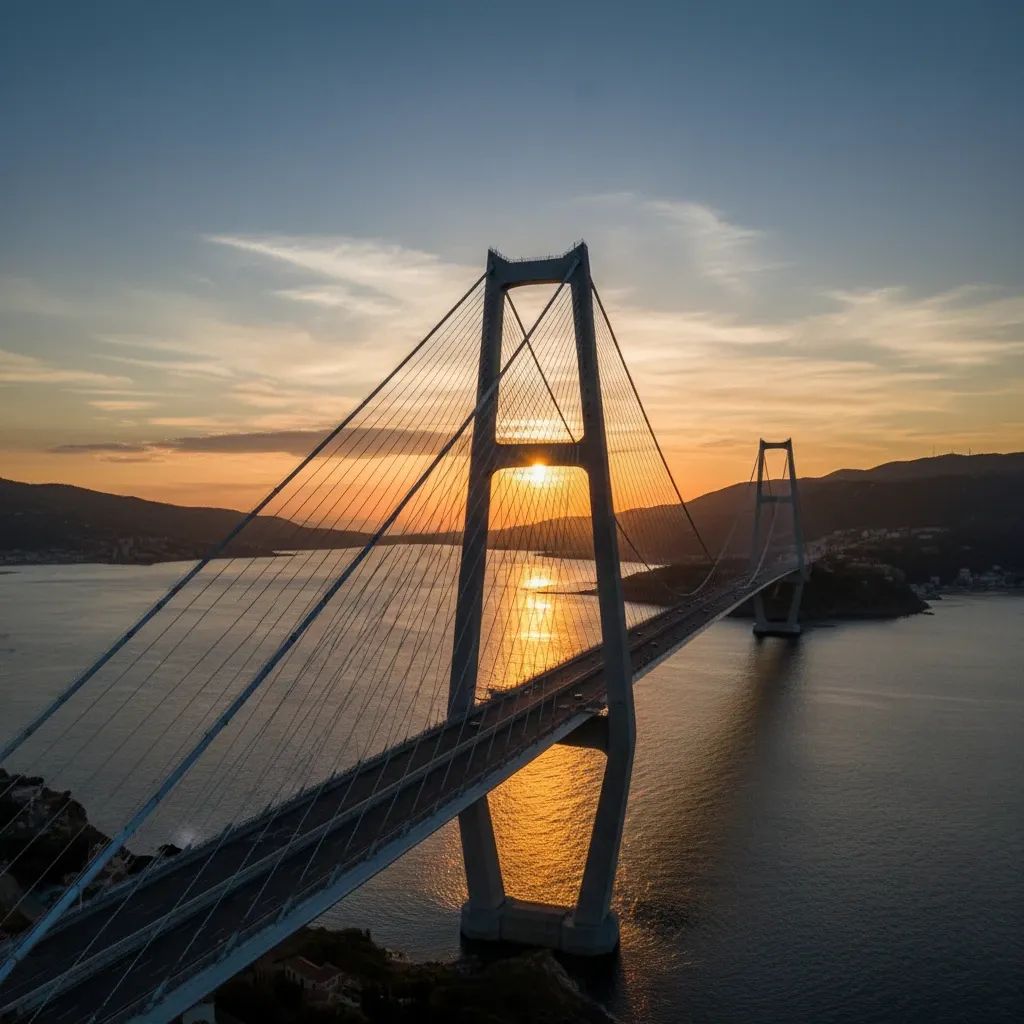
Italy's CGIL trade union today filed a formal complaint with the Corte dei Conti (Italy's Court of Accounts) to investigate whether public funds are being mismanaged or potentially wasted on the controversial Strait of Messina Bridge project. The move, announced by CGIL general secretary Maurizio Landini, seeks to determine if the €13.5 billion megaproject constitutes financial damage to the state treasury—a concept known in Italian law as "danno erariale."
The complaint arrives at a pivotal moment: construction is slated to begin in September 2026, with completion targeted for 2033 and operational service launching in 2034. But beneath the government's ambitious timeline lies a tangled web of cost overruns, regulatory warnings, and unfinished supporting infrastructure that has drawn scrutiny from anticorruption authorities, transport regulators, and now Italy's largest trade union confederation.
What This Means for You
• If the Corte dei Conti finds violations: The project could be delayed by years, potentially forcing a new competitive tender that would restart the timeline.
• If cleared: The complaint's rejection would lock in €13.5 billion in public spending commitments for three decades—money not available for hospitals, schools, or regional transport networks.
• Timeline: With construction set to begin in weeks, the window for legal intervention is narrow.
Why This Matters
• €13.5 billion in public funds are at stake in what would be the world's longest single-span suspension bridge, connecting Sicily to mainland Italy.
• The Corte dei Conti will now examine whether procurement rules, environmental compliance, and cost controls have been properly applied.
• CGIL argues every euro diverted to the bridge is money not spent on hospitals, schools, and transport links the south desperately needs.
• Construction kickoff is just weeks away, with the government seeking final CIPESS approval before launching tenders.
The Price Tag That Keeps Growing
When first conceived, the Strait of Messina Bridge carried a price tag of €4.3 billion in 2005. By 2011, that figure had climbed to €8.5 billion. Today, the official estimate stands at €13.5 billion—with some independent analyses warning the final bill could exceed €15 billion once technical adjustments and complementary works are factored in.
The Stretto di Messina S.p.A., the state-controlled company managing the project, attributes the surge to inflation in construction materials and argues that the original contract with the Eurolink Consortium (led by infrastructure giant Webuild) remains valid. But Italy's National Anti-Corruption Authority (ANAC) has raised red flags, suggesting the cost increase may trigger European public procurement regulations that would require a new competitive tender rather than relying on a contract signed more than a decade ago.
The Italy Ministry of Infrastructure, under the leadership of Deputy Prime Minister Matteo Salvini, has championed the bridge as a "green infrastructure" that will complete the Scandinavian-Mediterranean Corridor of the EU's Trans-European Transport Network (TEN-T). Government projections forecast annual toll revenues between €535 million and €800 million, with an operating profit of roughly €100 million per year and full payback in approximately 30 years.
What the Union's Complaint Alleges
CGIL's esposto was submitted to the regional public prosecutors of the Corte dei Conti for Sicily and Lazio, as well as to the General Prosecutor's Office overseeing jurisdictional appeals for Sicily. The complaint does not oppose the bridge on ideological grounds, Landini stressed, but rather demands accountability over how taxpayer money is being deployed.
The union highlights several concerns that echo warnings previously issued by the Corte dei Conti itself during its examination of CIPESS resolutions:
• Indefinite final cost: The total expense remains fluid, with no locked-in budget ceiling.
• Regulatory compliance gaps: Questions persist over alignment with EU procurement and environmental protection directives.
• Unfunded supporting infrastructure: Many of the road and rail connections required to make the bridge functional—including modernized access routes through Calabria and Sicily—remain either unfunded or incomplete.
The complaint frames the issue not as a battle against infrastructure development, but as a defense of fiscal responsibility. "Every euro wasted on the Bridge is an euro taken from hospitals, schools, and the real infrastructure the South needs," Landini said in a statement.
The Regulatory Gauntlet
The bridge project has cleared several bureaucratic hurdles in recent months. In May 2026, the Corte dei Conti granted legitimacy approval to the Program Agreement, and the Authority for Transport Regulation (ART) issued a favorable opinion on the Economic-Financial Plan (PEF) the same month. Dialogue with the European Commission on compatibility with EU norms is reportedly proceeding smoothly, with no infringement procedures currently underway.
However, the bridge still awaits a formal opinion from the Consiglio Superiore dei Lavori Pubblici (Italy's Higher Council of Public Works). Meetings at Palazzo Chigi in July aimed to finalize preparations for a new CIPESS review before construction begins.
The ART has stressed the need for a permanent monitoring system to track whether actual costs, traffic forecasts, and risk distribution align with the approved plan. It has also flagged the importance of ensuring toll rates remain fair and justified as the bridge nears operational status.
Economic Case Under Fire
Independent economists are sharply divided on whether the bridge delivers value for money. Studies commissioned by Unioncamere Sicilia and conducted by Uniontrasporti with Openeconomics predict a Net Present Economic Value (VANE) of €1.8 billion, a benefit-cost ratio of 1.2, and contributions to GDP of €23.1 billion during construction, along with 36,700 stable jobs and €10.3 billion in tax revenue.
But other analyses paint a darker picture. Francesco Ramella of Bridges Research estimates the project would result in a €3.6 billion loss in national welfare, as benefits fall short of costs. Marco Ponti, a former professor of economics, calculates the socioeconomic benefits lag costs by roughly €3 billion. These dramatic divergences stem largely from different assumptions about traffic volumes, toll revenues, and economic spillover effects—areas where forecasting remains notoriously uncertain for megaprojects.
Critics also point to the fragile transport networks on both sides of the strait. Without significant upgrades to roads and railways in Calabria and Sicily, the bridge risks becoming what detractors call a "cattedrale nel deserto" (cathedral in the desert)—an Italian expression for a monumental structure with insufficient connections to justify its expense. The region also sits atop active seismic faults, raising questions about long-term safety and maintenance costs.
What This Means for Residents
For people living in southern Italy, the CGIL complaint sharpens a long-running debate over regional priorities. The union's argument is straightforward: in a region where public hospitals face chronic underfunding, school buildings require seismic upgrades, and rural towns lack reliable bus or train service, a €13.5 billion suspension bridge represents a profound allocation choice.
If the Corte dei Conti finds evidence of financial mismanagement or procurement violations, it could delay or restructure the project, potentially forcing a new competitive tender that would push timelines back by years. Conversely, if the court clears the project, it would provide a green light for one of Europe's most ambitious infrastructure undertakings—and lock in public spending commitments for the next three decades.
The CGIL's action also signals organized labor's willingness to challenge government infrastructure priorities through legal channels, setting a precedent for scrutiny of other large-scale public works projects.
The Clock Is Ticking
With construction set to commence in September 2026, the window for intervention is narrow. The government has pledged that the bridge will not incur additional costs beyond what has been budgeted, with the Ragioneria dello Stato (Italy's General Accounting Department) mandating that agencies use existing resources only.
Whether the Corte dei Conti moves swiftly enough to influence the project's trajectory before ground is broken remains uncertain. What is clear is that the Strait of Messina Bridge—long a symbol of Italy's ambition to unite north and south—has become a flashpoint for questions about fiscal prudence, regional equity, and the trade-offs inherent in mega-infrastructure investment.


