
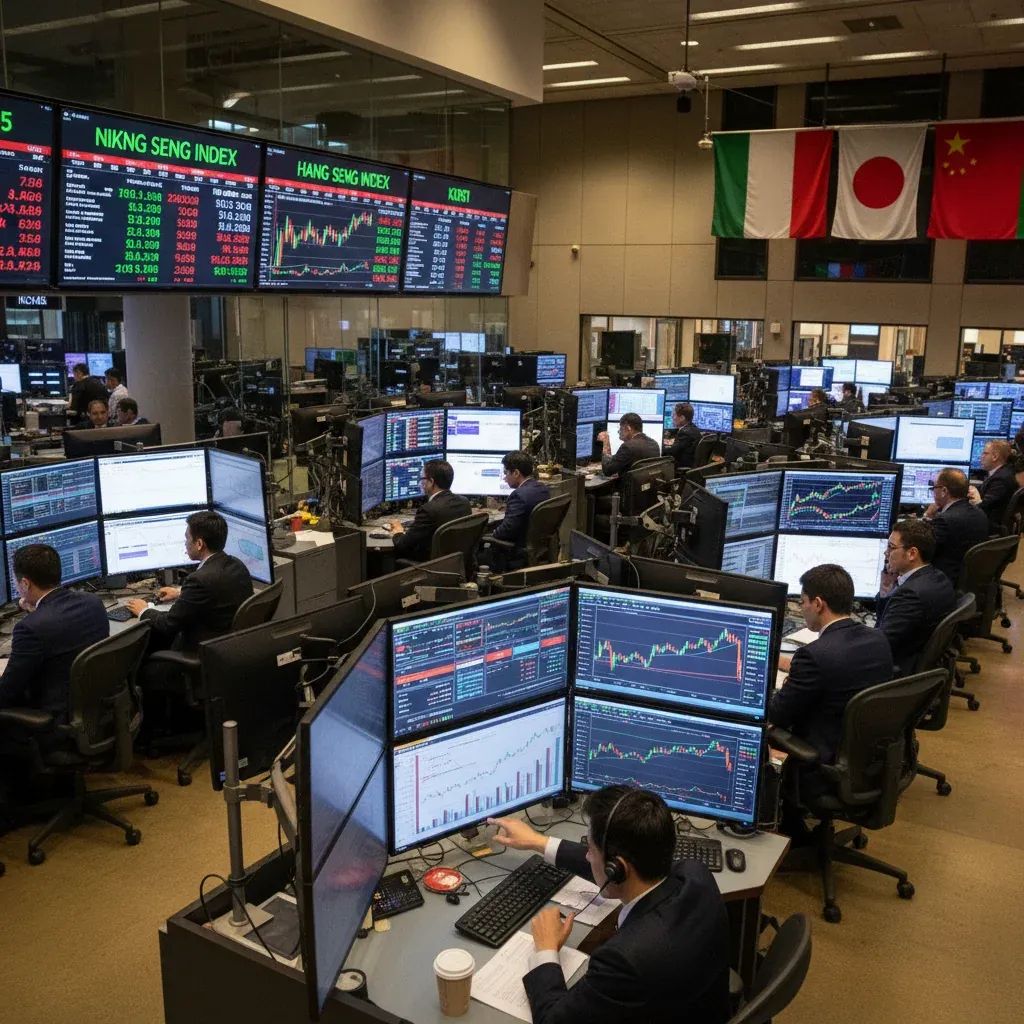
The Chinese mainland bourses posted modest gains as trading resumed following the Lunar New Year break, with Shanghai's composite index climbing 0.87% and the Shenzhen bourse advancing 1.23% on February 24. The rally reflected investor relief following a US Supreme Court ruling that struck down Trump's tariffs imposed under the International Emergency Economic Powers Act (IEEPA), though the legal victory may prove short-lived for global investors.
The Supreme Court Ruling
On February 20, the US Supreme Court delivered a landmark decision striking down tariffs imposed under the IEEPA in a 6-3 ruling, declaring that only Congress holds constitutional authority to levy customs duties. This effectively nullified Trump's "reciprocal tariffs" and fentanyl-related duties applied to dozens of countries, including China.
However, within hours, the Trump administration invoked Section 122 of the Trade Act of 1974, imposing a temporary 15% global tariff capped at 150 days—the maximum rate permissible without congressional approval. The new duties took effect February 24.
For European asset managers and Italian pension funds with Asian exposure, the ruling opens the door for importers to claim refunds on previously paid IEEPA-based tariffs through the US Court of International Trade, though the process will be neither automatic nor swift.
Mixed Asian Market Performance
While mainland Chinese stocks rallied on the tariff reprieve, the Hang Seng index in Hong Kong dropped 1.74% on February 24, erasing gains made when the Supreme Court ruling was first announced. The divergence reflects conflicting investor sentiment, with profit-taking and concerns about tech sector valuations weighing on Hong Kong-listed stocks.
The Nikkei 225 in Tokyo rose 0.87% as the yen weakened against the dollar, providing tailwinds for Japan's export-heavy manufacturers. The currency's slide followed reports that Prime Minister Sanae Takaichi expressed concern over a potential interest rate hike by the Bank of Japan, with market participants assigning significant probability to a rate increase in coming months.
What This Means for Italian Investors
For Italian manufacturers and investors, several factors warrant attention:
• Trade policy uncertainty: The 150-day window on Section 122 tariffs expires in late July, creating potential for renewed tariff escalation and complicating earnings forecasts for Italian companies with Asian supply chains.
• Currency effects: The yen's weakness offers short-term favorable pricing for Italian importers of Japanese components, particularly in automotive and robotics sectors. However, if the Bank of Japan raises rates as expected, the yen may stabilize, reducing this advantage.
• Market divergence: The gap between mainland Chinese equities and Hong Kong stocks signals investor caution about regulatory uncertainty and geopolitical risks in the region.
The interplay between US tariff policy, Chinese market response, and Japanese monetary tightening will remain a key driver of Asian market performance in coming months. For Italian investors, the lesson is clear: the frameworks underpinning global trade remain in flux, requiring active monitoring of regulatory shifts.


