
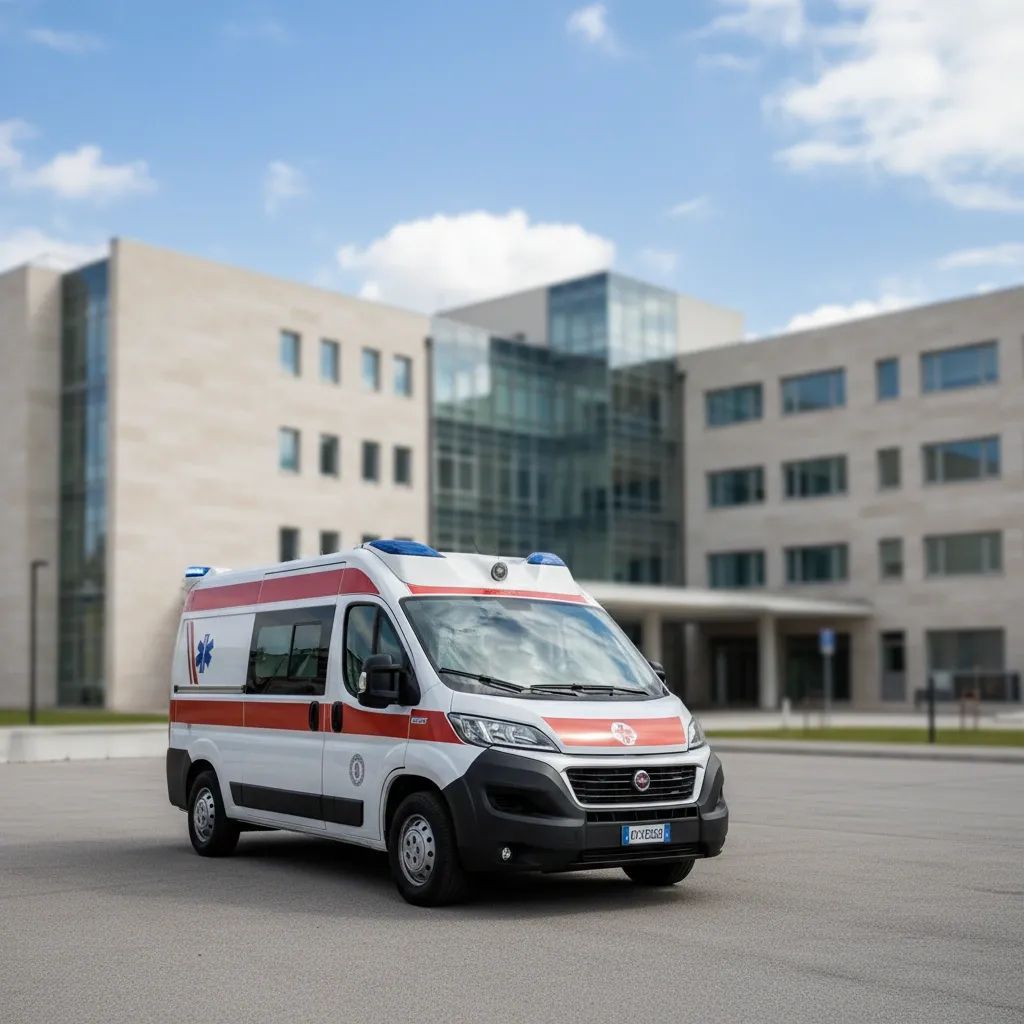
The Italy Carabinieri have placed a 27-year-old ambulance driver under investigation for premeditated serial murder using lethal substances, a case that has shaken public confidence in emergency medical transport across the Emilia-Romagna region. Prosecutors in Forlì allege the suspect killed at least 5 elderly patients between February and November 2025 by administering poisonous compounds during routine ambulance transfers—deaths initially attributed to natural causes among chronically ill, terminal patients.
Why This Matters:
• Trust in emergency services: Ambulance transport is now under scrutiny as investigators probe whether safety protocols failed to detect a pattern of suspicious deaths over nine months.
• Geographic focus: The deaths occurred during transfers between Forlì and Santa Sofia, affecting vulnerable populations in care facilities and hospitals across Romagna.
• Institutional response: The Italian Red Cross has suspended the operator, and the Ausl Romagnola health authority has blocked any return to duty pending criminal proceedings.
• Ongoing investigation: Authorities suspect additional victims may emerge as investigators review transport records and medical files dating back to early 2025.
The Accusations and Legal Framework
The Forlì Prosecutor's Office, led by Umberto Cieri and prosecutor Andrea Marchini, has charged the suspect with voluntary continued homicide aggravated by premeditation and committed through venomous substances or other insidious means—a charge framework under Italy penal code that carries sentences upward of life imprisonment if multiple murders are proven. The legal threshold here is significant: prosecutors must demonstrate not only causation but also intent and planning, distinguishing these deaths from medical negligence or error.
Initial charges classified the deaths as culpable homicide (involuntary manslaughter), but as the Carabinieri Nucleo Operativo in Forlì compiled evidence with support from the NAS (Nucleo Antisofisticazioni e Sanità), the specialized health fraud and safety unit, the investigation escalated. Prosecutors now theorize the suspect induced embolism or cardiac arrest by injecting substances into patients during transport, a method that mimics natural death in elderly, frail individuals.
One autopsy has been completed on a woman who died in November 2025, though results have not been publicly disclosed. Additional exhumations and toxicological screenings are reportedly underway on other victims, all of whom were chronically ill and considered terminal—a profile that initially masked the deaths as expected outcomes rather than criminal acts.
How the Pattern Was Discovered
The breakthrough came not from medical examiners but from internal whistleblowing. According to investigative sources, colleagues of the suspect flagged the recurring presence of the 27-year-old driver at the scene of multiple sudden patient deaths during transport. This pattern—five deaths in nine months, all involving the same operator—triggered alarm within the Croce Rossa (Italian Red Cross) and prompted the health authority to notify law enforcement.
Investigators installed hidden cameras inside ambulances to monitor the suspect's behavior during shifts, though sources indicate the driver became aware of the surveillance. The defense has countered that a physician from Romagna Soccorso was present in the medicalized vehicle during all contested transports, arguing it would have been nearly impossible to administer lethal injections unnoticed. This claim raises questions about whether multiple crew members could have failed to observe suspicious activity—or whether the method used was so subtle it evaded real-time detection.
The suspect, a resident of the Forlì area, has not yet been formally questioned by magistrates but has submitted documentation through his attorney asserting innocence. His legal representative described him as "bewildered by what is emerging" and insistent on his right to testify before the prosecutor. As of the latest reports, no arrest warrant has been issued, and the investigation remains under judicial secrecy.
Impact on Emergency Medical Services and Public Health
For residents and families relying on ambulance transport in Romagna, the case exposes vulnerabilities in patient safety protocols during emergency and non-emergency medical transfers. The victims were elderly, terminal patients—individuals whose deaths would typically not trigger automatic forensic review. This demographic invisibility allowed the alleged crimes to continue undetected for months.
The Italian Red Cross, which operates ambulance services across Italy under contract with regional health authorities, has faced scrutiny over screening and supervision of personnel. While criminal background checks are standard for hiring, no existing protocol systematically monitors for patterns of patient deaths linked to individual crew members. The Ausl Romagnola health authority has since indicated it will not permit the suspect to return to service, regardless of the criminal outcome, citing patient safety concerns.
Nationally, the case recalls similar scandals involving healthcare workers who exploit their access to vulnerable patients. Italy has seen prior cases, including the so-called "ambulanza della morte" (death ambulance) incident involving Davide Garofalo, a stretcher bearer accused of murdering terminally ill patients for financial gain. Internationally, parallels exist with Germany's Niels Högel, a nurse convicted of killing 86 patients by inducing cardiac arrest to play the role of rescuer—a phenomenon criminologists classify as "Angel of Death" killers.
What Residents and Families Should Know
While the investigation is ongoing and the suspect maintains innocence, the case underscores the importance of vigilance in medical care settings. Families with elderly relatives receiving home care or frequent hospital transfers may consider:
• Documentation: Keep detailed logs of medical transport dates, crew names visible on uniforms, and vehicle identification numbers.
• Presence: When feasible, accompany vulnerable patients during ambulance transfers or request updates immediately upon arrival at the destination facility.
• Reporting: Alert the Ausl regional health authority or Carabinieri if you observe unusual patterns of deterioration or death among patients transported by the same crew or service.
The Ministry of Health has not issued nationwide guidance on ambulance safety protocols in response to this case, but regional authorities in Emilia-Romagna are expected to review staffing, monitoring, and incident-reporting procedures. For now, the Forlì investigation remains the primary mechanism for establishing accountability.
The Defense and Presumption of Innocence
The suspect's attorney has emphasized that no formal charges have been filed, and under Italy law, investigative accusations do not constitute proof of guilt. The defense argues that the presence of a physician during all five transports creates reasonable doubt, as a trained medical professional would likely notice unauthorized interventions. Additionally, the suspect has provided unspecified documentation to support his claim of innocence and has requested a formal interrogation by the prosecutor to present his version of events.
Italy criminal procedure allows lengthy investigative phases before trial, and toxicology results from autopsies can take months. Legal experts note that proving premeditation in serial murder cases requires forensic evidence linking the suspect to the administration of lethal substances, testimony from witnesses, and demonstration of motive—none of which has been publicly disclosed.
Broader Implications for Health System Accountability
This case raises systemic questions about oversight of emergency medical personnel across Italy. Unlike hospitals, where patient deaths trigger institutional review boards and mortality audits, ambulance services operate in a decentralized, mobile environment with less structured supervision. The NAS typically investigates food safety, pharmaceutical fraud, and institutional abuse—not individual crew members—making this investigation an outlier in scope and complexity.
Health policy advocates have called for enhanced incident reporting systems that flag anomalous death patterns among transport services, analogous to the SIMES (Sistema Nazionale di Monitoraggio degli Errori in Sanità), which tracks sentinel events like surgical errors and hospital-acquired infections. Extending such monitoring to ambulance services could provide early detection of misconduct, whether criminal or negligent.
For now, the Forlì Prosecutor's Office continues to coordinate with the Carabinieri and NAS to build a case that will ultimately be tested in court. Residents in the Forlì-Santa Sofia area await clarity on whether the deaths were criminal acts or tragic coincidences in a population already facing terminal illness. Until forensic results and witness testimony are disclosed, the full story remains sealed under judicial review, leaving families and the public to grapple with disturbing questions about the safety of Italy's emergency medical infrastructure.


