
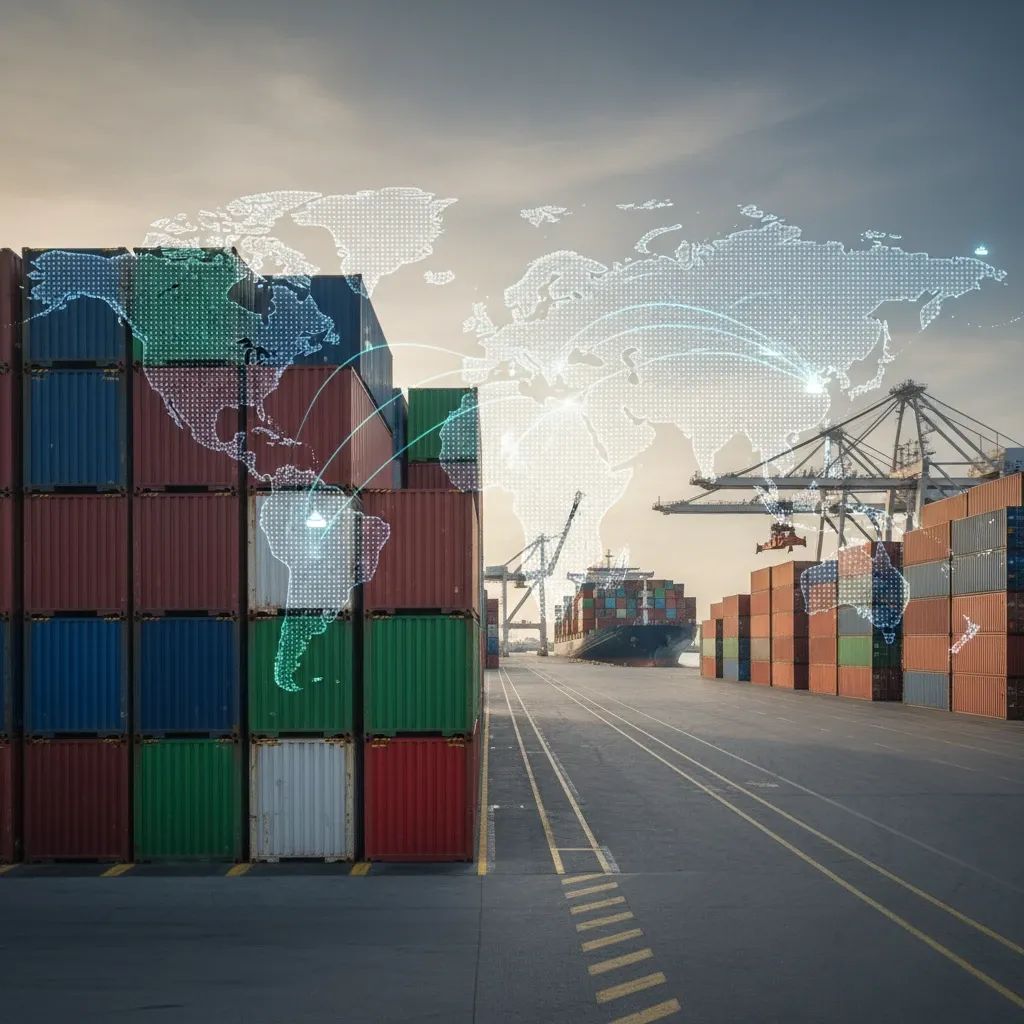
The United States has activated a sweeping 15% tariff on global imports, a move that took effect at 6:00 AM Central European Time (midnight in Washington) and is sending Italian exporters scrambling to recalibrate supply chains, pricing models, and market strategies. The tariff, imposed under Section 122 of the Trade Act of 1974, replaces a chaotic patchwork of duties previously struck down by the U.S. Supreme Court, but Italian businesses face a stark new calculus: accept tighter margins, relocate production, or risk losing ground in one of Europe's most lucrative export markets.
Why This Matters
• Direct exposure: Italian companies face potential losses between €6.7 billion and €7.5 billion, with pharmaceuticals, automotive, and agri-food sectors bearing the heaviest burden.
• Strategic pivot required: The tariff is temporary—valid for 150 days unless extended by Congress—forcing Italian firms to decide whether to absorb costs or accelerate diversification away from the U.S. market.
• EU response pending: Brussels has suspended ratification of its trade deal with Washington and is weighing retaliatory measures, leaving Italian exporters in regulatory limbo.
What Replaces the Old System
U.S. Customs and Border Protection simultaneously discontinued collection of duties imposed under the International Emergency Economic Powers Act (IEEPA), which the Supreme Court invalidated earlier this month. The flat 15% rate now applies broadly, replacing a complex grid of country-specific and sector-specific levies that ranged from 0% to over 50% depending on product category and origin.
For Italy, the shift is a mixed signal. Sectors like automotive—previously facing 27.5% duties—see some relief. But industries such as cosmetics and furniture, which enjoyed zero tariffs until now, confront a sudden 15-percentage-point cost shock. The U.S. market accounts for roughly 10% of Italian exports, worth approximately €70 billion annually, making even a modest tariff adjustment economically consequential.
Impact on Italian Industry
Pharmaceuticals and Chemicals
Italy's pharmaceutical sector exports €10 billion to €13 billion annually to the United States, representing the largest value-added exposure at 24% of total industry output. While some specialty chemical and pharmaceutical products may qualify for partial or full exemptions, most manufacturers now face higher landed costs. Companies are exploring local production partnerships in the U.S. to sidestep tariffs entirely, though capital investment and regulatory approvals make this a medium-term solution at best.
Automotive and Aerospace
The automotive supply chain—worth about 20% of Italy's U.S. exports—benefits from the reduction from 27.5% to 15%, but still confronts a substantial cost layer. Aerospace components, another high-value segment, are being evaluated for potential carve-outs, though uncertainty persists. Italian parts manufacturers are considering Free Trade Zone warehousing strategies in the U.S., deferring duty payments while awaiting policy clarification.
Agri-Food Under Pressure
Italy's agri-food exports to the U.S. total roughly €8 billion, with wine, olive oil, pasta, and cured meats among the most vulnerable. Wine producers alone face an estimated €290 million impact, extra virgin olive oil €140 million, and durum wheat pasta €74 million. Parmigiano Reggiano and Grana Padano, already subject to 15% duties under prior arrangements, see no additional deterioration—but also no improvement.
Fruit and vegetable growers are less directly affected, but the agricultural machinery and processing technology sectors—key enablers of Italy's agri-food competitiveness—now face a steeper uphill battle in the U.S. market.
Luxury, Cosmetics, and Furniture
High-margin sectors such as luxury goods, cosmetics, and home furnishings are absorbing what industry analysts describe as a "psychological shock." Previously tariff-free, these categories now carry a 15% levy, compressing margins and forcing brands to choose between price hikes (risking market share) and margin erosion (risking profitability).
Corporate Response: Pragmatism and Flexibility
Cristina Scocchia, CEO of illycaffè, articulated the prevailing sentiment among Italian multinationals: "The introduction of new generalized tariffs by the U.S. administration adds further instability to an already complex geo-economic landscape. Strategic planning and operational development become increasingly challenging due to a context that changes constantly according to unpredictable logic."
Her response underscores the dual mandate now facing Italian firms: be pragmatically strategic and strategically pragmatic. In practice, this means:
• Rapid adaptation: Adjusting plans and pricing structures to minimize negative impacts and capture alternative opportunities in other markets without abandoning the strategic importance of the U.S. market long-term.
• Supply chain optimization: Conducting granular due diligence on sourcing, exploring "first sale" and "industrial cost" customs protocols to calculate duties on lower taxable values, and building minimal inventory buffers directly on U.S. soil to shorten delivery times.
• Market diversification: Reinforcing presence in Asia, Africa, and Latin America to offset U.S. exposure.
• Localization investments: Evaluating joint ventures or greenfield plants in the United States, turning the tariff challenge into a competitive advantage by becoming a domestic producer.
Scocchia also called for a "compact, reasoned, and responsible response" from European institutions to ensure stability in commercial agreements—a sentiment echoed across Italian industry associations.
Government and Institutional Reactions
Italy's Ministry of Foreign Affairs, led by Antonio Tajani, convened a task force of the Sistema Italia—bringing together ministries, industry groups, and major exporters—to assess the fallout and coordinate a national response. Tajani acknowledged that while the removal of the IEEPA-based tariffs is "generally good news," he does not foresee "major changes" or "particular effects" for Italian exports, given that U.S. businesses had already anticipated the Supreme Court ruling.
Adolfo Urso, Minister of Enterprises and Made in Italy, noted that a generalized 15% tariff "would reduce" the overall impact compared to the previous differentiated regime, which hit certain Italian sectors with rates as high as 27.5%. Francesco Lollobrigida, Minister of Agriculture, emphasized the need for clarity and adherence to EU-U.S. agreements.
At the European level, the reaction has been one of caution and coordination. The European Commission stressed that the current situation does not favor "fair, balanced, and mutually beneficial" transatlantic trade and investment. Bernd Lange, chairman of the European Parliament's International Trade Committee, proposed suspending legislative work on the EU-U.S. tariff agreement until there is adequate legal assessment and clear commitments from Washington. Christine Lagarde, President of the European Central Bank, underscored that clarity on future trade relations is fundamental for all economic operators.
French President Emmanuel Macron and German Chancellor Friedrich Merz have both called for a unified EU response. Merz described the uncertainty over tariffs as "poison" for economies and announced plans to travel to Washington with a coordinated European position. The European Parliament has postponed a vote on the EU-U.S. trade agreement pending resolution of the tariff issue.
Economic Forecasts and Long-Term Outlook
Italy's GDP exposure to the new tariff structure is projected at between 0.15% and 0.4% cumulative over the 2025–2027 period, with an impact of 0.1% to 0.2% in 2025 alone. The European Union overall is expected to see a 0.4% GDP contraction, with Germany hit hardest at 0.5% and Italy tracking near the EU average.
For Italian businesses, the direct cost burden is estimated between €6.7 billion and €7.5 billion—lower than initial projections of nearly €10 billion, thanks to sectoral exemptions and the ability to absorb some costs within existing margins. Small and medium-sized enterprises (SMEs) with high U.S. dependency and thin margins face the steepest challenges, while larger, diversified manufacturers are better positioned to weather the shock.
Despite the tariff headwinds, Italy's export composition—43% high-end, 49% mid-range—provides a structural cushion. Italian companies and their U.S. commercial partners have adopted pragmatic strategies such as freezing or slightly reducing prices and sharing tariff costs across the supply chain, limiting consumer price increases in the United States. This has allowed Made in Italy exports to show resilience and continue growing beyond the summer of 2025.
Medium-term forecasts (2025–2026) anticipate a slight uptick in revenues at constant prices for Italian firms, driven by recovering foreign demand, falling interest rates, high employment levels, and stabilizing inflation. Italy's GDP growth is projected at +0.6% in 2025 and +1.0% in 2026.
What This Means for Businesses and Investors
The 15% tariff is a temporary measure—valid for 150 days unless Congress extends it—but Italian companies cannot afford to wait for political clarity. The strategic imperatives are clear:
• Immediate cost management: Renegotiate supplier contracts, optimize customs classifications, and leverage Free Trade Zones to defer duty payments.
• Medium-term localization: Assess feasibility of U.S.-based production or partnerships to eliminate tariff exposure.
• Long-term diversification: Reduce reliance on any single export market, particularly given the unpredictability of U.S. trade policy.
For investors, the tariff environment introduces sector-specific risks. Pharmaceutical and automotive stocks may see near-term volatility, while agri-food and luxury brands face margin compression. However, Italy's strong export fundamentals and proven adaptability suggest that well-managed firms can navigate the disruption without catastrophic losses.
The U.S. market remains strategically irrevocable for Italian exporters—but the era of predictable, low-friction transatlantic trade is over. Italian companies must now operate in a regime defined by regulatory flux, political pragmatism, and the constant need for operational agility.


