
The United States State Department has openly endorsed Hungarian Prime Minister Viktor Orbán, a step that undermines EU consensus on Russia sanctions and could ricochet onto Italian energy bills as early as this spring.
Why This Matters
• Cheaper Russian gas for Budapest may push Brussels to rethink the bloc’s energy rules—Italy’s own import costs could follow.
• A fresh US-Hungary nuclear accord creates room for Italian engineering firms to bid on small-modular-reactor projects worth up to $15 B.
• EU unity at stake: if Hungary keeps breaking ranks, Rome risks higher borrowing costs and a slower approval cycle for post-Recovery-Fund cash.
• US travel perks resurface: Hungarians just regained visa-free entry; Italian business lobbies see an opening to press Washington for the same 90-day rule extension.
The New Washington–Budapest Axis
After two days of talks in Budapest, US Senator Marco Rubio hailed a “golden era” in relations, stressing that former president Donald Trump is “personally invested” in Orbán’s victory ahead of Hungary’s 12 April election. The pair sealed a memorandum that places Hungary at the centre of a US-backed security cordon in Central Europe, angering officials in Brussels who have spent years trying to discipline Orbán over rule-of-law issues.For the United States, the calculus is simple: a friendly capital on the Danube offers logistical depth for NATO’s eastern flank and, politically, a model of hard-border migration policy that Trump’s camp wants to showcase.
What’s in the Energy Package?
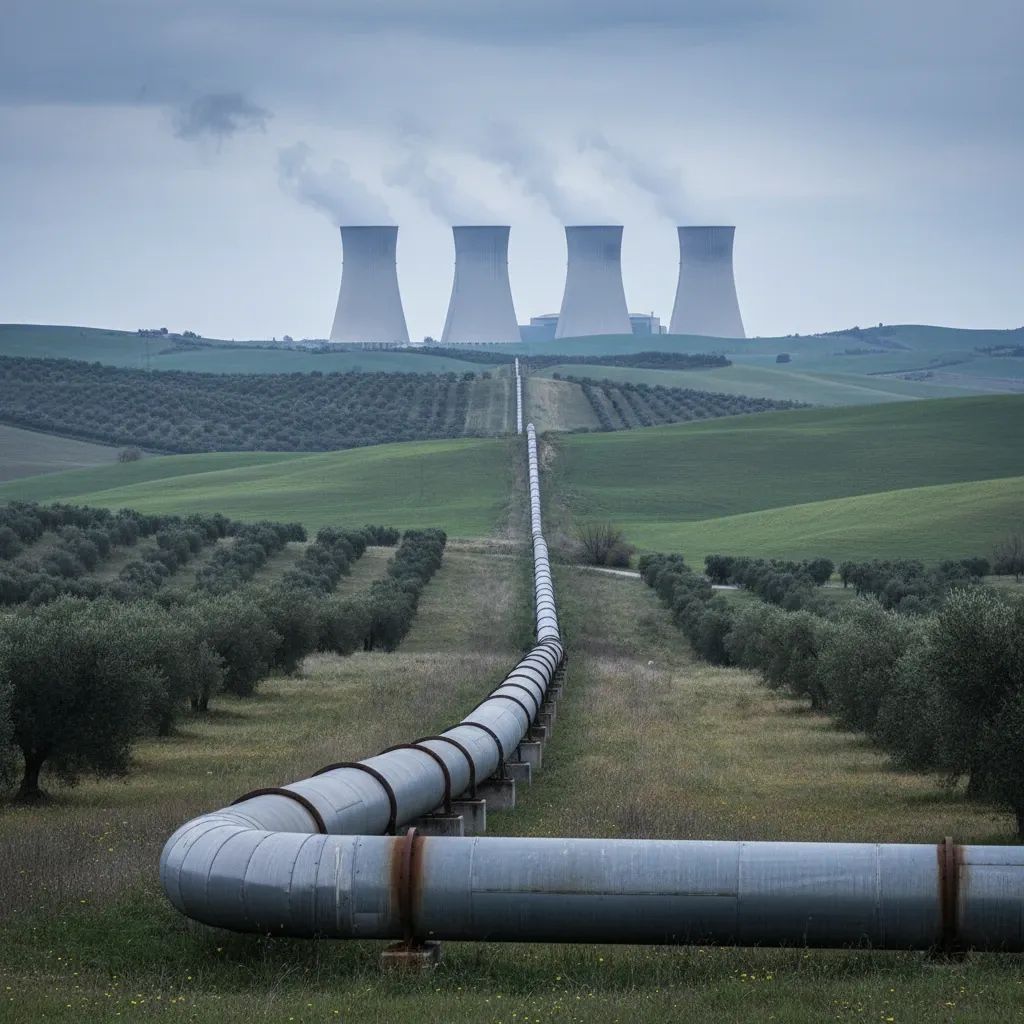
The headline item is an Inter-Governmental Civil Nuclear Agreement that makes Hungary a pilot market for small modular reactors (SMRs) built with American technology. Budapest also pocketed a rare waiver on Russian oil and gas imports, shielding its refiners from any future tightening of EU penalties. Energy analysts in Milan note that the combined deal may shave as much as €6/MWh off Hungarian wholesale electricity prices by 2028—prices Italians will still be paying unless Rome acts.Orbán has already dangled tax holidays and fast-track permits to lure U.S. suppliers such as Holtec International; insiders at the Italy Energy Agency say Turin-based Ansaldo Nucleare is studying whether to partner on fuel-storage systems.
Brussels Caught Off Guard
The European Commission’s Directorate-General for Energy was informed only hours before the signing. Officials fear the waiver creates a precedent every other energy-poor member state might demand. “If everyone asks for a carve-out, the sanctions regime collapses,” one EU diplomat told Il Sole-24 Ore.The Italy Ministry of Foreign Affairs is keeping a deliberately low profile, but privately concedes that Hungary now enjoys “asymmetric leverage” in Council votes—from the next budget ceiling to migration burden-sharing rules Italy desperately wants.
What This Means for Residents
Italian households have already seen a 24 % drop in the electricity component of their utility bill since peak-2022. Orbán’s discount pipeline, however, could pressure suppliers to sell leftover LNG cargoes to Hungary rather than bring them into Italian ports. Translation: winter 2026 heating costs in Rome or Bologna might tick up unless the Italy Regulatory Authority for Energy speeds up new regasification capacity.Travellers, meanwhile, note that Hungary regained full Visa Waiver Program privileges; Italian chambers of commerce are lobbying for parity, arguing that entrepreneurs from Milan and Naples should enjoy 90-day visa-free stays to scout U.S. ventures just as their Hungarian counterparts now do.
Business Angle: Opportunities for Italian Firms
SMR supply chain: from precision valves in Brescia to control-room software in Genoa, Italy’s industrial districts can feed the Hungarian build-out.
Refinery services: with Budapest eyeing the Serbian NIS refinery, Rome’s EPC contractors smell a €500 M maintenance market.
Green-bond arbitration: Milanese banks expect Hungary to tap markets for “sustainable nuclear” notes—an unusual asset class that could diversify Italian pension-fund portfolios.
Political Ripple Effects in Rome
Prime Minister Giorgia Meloni has avoided public comment, but coalition insiders admit the Rubio-Orbán photo-op undercuts Italy’s own pitch as Washington’s most reliable right-of-centre partner in Europe. Opposition lawmakers already frame the deal as evidence that Rome “lost the inside track” because it moved too slowly on reviving Italy’s dormant nuclear sector.The Italy Defence Staff, for its part, says the Budapest axis does not reduce Italian relevance to NATO operations but “adds another voice” in strategic planning—a diplomatic euphemism for fewer guaranteed Italian offsets when new defence contracts are sliced up.
The Road Ahead
Orbán’s re-election bid remains uncertain; polls published by Századvég Institute on Monday put his Fidesz party 4 points behind the liberal-conservative Tisza movement. Should Orbán falter, many of the freshly inked U.S. deals contain sunset clauses. Even so, Rubio’s explicit promise that “Hungary’s success is America’s success” signals that—win or lose—the Trump-aligned wing in Washington now treats Budapest as its go-to European staging ground.
For Italy, the take-home message is strategic pragmatism: stay alert to fast-moving bilateral pacts inside the EU framework, or risk discovering that the next energy discount—or tech partnership—has already gone to a nimbler neighbour.


