
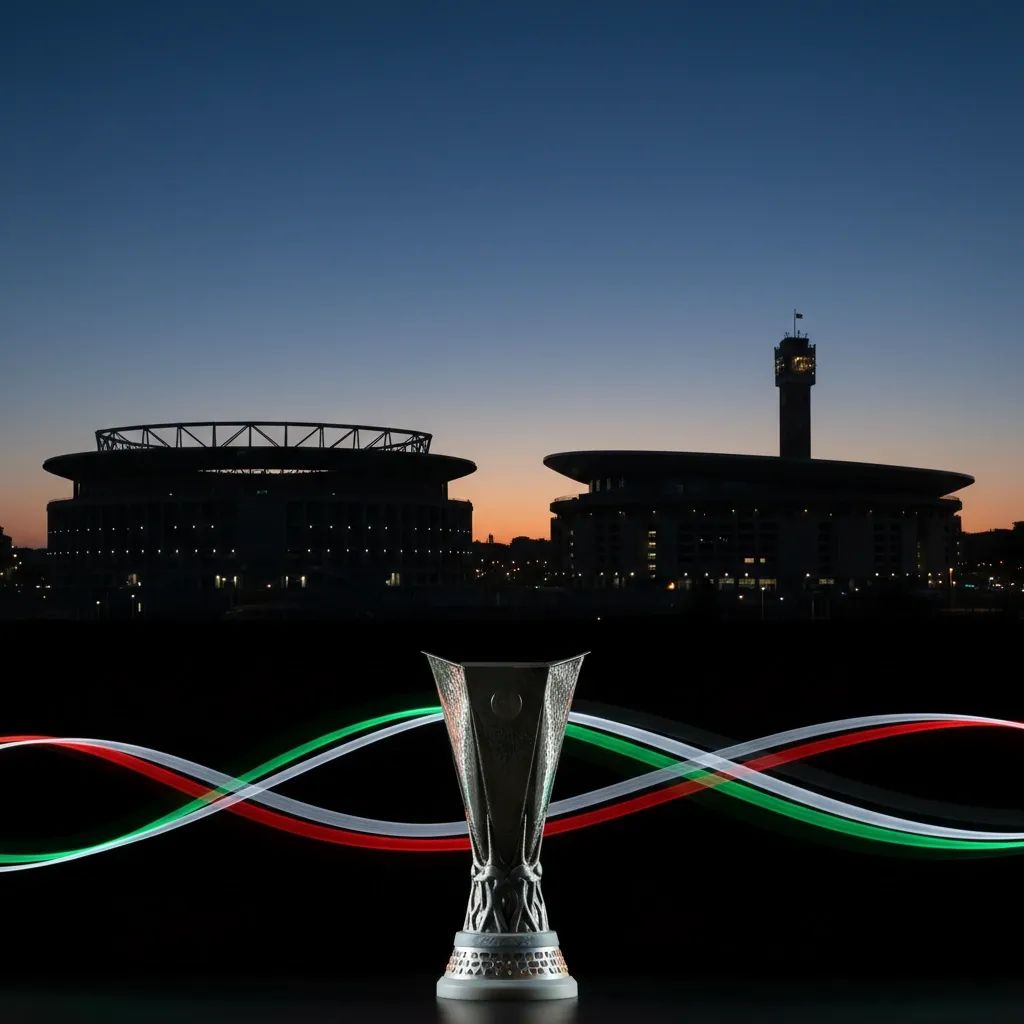
An internal Italian matchup in the UEFA Europa League Round of 16 means one Serie A club will advance to the quarterfinals while the other exits. But for Italian football's continental standing, both outcomes carry a hidden cost: one team's elimination means Italy loses the chance to accumulate points that could secure additional Champions League berths in future seasons.
What You Need to Know
• Match Schedule: First leg March 12 at Bologna's Dall'Ara; return leg March 19 at Roma's Stadio Olimpico
• How They Qualified: Roma finished 8th in the league phase; Bologna reached Round of 16 by defeating Norway's Brann 2-0 in the playoff round
• What's Next: The winner faces either Lille or Aston Villa in the quarterfinals
• TV Coverage: Expect comprehensive coverage across Italian networks; matches ideal for pub viewings and family gatherings
• Travel: Italy's high-speed rail connects both cities efficiently for committed supporters
The Real Problem: Italy's Coefficient Loss
When two clubs from the same nation meet in UEFA competitions, one represents lost opportunity. The winning club earns qualifying points for Italy's coefficient standing, which directly determines how many automatic Champions League berths Serie A receives in future seasons. The losing club—eliminated by a domestic rival rather than foreign opposition—represents foregone accumulation.
This reality prompted candid comments from both sporting directors. Roma's Frederic Massara told Sky Sport Italia: "Our genuine concern centers on the UEFA coefficient calculation—we've lost the chance for Italy to accumulate maximum points through two separate advancing clubs." Bologna's Marco Di Vaio added: "Meeting Roma in Europe carries a weight that domestic Serie A encounters simply don't possess."
The mathematics are straightforward: had the draw produced Roma-versus-foreign-opponent and Bologna-versus-another-foreign-opponent, Italy would advance two clubs to the next round, doubling its opportunity for coefficient reinforcement. Instead, one Italian club will exit, weakening Italy's competitive standing for Champions League allocation decisions.
An Unexpected European First
For the first time in their competitive histories, Roma and Bologna will meet in a UEFA tournament. The clubs have faced dozens of domestic encounters, but European competition has never brought them together—partly because Bologna endured a 25-year absence from continental football following 1999.
The UEFA draw in Nyon on Friday determined this pairing from the available Italian-qualified clubs. For both organizations, the outcome generated mixed reactions rooted in practical calculation rather than pure sporting drama. Bologna, recovering from a winter domestic slump, has nevertheless performed convincingly in Europa League, suggesting European organization that their Serie A record doesn't fully reflect.
Roma's Recent Attacking Reinforcement
Roma underwent significant January investment with the acquisition of Donyell Malen, the Dutch winger from Borussia Dortmund. Since his arrival, Roma's offensive profile has transformed noticeably. In January 2026 fixtures spanning domestic and European competition, Roma recorded victories including a 2-0 Serie A win over Torino on January 18 and a 2-0 Europa League victory over Stuttgart, generating approximately 1.67 goals per match—respectable output for a rebuilding group.
Against Bologna—intimately familiar with Roma's conventional tactical vocabulary through dozens of domestic meetings—Malen's pace and positional adaptability provide valuable unpredictability. Roma's established patterns become less readable.
Bologna's European Credibility
A club that dropped toward the bottom half of Serie A during their December-February collapse has nevertheless managed European football with genuine competence. Bologna survived a group stage featuring five different national associations, defeated playoff opposition decisively, and arrives at the Round of 16 without intimidation.
Roma enters as established favorites based on historical advantage and squad depth. Yet Bologna arrives with recent European organization and tactical clarity that their domestic struggles don't reflect—a distinction that may prove tactically significant.
Practical Considerations for March Fixtures
The March dates place maximum stress on team management, requiring both clubs to balance knockout-round preparation with ongoing Serie A competition. Roma, accustomed to juggling multiple competitions with deeper squad resources, holds logistical advantage.
Tactically, neither club can rely on established European history against the other. Ranieri's Roma will likely employ superior squad depth to establish tempo control at the Stadio Olimpico return fixture, betting that home advantage provides security should Bologna claim a first-leg result. Bologna must leverage home support at the Dall'Ara and extract maximum value from domestic atmosphere that tests Roma's comfort outside the capital's familiar stadium ecosystem.
The Broader European Picture
This Italian derby represents one of eight Round of 16 pairings. Other matchups include Ferencváros vs Braga, Panathinaikos vs Real Betis, Genk vs Freiburg, Celta Vigo vs Lyon, Stuttgart vs Porto, Nottingham Forest vs Midtjylland, and Lille vs Aston Villa—cross-continental pairings creating typical tournament geographic diversity.
Yet the Italian derby carries sharper implications precisely because both participants represent the same national association. The eventual survivor determines Italy's representation at the Round of 8 stage and contributes to the five-year coefficient calculation shaping Italian football's future European allocation. First legs commence March 12; return fixtures follow March 19.
Historic First Meeting Under Pressure
This inaugural European encounter arrives under coefficient pressure. Bologna's prolonged continental absence meant such a meeting never previously materialized. Roma, participating consistently in Champions League and Europa League, remained unable to meet their domestic rival in UEFA competition until now.
That timing matters. Neither club possesses European opposition footage or tournament-specific tactical familiarity with the other's European setup. Bologna, while less experienced continentally overall, arrives with recent European knowledge their domestic record doesn't reflect. Tactical uncertainty cuts both directions, making this two-leg matchup genuinely unpredictable.


