
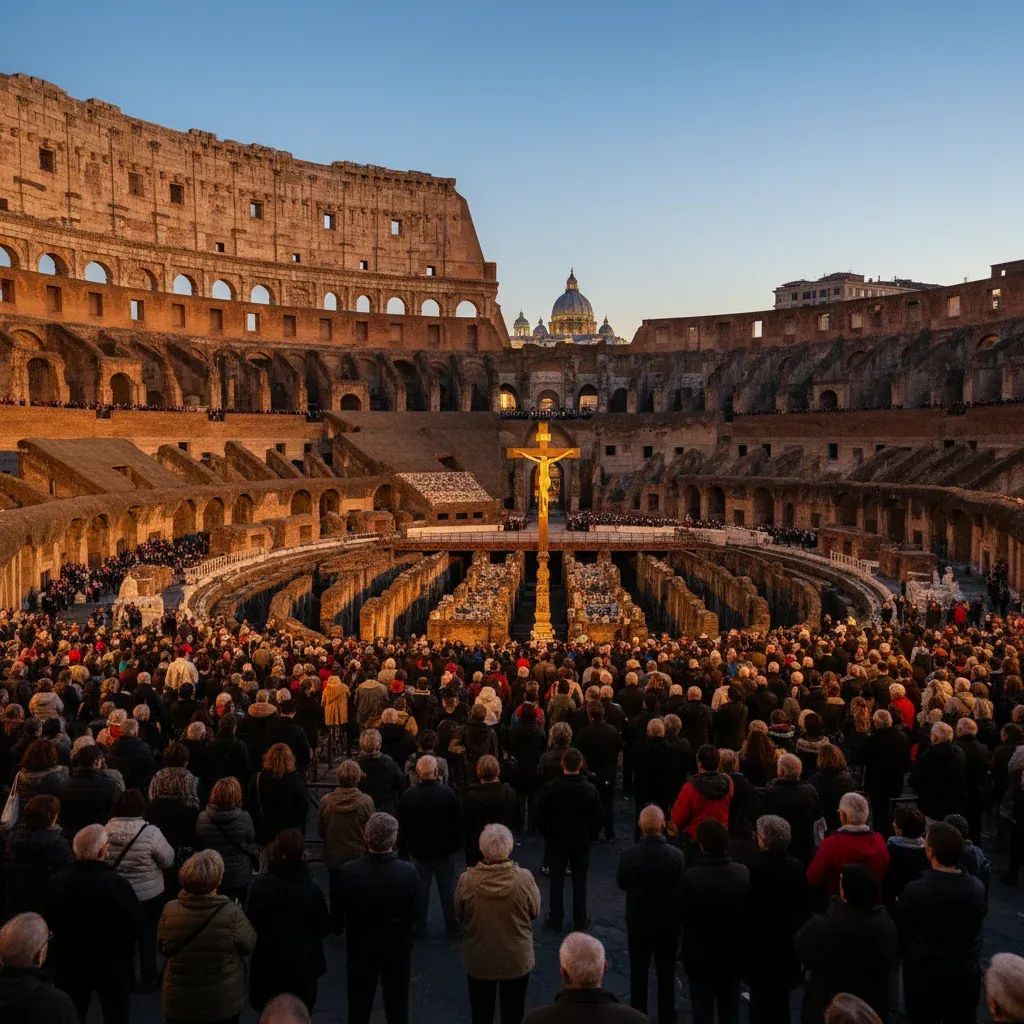
Pope Leo XIV has called for a global prayer vigil for peace on Saturday, April 11, marking one of his first major spiritual initiatives since ascending to the papacy. The announcement, delivered during his inaugural Urbi et Orbi blessing on Easter Sunday, comes as the world grapples with intensifying conflicts—from a two-month-old war involving the United States and Israel against Iran to the relentless fourth year of the Russian campaign in Ukraine and ongoing devastation in Gaza.
The vigil will take place at St. Peter's Basilica in Rome, offering Italian Catholics and believers worldwide a direct role in a global spiritual mobilization for peace. The Vatican has positioned this as both a spiritual act and a diplomatic signal: the Holy See intends to remain a visible, vocal advocate for ceasefires and humanitarian corridors, even as traditional diplomatic channels falter.
Why This Matters
• Vatican diplomacy shifts to active peace-building: Pope Leo XIV is channeling the Holy See's extensive diplomatic network to advocate for dialogue over military escalation.
• Italy's Catholic community called to act: The vigil offers Italian faithful a concrete opportunity to participate in a global spiritual response to multiple conflicts.
• A moral voice in crisis: The pontiff is framing peace not as political abstraction but as a spiritual and humanitarian imperative, echoing his predecessor's concern about the "globalization of indifference" that allows wars to proliferate unchecked.
The Crises Driving the Vigil
Pope Leo XIV's Easter message spoke directly to the global reality facing the world. Three major conflicts dominate the landscape:
The Iran Crisis has destabilized the Gulf region since early February, with a U.S.-Israeli military campaign closing the Strait of Hormuz and triggering missile reprisals. The Vatican has warned of wider Middle Eastern escalation risks.
Ukraine's fourth-year war continues to claim thousands of lives and displace millions. The pontiff has explicitly called for an immediate and lasting ceasefire, a long-standing Vatican position.
Gaza's humanitarian catastrophe has persisted for over 17 months, with Israeli military operations compounding civilian suffering. The pontiff lamented that Christian communities in the Holy Land cannot fully observe Holy Week due to violence.
Beyond these three theaters, conflicts in Sudan, the Sahel, the Democratic Republic of Congo, Myanmar, and Yemen underscore the Pope's diagnosis of a world fractured by violence.
What This Means for Italian Residents
For Italy's Catholic community and expatriates, the vigil represents a concrete opportunity to participate in a global spiritual response to war and suffering. Dioceses across Italy are expected to organize satellite vigils, prayer chains, and fasting campaigns aligned with the April 11 event.
The vigil also carries diplomatic weight: it serves as a reminder that the Vatican remains a moral arbiter on questions of war and peace, with soft power that extends beyond Rome. For Italy's political establishment, the event signals the Church's expectation that peace advocacy should remain central to foreign policy discussions within the European Union.
Religious organizations and NGOs based in Italy that operate in conflict zones—particularly in Gaza, Ukraine, and the Middle East—may see heightened visibility and fundraising momentum following the vigil.
Historical Context
Prayer vigils for peace are not unprecedented in the modern papacy. Pope Paul VI declared "Never again war!" at the UN General Assembly in 1965, while Pope Francis convened a major vigil for Syria in September 2013. What distinguishes the April 11 event is its context: a world where multiple nuclear-armed powers are engaged in direct or proxy conflicts, and where diplomatic solutions have grown increasingly elusive.
How to Participate
Italian Catholics seeking information on the vigil should contact their local dioceses or visit the Italian Episcopal Conference website. The Vatican's official media channels will broadcast the event globally, with commentary available in multiple languages. For those unable to attend in person, synchronized parish events are being organized throughout Italy, coordinated by the Italian Episcopal Conference, providing opportunities for community participation through prayer, fasting, and reflection.
For expatriates and non-Catholics in Italy, the vigil offers a window into the country's spiritual and cultural identity—a reminder that for many Italians, the Vatican is not just a diplomatic entity but a living moral voice in matters of global justice and peace.


