
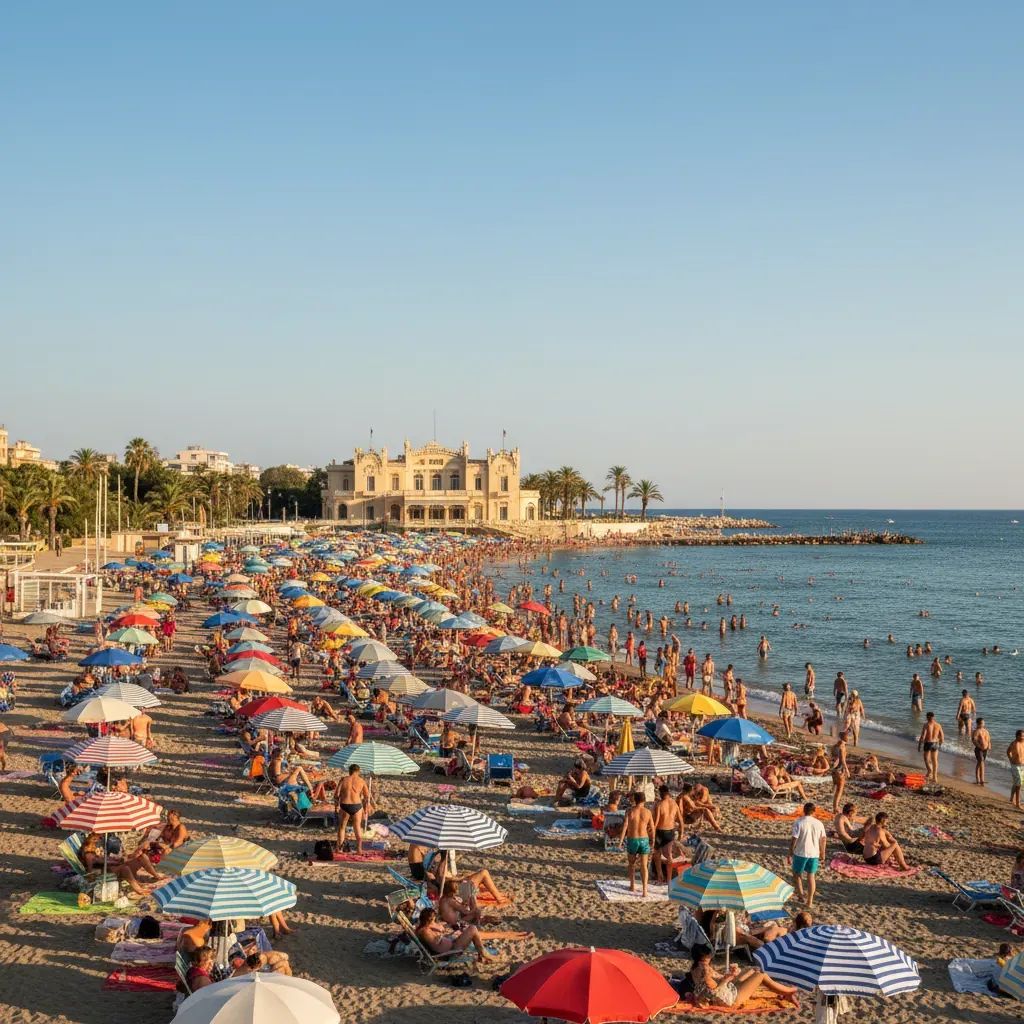
The Regional Council of Administrative Justice for Sicily has granted an emergency suspension protecting the century-old beach concession at Mondello, Palermo's most famous waterfront, citing the risk of "concrete danger for public order and safety" if one of Sicily's busiest beaches were to open the summer season without organized management. This ruling, issued on April 25, 2026, secures operational continuity for summer 2026.
Why This Matters
• Immediate effect: Mondello Immobiliare Italo Belga will continue managing roughly 36,000 square meters of beach and 3,000 square meters of water through the peak summer months, despite a prior revocation order.
• Legal limbo: A full hearing on the merits—including allegations of mafia infiltration and contract violations—is scheduled for May 14, leaving the long-term fate of the concession unresolved.
• Tender chaos: Regional plans to divide the beach into 13 short-term lots for 90-day mini-concessions are now frozen, with a separate court session set for April 28 to address those contracts.
• Public access at stake: The original revocation plan promised to expand free beach space to nearly 50% of the total area, a dramatic shift from the current model dominated by a single concessionaire.
The Ruling and Its Rationale
The CGA for Sicily overturned a March decision by the Regional Administrative Court (TAR) that had upheld the regional government's decree stripping Mondello Immobiliare Italo Belga of its concession. In its April 25 order, the CGA emphasized that the "imminence of the summer season" creates unique urgency: Mondello beach routinely draws tens of thousands of visitors between May and September, and any management vacuum could trigger safety hazards, crowd-control failures, and sanitation breakdowns.
The judges ruled that public order concerns outweigh the need for immediate enforcement of the revocation, at least until the collegial chamber can examine the full case in mid-May. This precautionary suspension does not adjudicate guilt or compliance; it simply recognizes that leaving a high-traffic beach without lifeguards, waste collection, or organized access points poses an unacceptable short-term risk.
What the Revocation Was About
The Regional Department of Territory and Environment had declared the concession lapsed late last year, citing multiple grounds: alleged serious violations of concession terms, failure to secure proper sub-contracting authorizations, and—most explosively—concerns about possible infiltration by organized crime through a partner company. The department argued that these breaches justified immediate termination of a contract dating back more than a century.
That decree triggered a legal battle in which Mondello Immobiliare Italo Belga appealed first to the TAR, which sided with the regional government, and then to the CGA. The company contended that the revocation was legally flawed and that it had invested heavily in infrastructure over its long operational history.
The Regional "Bridge Plan" Now on Hold
In anticipation of the revocation taking effect, the Sicily Region had drafted a "piano ponte"—a stopgap plan for summer 2026—that would have fragmented the concession area into at least 8 to 13 mini-lots of approximately 1,000 square meters each. These were to be awarded as 90-day short-term permits, enabling multiple small operators to run compact beach clubs while freeing up nearly half the shore for unrestricted public access.
The Palermo Municipal Council had endorsed priorities including disability-accessible zones, expanded free waterline strips, and greater involvement of concessionaires in maintaining adjacent public areas. Regional officials announced in March that tenders would be published within weeks.
The CGA suspension throws that timeline into disarray. Prospective bidders now face uncertainty about whether the lots will ever materialize, and a TAR hearing on April 28 will attempt to untangle the legal status of those short-term tenders. If the CGA ultimately reinstates the concession or delays its revocation beyond the summer, the entire bridge plan may collapse, leaving residents and tourists to navigate another season under the existing arrangement.
What This Means for Beachgoers and Residents
For anyone planning to visit Mondello this summer, the practical outcome is continuity with the status quo—at least through September. Expect the same services, cabins, umbrella rentals, and organized facilities that Mondello Immobiliare Italo Belga has provided in previous years. The company remains responsible for beach cleaning, lifeguard coverage, sanitation, and maintenance of infrastructure and surrounding areas.
However, the promise of expanded free beach space is now deferred. Critics have long complained that Mondello's public-access shoreline is too narrow, forcing day-trippers and families to compete for scarce patches of sand or pay premium prices for sunbeds. The regional plan would have tripled the free zone, but the suspension means that reform is on pause pending the May 14 ruling.
From a safety perspective, the CGA's logic is straightforward: leaving a high-traffic beach without adequate staffing and services poses an unacceptable short-term risk. The court recognized that dismantling established beach management operations mid-season creates operational challenges.
Broader Implications for Sicily's Beach Wars
The Mondello case is a microcosm of Italy's broader struggle over demanio marittimo—state-owned coastal land whose concessions have become legally and politically contentious. European competition rules, domestic anti-monopoly sentiment, and public anger over privatized shorelines have collided, forcing regional governments to rethink decades-old arrangements.
In Sicily, free beaches are shrinking as more stretches fall under concession, and municipalities face mounting pressure to enforce public-access corridors and expand no-fee zones. These policy conflicts reflect an attempt to balance accessibility with operational viability.
If the CGA eventually sides with the regional government and the revocation stands, Mondello could become a pilot project for fragmented, short-term concessions and greatly expanded public space. If the company prevails, it will signal that operational continuity weighs heavily in administrative law, even when compliance questions arise.
What Happens Next
The May 14 hearing will be the decisive moment. Until then, summer bookings, event planning, and municipal budgets hinge on a temporary order. The April 28 TAR session on the short-term tenders may offer clues about judicial appetite for the regional bridge plan, but it is unlikely to resolve the broader concession fight.
For residents and regular visitors, the message is clear: Mondello will be open and managed for summer 2026, but the legal and political battle over who controls one of Sicily's crown jewels is far from finished. Whether you favor the continuity of an established concessionaire or the promise of a reimagined, more accessible public beach, the answer will come in a courtroom, not on the sand.


