
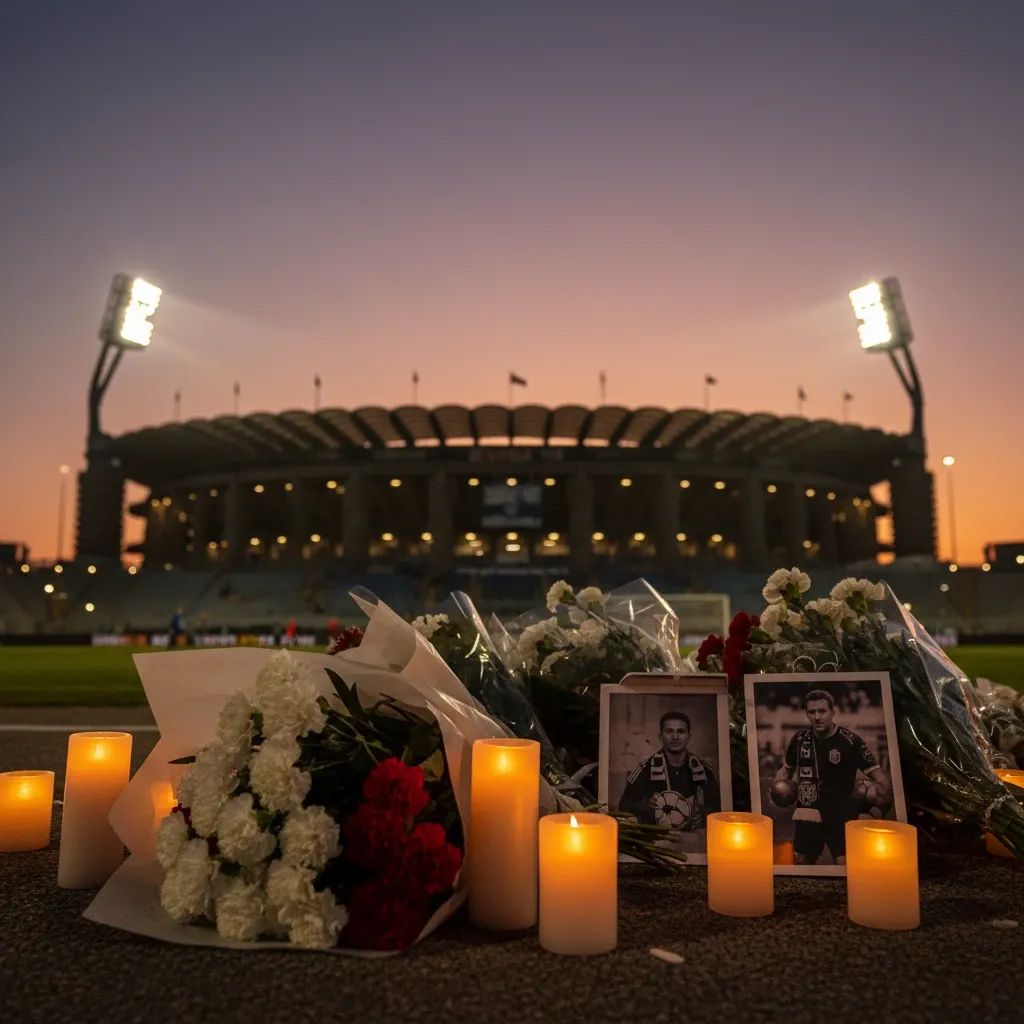
Romanian football has lost one of its most decorated figures. Mircea Lucescu, who passed away at 80 in Bucharest on April 7, leaves behind an extraordinary coaching legacy that touched clubs across Europe—including a notable stint in Italy—and a career spanning more than four decades.
Why This Matters
• Coaching royalty: Lucescu ranks as the third most decorated manager in football history, with 37 trophies to his name.
• Italy connection: He coached Inter, Brescia, and Pisa, delivering memorable Serie A campaigns and a Champions League quarter-final run with the Nerazzurri.
• Until the end: He stepped down as Romania national team coach just days before his death, having led them in a World Cup playoff match while battling serious illness.
Death Followed Weeks of Health Struggles
The University Emergency Hospital of Bucharest confirmed Lucescu's death at around 8:30 PM local time. He had been hospitalized since March 29, after collapsing during a training session with the Romania national squad. Initial reports suggested stabilization, and doctors had even planned his discharge for early April. But on April 3, he suffered an acute myocardial infarction that triggered a cascade of complications.
Over the following days, his condition deteriorated sharply. Cardiac arrhythmias failed to respond to treatment, and scans revealed signs of ischemic stroke and pulmonary embolism. Lucescu slipped into a coma from which he never emerged. Romanian media outlets, which had monitored his condition closely, broke the news late on Monday evening.
The timing underscores the manager's relentless commitment. On March 26—just 12 days before his death—Lucescu had left the hospital to coach Romania in their World Cup playoff semi-final against Turkey. Despite losing 1-0 to Vincenzo Montella's side, he refused to miss the match. "I cannot leave as a coward," he told reporters at the time. That game would be his last.
A Career That Spanned Continents and Generations
Lucescu's professional life began in 1963 as a midfielder for Dinamo Bucharest, where he won seven Romanian league titles and one domestic cup. He captained Romania at the 1970 World Cup in Mexico, facing legends like Pelé and Bobby Moore. Yet it was from the touchline that he truly made his mark.
His coaching career took off in 1982, and by 1984 he had guided Romania to their first-ever European Championship, breaking new ground for the national team. Over the next 42 years, he accumulated silverware across Romania, Turkey, Ukraine, and Russia.
The most dominant chapter came at Shakhtar Donetsk, where he won 21 trophies between 2004 and 2016—including nine Ukrainian league titles, seven national cups, and the 2009 UEFA Cup. He also lifted titles with Galatasaray (including a UEFA Super Cup), Besiktas, Dinamo Kiev, and Zenit Saint Petersburg.
His reputation extended beyond trophies. Lucescu was an early adopter of data-driven match analysis and insisted his players cultivate intellectual curiosity off the pitch. The Romanian Football Federation described him as a "visionary who introduced modern football to Romania" and a "national symbol."
What Lucescu's Italian Chapters Meant for Serie A
Though his time in Italy was short, it left a distinctive imprint. Lucescu's first Italian post came in 1990–91 with Pisa, a modest Serie A side that shocked observers by briefly topping the table under his guidance. His tenure at Brescia was even more eventful. Hired in 1992, he immediately secured promotion from Serie B to Serie A, then navigated a turbulent five-year spell of relegations and re-promotions. Club president Corioni later called them "five wonderful years," and Lucescu resigned in 1996 on amicable terms.
His most high-profile Italian job came in December 1998 with Inter Milan. Taking over mid-season, he steered the Nerazzurri through the group stage and into the Champions League quarter-finals, where they were eliminated by eventual winners Manchester United. Despite the European success, internal tensions and inconsistent domestic form led to his resignation in March 1999 after just 22 matches.
Inter was among the first clubs to pay tribute. In a statement released late Monday, the Milanese club remembered Lucescu as "one of the most authoritative and respected managers on the international stage, capable of leaving a profound mark wherever he coached thanks to his vision, charisma, and extraordinary football culture." The club praised his "professional depth and human elegance."
What This Means for Italian Football Fans
For those who followed Serie A in the 1990s, Lucescu represented an era when Italian clubs actively recruited Eastern European tacticians with fresh ideas. His brief but memorable campaigns—especially the unexpected Pisa surge and Brescia's yo-yo years—illustrated how a coach with limited resources could still impose a distinct tactical identity.
His Inter tenure, though truncated, coincided with a transitional phase for the club and offered a glimpse of the European pedigree he would later demonstrate at Shakhtar. Italian football circles respected him as a cultured, data-oriented pioneer who balanced tactical rigor with a humanistic coaching philosophy.
Tributes Pour In from Across Europe
Within hours of the announcement, condolences flooded in from clubs, players, and fellow managers. Vincenzo Montella, whose Turkey side had just ended Romania's World Cup dream, had embraced Lucescu warmly before and after that playoff match. His gesture now resonates as a poignant farewell between two coaches who understood the human cost of the game.
The Romanian Football Federation wrote: "We lose not only a brilliant strategist, but also a mentor, a visionary, and a national symbol who carried the tricolor to the highest peaks of global success."
Former players and colleagues across Turkey, Ukraine, and Romania shared personal memories, underscoring Lucescu's reputation as a coach who demanded excellence while nurturing individual growth. Many recalled his insistence that footballers read widely and think critically—a rare emphasis in a results-driven profession.
A Legacy Measured in More Than Medals
Lucescu's 37 trophies place him in rarefied company among football's all-time greats. Yet his influence extends beyond the silverware. He launched the careers of hundreds of players, many of whom credit his meticulous preparation and philosophical approach for shaping their development.
He remained active until the very end, returning to the Romania bench in 2024 for a second spell as national coach—44 years after his first appointment. His refusal to step away, even as illness progressed, encapsulates a lifelong devotion to the game.
For Italian audiences, Lucescu's story is a reminder of the golden thread connecting Serie A to the broader tapestry of European football. His brief but impactful time in Pisa, Brescia, and Milan contributed to a period when Italy served as a proving ground for some of the continent's most innovative minds.
The University Emergency Hospital of Bucharest has not disclosed details of funeral arrangements, but the Romanian government is expected to honor Lucescu with a state ceremony befitting a national sporting icon. Alongside George Hagi, he stands as one of the two towering figures in Romanian football history—one celebrated for brilliance on the pitch, the other for vision from the sideline.
As tributes continue to arrive from across the footballing world, the consensus is clear: Mircea Lucescu lived and died for the game, and his mark on it will endure for generations.


