
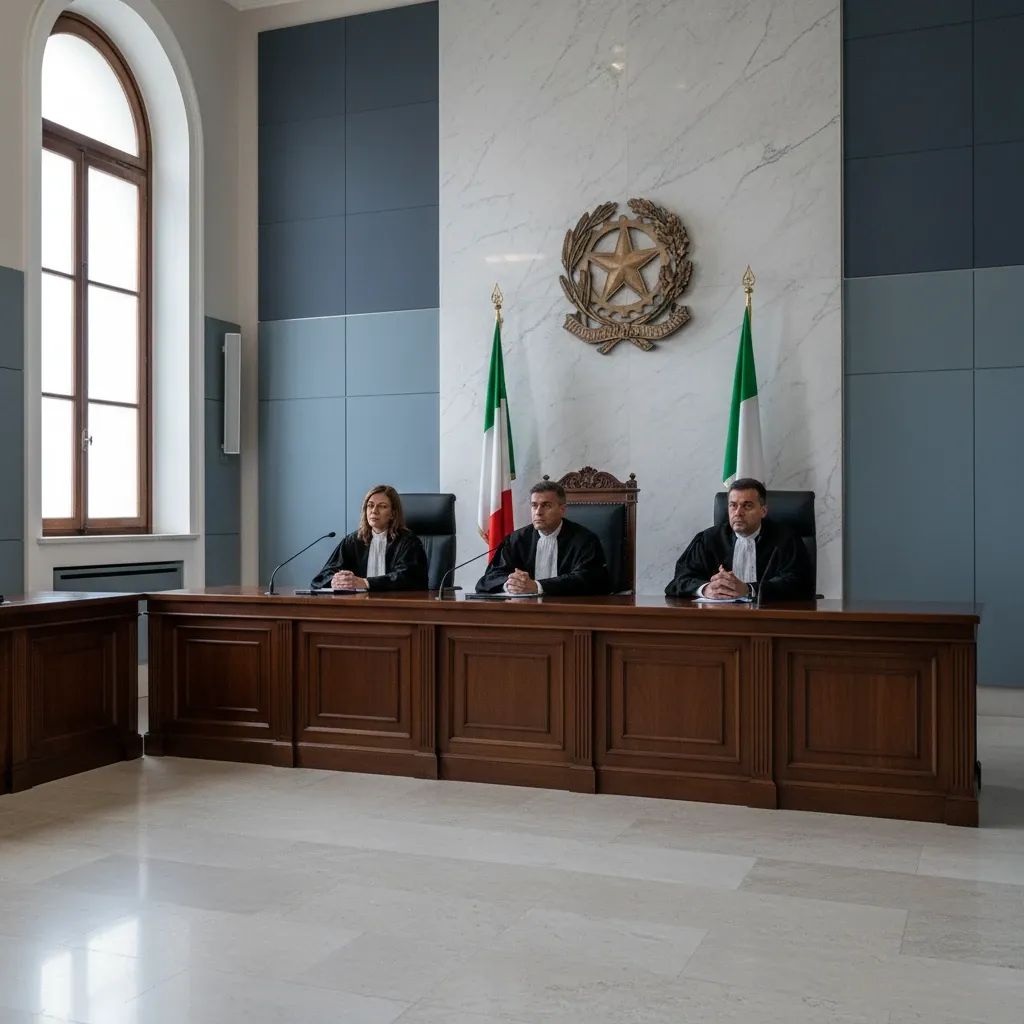
The National Association of Magistrates (ANM), Italy's influential judicial trade union, has elected Giuseppe Tango as its new president, signaling a deliberate generational shift aimed at mending relations with the national government after months of tense confrontation over judicial reform. The 43-year-old labor judge from Palermo secured 31 votes with zero abstentions in a near-unanimous endorsement that places him at the helm during a pivotal moment for Italy's judiciary.
For residents and legal professionals tracking governance stability in Italy, Tango's appointment represents a calculated pivot: the ANM is explicitly distancing itself from the factional infighting that has undermined public trust and is now positioning a millennial magistrate as the face of institutional renewal. His predecessor, Cesare Parodi, resigned immediately following the closure of the referendum polls, citing family reasons, but the timing underscores a broader strategic reset within the magistrates' association.
Why This Matters
• Dialogue resumption: Tango pledged to reopen negotiations with the Italy Ministry of Justice on long-stalled reforms, including judicial staffing levels and digital case management systems.
• Generational marker: At 43, Tango is the youngest president in ANM history and represents a cohort intentionally detached from the Palamara scandal that exposed corrupt internal dynamics.
• Post-referendum reality: Voters rejected the government's proposal to separate prosecutorial and judicial careers in a recent referendum, leaving Italy's justice system structure intact but public expectations for reform high.
• Election cycle pressure: The Superior Council of the Magistracy (CSM), Italy's judicial governance body, faces elections at year-end, with electoral law changes still under debate.
The Palamara Shadow and the Push for a Clean Slate
Tango's rise is inseparable from the fallout of the Palamara affair, a 2019 scandal that revealed how magistrates traded judicial appointments for political favor through a system of entrenched factions known as correnti. The affair prompted accusations from across the political spectrum that Italy's judiciary operated more like a closed guild than an impartial institution. Public confidence in the magistracy has not recovered to pre-scandal levels, a reality Parodi acknowledged in his farewell address: "The victory in the referendum is a strong mandate from citizens, but not a blank check. Trust has been granted; we must earn it. The judiciary no longer enjoys automatic credibility."
Tango, a member of Magistratura Indipendente (the ANM's right-leaning faction), had actually won the most votes within his bloc during the last internal elections but was passed over for president due to inter-factional negotiations that favored Parodi. This time, with the government's controversial dual CSM proposal defeated at the polls and tensions still simmering, the ANM opted for a figure perceived as unencumbered by the old guard's liabilities.
What This Means for Legal and Regulatory Stability
Tango's first statement as president was notably conciliatory, a marked departure from the combative posture the ANM adopted during the referendum campaign. "Starting tomorrow, we will work together with all actors in the justice system to propose solutions that can genuinely improve the judiciary," he said. "We will, if possible, re-tie the knots of authentic dialogue with our political counterparts."
His reference to "re-tie the knots" is significant. Roughly one year ago, the ANM presented an eight-point plan to the government during a meeting at Palazzo Chigi, the official residence of Italy's Prime Minister. That agenda included proposals to address chronic understaffing in courts, modernize outdated IT systems that slow case processing, and streamline procedural bottlenecks. Negotiations stalled as the government pivoted to its separazione delle carriere push, which the ANM vehemently opposed. Now, with that proposal rejected by voters, Tango is betting he can restart those talks.
Francesco Paolo Sisto, Deputy Minister of Justice, has already signaled openness to renewed engagement, a diplomatic olive branch that suggests both sides recognize the cost of continued deadlock. For businesses operating in Italy, legal professionals, and anyone navigating the notoriously slow Italian court system, progress on these technical reforms could translate into faster case resolution times and more predictable legal outcomes.
The CSM Election Question
One thorny issue unlikely to be resolved quickly is reform of the electoral system for the CSM, which governs judicial appointments and discipline. The current system has been criticized for enabling the very factional horse-trading exposed in the Palamara case. Tango acknowledged the pressure but was cautious about timelines: "I don't know if there's enough time to revise it, even though there are strong calls for renewal."
The CSM elections are scheduled for late 2026, leaving roughly nine months to negotiate, draft, and pass new electoral rules. Any changes would require legislative approval, meaning cooperation between the ANM, the government, and Parliament. Given the political calendar and the fragmented nature of Italy's coalition government, observers are skeptical that substantive reform can be enacted before the vote.
Who Is Giuseppe Tango?
Tango's profile is deliberately low-key. A labor court judge in Palermo, he has spent his career handling employment disputes, wage claims, and workplace safety cases—unglamorous work far removed from the high-profile criminal investigations that often dominate headlines. His supporters within the ANM frame this as an asset: he is untainted by the celebrity prosecutor culture and brings a service-oriented mindset to the role.
Born in 1983, Tango falls squarely within the millennial generation, a demographic marker the ANM is leveraging to project institutional evolution. His election is the first time someone in their 40s has led the association, a symbolic break with a leadership tradition that favored seasoned jurists in their 50s and 60s.
Structural Continuity with Strategic Change
Despite the leadership change, the ANM's executive council remains largely intact. Marcello De Chiara of Unicost stays on as vice president, and Rocco Maruotti of Area continues as general secretary. Parodi himself will remain on the Central Directive Committee, ensuring continuity even as the public face of the organization shifts.
This hybrid approach—new leadership atop an experienced administrative structure—suggests the ANM is aiming for a controlled evolution rather than a disruptive overhaul. The message to both the government and the public is clear: the association acknowledges the need for change but insists on maintaining institutional knowledge and stability.
Broader Implications for Governance in Italy
The ANM's internal politics rarely generate significant public attention, but this transition arrives at a moment when Italy's judicial system faces external pressure from multiple directions. The European Union has repeatedly flagged Italy's slow courts as a barrier to economic competitiveness, while domestic political actors across the spectrum have called for structural reforms to reduce case backlogs and improve transparency.
Tango's ability to deliver on his promise of "concrete solutions" will be tested quickly. The eight-point agenda he hopes to revive includes technical but high-impact reforms: increasing the number of magistrate positions to match caseloads, deploying unified digital case management platforms, and streamlining procedural rules that currently allow civil cases to drag on for years. For Italy's business community and foreign investors, these are not abstract legal questions—they directly affect contract enforcement, dispute resolution timelines, and the overall rule-of-law environment.
Whether Tango can navigate the dual pressures of satisfying his membership while rebuilding trust with the government and the public will define his tenure. The ANM's referendum victory may have preserved the current judicial structure, but it has not resolved the underlying credibility crisis that continues to shadow Italy's magistracy.


