
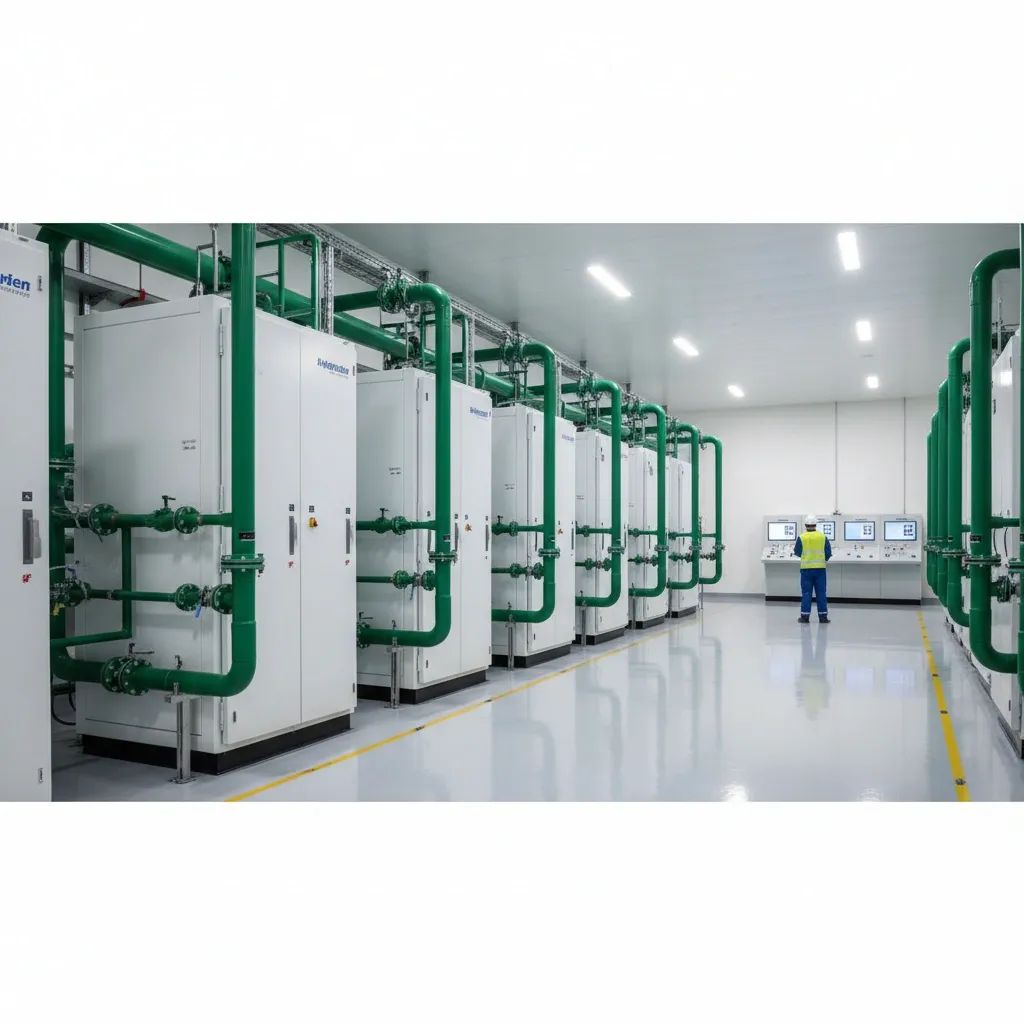
The Italy banking group Intesa Sanpaolo and the industry body H2It have confirmed that most companies working in hydrogen are already turning a profit, a sign that the fuel is moving from laboratory talk to real cashflow—and that spending along the supply chain will rise sharply before 2026.
Why This Matters
• 66 % of manufacturers already earn hydrogen revenue, meaning the sector is no longer an R&D sandbox.
• 85 % of firms plan to boost investment within 24 months, a cue for suppliers and job-seekers to position now.
• €6 B in PNRR funds are still on the table; residents can tap grants for retrofits, universities and start-ups.
• A forthcoming “decreto opex” in 2026 could subsidise green-hydrogen output, potentially easing energy bills later this decade.
A Sector Moving From Prototype to Profit
The latest 2025 Hydrogen Observatory—compiled by Intesa Sanpaolo Research with H2It—surveyed 79 companies that design everything from electrolyser plates to refuelling stations. Roughly 58 % of all respondents and 66 % of manufacturers already book hydrogen-related turnover. For half of the sample, more than 10 % of total capex is now devoted to the gas, a share that climbs further among small and medium-sized enterprises.
Beyond spending, the study paints a technologically advanced picture: one firm in three has filed, or is filing, patents, and digital twins, cloud monitoring and AI-based maintenance are spreading fast across workshops from Lombardia to Puglia.
Public Money Is Flowing: PNRR and National Strategy
Rome’s National Recovery and Resilience Plan (PNRR) has earmarked €6 B for hydrogen, of which €1.25 B specifically strengthens domestic supply chains. The Environment and Energy Security Ministry (MASE) updated the National Hydrogen Strategy in November 2024, framing the gas as a pillar of decarbonisation. Key spending lines include:
€450 M for a gigawatt-scale electrolyser factory; De Nora and Ansaldo Energia are front-runners.
€500 M for 52 Hydrogen Valleys, half in the South, converting disused industrial areas into clean-energy hubs.
€160 M for R&D grants covering storage, transport and fuel-cell innovation, with strict June 2026 deadlines.
€103.5 M has been approved for 38 hydrogen refuelling stations across 13 regions—critical for heavy-duty trucking corridors.
Where Companies Are Betting Their Capital
Surveyed firms say their biggest cheques in 2025-26 will be written for production equipment, especially high-pressure vessels and electrolyser stacks. Next on the list: software and digital controls, followed by workforce training. Crucially, 90 % foresee higher turnover by the end of 2026, and more than one quarter expect growth to exceed 25 %.
The large pipeline is already visible:
• Snam’s €12.4 B plan (2025-29) to build a multi-molecule backbone will demand valves, sensors and compressors from domestic suppliers.
• ErreDue’s 1.25 MW PEM units, due in an Apulian Hydrogen Valley by mid-2026, are locking in €4 M of orders.
Export Ambitions and European Corridors
Although today’s priority is the home market, almost 46 % of hydrogen turnover already comes from foreign buyers—a figure that jumps to 60 % among manufacturers. Italian kit is shipped mainly to Germany, the Netherlands and France, where steel and chemical plants need green molecules. The forthcoming SouthH2 Corridor, linking North-Africa-produced hydrogen with Central Europe via Sicily and Friuli, positions the peninsula as both a transit state and a potential technology exporter.
The Bottlenecks Still Holding Back Deployment
Three hurdles keep executives awake at night:
High electricity prices: Renewables remain costlier here than in Spain or Portugal, undermining the price of made-in-Italy H₂.
Permitting drag: Regional approvals for pipelines and storage caverns can take 18 months or more.
Cash-flow gap before 2026 incentives: The long-awaited decreto tariffe, expected to allocate up to €4 B in operating subsidies over five years, is still in draft form.
What This Means for Residents
For citizens and local businesses, the hydrogen push is more than an industrial story.
• Job market: Engineering graduates, welders and software developers are already being recruited in Lombardy, Emilia-Romagna and Campania. Upskilling programs funded by regional ERDF envelopes cover up to 70 % of course fees.
• Grants for SMEs: Family-owned metal shops can still apply, via Invitalia, for the €100 M component-supply scheme; 40 % of the money is reserved for the South.
• Energy prices: While green hydrogen will not lower home utility bills tomorrow, the infrastructure built now should blunt future gas-price spikes—think winter 2022—by diversifying supply.
• Mobility: The first wave of hydrogen refuelling stations is slated for the Brenner, Milan-Turin and Rome-Naples corridors. Early adopters of fuel-cell vans may soon dodge congestion fees that cities plan to impose on diesel.
Bottom line: Italy’s hydrogen ecosystem has entered its money-making phase, and the next two years are set to decide whether the country becomes a continental hub—or settles for being a technology customer. Either way, residents willing to skill-up or invest now stand to benefit from the public and private billions already in motion.


