
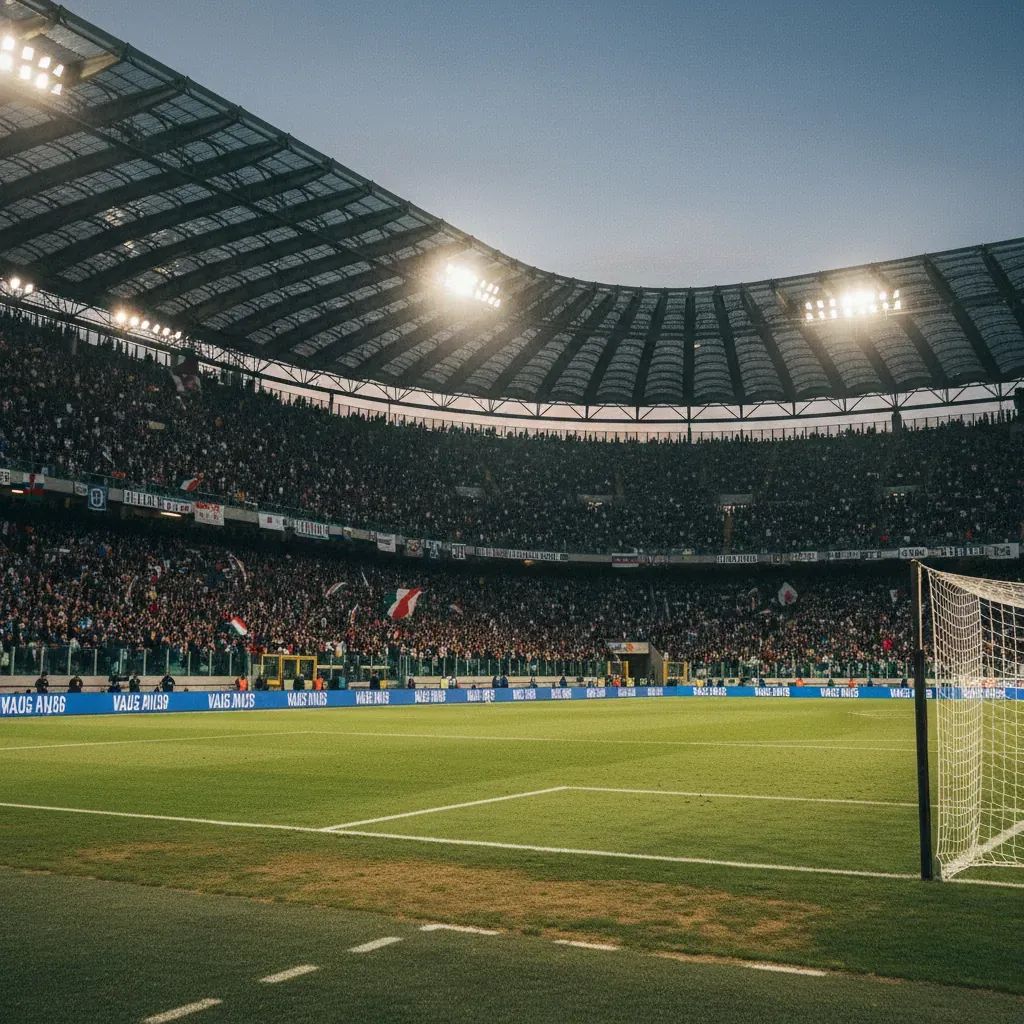
Italy's youth national teams win tournaments. Then those same players disappear. Just 9% of Serie A playing time goes to homegrown talent—the lowest rate among Europe's top five leagues. This disconnect between academy success and professional opportunity has become the defining crisis in Italian football, one that extends far beyond national team disappointments.
What This Means for You:
• Your club prefers foreign journeymen over local prospects: 67.5% of Serie A players are foreign, creating a widening gap between academy graduates and first-team opportunities
• Financial instability threatens the sport: Serie A clubs carry €5.5B in debt—more than double pre-2008 levels—limiting investment in local talent development
• World Cup absence continues: Italy's third consecutive failure to qualify has triggered a federation leadership election set for June 22, 2026, and sparked demands for systemic reform from the government
The Coaching Community's Diagnosis
Renzo Ulivieri, president of the Italy Football Coaches' Association (AIAC), recently told RAI Radio 1's "Radio Anch'io Sport" program that Italy's football woes demand urgent attention to specific systemic failures. His comments came as the Italy Football Federation (FIGC) grapples with the fallout from another World Cup absence—a streak that now spans 12 years.
"We don't need a radical change, but we must confront the main problems our football faces, especially regarding talent," Ulivieri stated. He highlighted the paradox at the heart of Italian football: the country's youth national teams consistently perform well, yet those same players struggle to break into Serie A starting lineups.
"These young players cannot make the transition," he said. "Whether it's the fault of coaches who must win at all costs or the clubs themselves, this is the critical moment. We need to find a solution, though given current regulations, it won't be forcing teams to field a minimum number of Italians."
The Talent Drain: Numbers Tell a Stark Story
The numbers prove his point. Serie A has become Europe's most internationalized league, with foreign players occupying more than two-thirds of roster spots. Italian players who developed through domestic youth systems logged just 9% of total minutes in the 2025-26 season, trailing far behind France's Ligue 1, Germany's Bundesliga, and Spain's La Liga.
The problem begins in the academies themselves. While Italy's Primavera youth championship teams post impressive records, the structure incentivizes winning at the youth level rather than cultivating well-rounded professionals. Coaches face pressure to deliver trophies even in age-group competitions, leading to tactical rigidity and a result-first mentality that stuns creativity and individual technical growth.
By the time a prospect reaches 18 or 19, Serie A clubs default to what insiders call "l'usato sicuro"—the safe, experienced option. A foreign journeyman with 100 professional appearances becomes a safer bet than a domestically trained teenager, even one with a decorated youth résumé. The average debut age for Italian players in Serie A is higher than in the Bundesliga, Ligue 1, or La Liga, and when young Italians do get minutes, they're judged with far less tolerance for error than their veteran counterparts.
What Residents Experience Every Weekend
For Italian football fans, the consequences are felt in the stands and on the pitch. Ticket buyers watch a slower, more conservative style of play. Serie A matches average just 52 minutes and 55 seconds of effective playing time, the lowest among major European leagues. The ubiquitous 3-5-2 formation, a tactical relic rarely seen in England, Spain, or Germany, dominates Italian pitches and contributes to a defensive, low-tempo product that struggles to compete with the intensity of rival leagues.
The €5.5B debt burden carried by clubs across Serie A, Serie B, and Serie C threatens financial stability and limits investment in infrastructure and youth development. Match-day revenue suffers from aging stadiums, which UEFA President Aleksander Čeferin has criticized as among the worst in Europe—a critique that could jeopardize Italy's co-hosting of Euro 2032.
Serie A ranks second globally in transfer spending, yet that capital flows overwhelmingly to foreign players and agents rather than reinvestment in local academies. The result: residents pay ticket prices rivaling Europe's best leagues but watch a product that lags behind them competitively.
Federation Response: A Coordinated Overhaul Begins
The FIGC launched a "Technical Project for Italian Youth Football" in March 2026, appointing Maurizio Viscidi as Technical Director to harmonize efforts across the federation's disparate youth bodies. World Cup winners Simone Perrotta and Gianluca Zambrotta are drafting updated guidelines for grassroots football, with an emphasis on individual technique, creativity, and enjoyment for players aged 5 to 12.
The federation also rolled out the "Evolution Programme," a network of Territorial Federal Centers (CFT), Territorial Development Areas (AST), and Territorial Development Centers (CST) designed to standardize coaching quality and create clear progression routes for players under 15. Critically, the FIGC amended Article 33 of its internal regulations to give clubs greater flexibility in contracting young professionals, eliminating exclusive rights to sign a player's first professional contract.
Bright Spots in a Dark Landscape
Not every corner of Italian football is declining. Women's Serie A turned professional in 2022, and the Italy women's national team has grown its fan base and improved results. A handful of clubs—Atalanta, Sassuolo, and Fiorentina—have bucked the trend by investing heavily in youth infrastructure.
Atalanta, in particular, generates significant transfer profits from academy graduates and maintains a high percentage of homegrown players in its first-team squad. Fiorentina's Viola Park, opened in 2024, represents a state-of-the-art training complex designed to rival Europe's best. These clubs prove that sustainable success and youth development are not mutually exclusive, even in a league dominated by short-term thinking.
Lessons from Europe's Top Academies
The contrast with Europe's most successful football nations is instructive. France's Clairefontaine academy receives public funding to integrate academic education with elite training, producing professionals while guaranteeing graduates earn their secondary school diplomas. Spain's four-tier regional youth competition structure ensures no talent escapes scouting networks, while Germany's post-2000 overhaul created a nationwide system of federal youth centers feeding directly into professional clubs.
Critically, Germany and Spain allow reserve ("B") teams to compete in professional leagues, giving 18- and 19-year-olds regular exposure to adult competition. Italy has only recently embraced this model, with Juventus Next Gen, Atalanta U23, and Milan Futuro fielding second teams in lower divisions.
France, Spain, and the Netherlands also cultivate a culture of calculated risk, where clubs plan four-to-six-year development arcs for prospects and accept that young players will make mistakes. In Italy, where managerial tenure averages less than two seasons, the pressure to deliver immediate results leaves little room for patience.
The Foreign Coach Question
Ulivieri dismissed the notion that Italy should look abroad for its next national team manager. "I believe the national team needs an Italian coach," he said, invoking the legacies of Enzo Bearzot (1982 World Cup winner) and Marcello Lippi (2006 champion). "We have a history of winning every 25 years. Both in 1982 and 2006, we had the fortune of finding players at peak condition who were also champions."
He noted with pride that Italian coaches remain prominent on the global stage. Carlo Ancelotti, Vincenzo Montella, and Fabio Cannavaro are all competing at the current World Cup, though Ulivieri expressed regret that Gennaro Gattuso, who resigned as Italy head coach following the qualification failure, is not among them.
The Path Forward
Ulivieri's measured tone reflects the prevailing sentiment among Italian football insiders: the crisis is real, but panic-driven overhauls often do more harm than good. The FIGC's new technical project, combined with regulatory tweaks to youth contracting and a growing willingness among top clubs to field reserve sides, represents a foundation.
Whether that foundation can support a genuine cultural shift—from result-obsessed conservatism to patient, technique-focused development—will determine whether Italy's next generation of talent makes it beyond the Primavera. For now, the June 22 election looms as the next inflection point. Whoever succeeds Gabriele Gravina will inherit a federation under political pressure from the Italy Ministry of Sport, led by Andrea Abodi, who has called for complete refoundation.
The coaches, at least, are not calling for revolution. But they are insisting on solutions. Whether the sport's administrators and club owners can deliver them remains the defining question for Italian football in 2026.


