
A2A, the Milan-based multi-utility, is accelerating its transformation into a renewable energy powerhouse—and shareholders meeting in Italy today heard that the company's installed electric capacity surged 71% in 2025, even as global crises rattled energy markets and geopolitics cast long shadows over supply chains.
The company closed last year with €686M in adjusted net profit and €14B in revenue, backed by a record €1.7B investment push—up 11% year-on-year—most of which went toward renewable generation, network upgrades, and circular economy infrastructure. The board is proposing a dividend of €0.104 per share, a 4% increase, signaling confidence despite turbulent conditions.
Why This Matters
• Renewable rollout continues: A2A's 71% capacity surge places Italy among Europe's fastest-moving incumbents in clean energy deployment—directly supporting the country's decarbonization targets.
• Grid resilience improves: With upgrades flowing into the electricity distribution network, outages and integration bottlenecks for rooftop solar and EVs should decline in coming years.
• Circular economy bets grow: Waste-to-energy and biometano projects reduce Italy's reliance on imported gas and landfill pressure.
• Dividend stability: Despite profit pressures, A2A is maintaining shareholder returns—important for pensioners and municipal investors who hold significant stakes.
Navigating a Year of Shocks
Speaking at the shareholders' assembly held today—where over 75% of the capital was represented—Chairman Roberto Tasca described 2025 as a year "marked by growing international tensions." Conflicts in multiple theaters, including a flare-up in the Middle East, disrupted global oil and gas flows and exposed the fragility of European supply arrangements, particularly for natural gas.
"Turmoil in Latin America and the Middle East crisis hit energy markets hard," Tasca noted, "placing strain on multilateral mechanisms and the stability of even the most solid economies." He also pointed to climate change as a force that "continued to produce effects on economy, society, and ecosystems—reminding us that the energy transition is not only necessary, but economically rational."
Against that backdrop, A2A "stayed the course," Tasca said, delivering results that "testify to the solidity of our industrial model and the coherence of our strategic choices."
The Numbers: Profit Down, Investment Up
A2A's adjusted net profit of €686M reflected a 16% decline from the prior year, driven primarily by normalized hydroelectric production after an exceptional 2024, plus higher depreciation charges tied to the investment surge and rising financing costs. The company's reported net profit stood at €750M.
But the revenue picture was rosier: €14B in turnover, a 9% increase, and an adjusted EBITDA of €2.24B, underscored the group's scale and diversification. Net financial position improved to €5.47B.
What stands out is where the money went. Of the €1.68B in organic capex, roughly 70% qualifies under the EU Taxonomy—meaning it meets strict environmental criteria—and was channeled into renewable generation, electricity network reinforcement, circular economy assets, and digitalization.
Renewable Capacity Soars
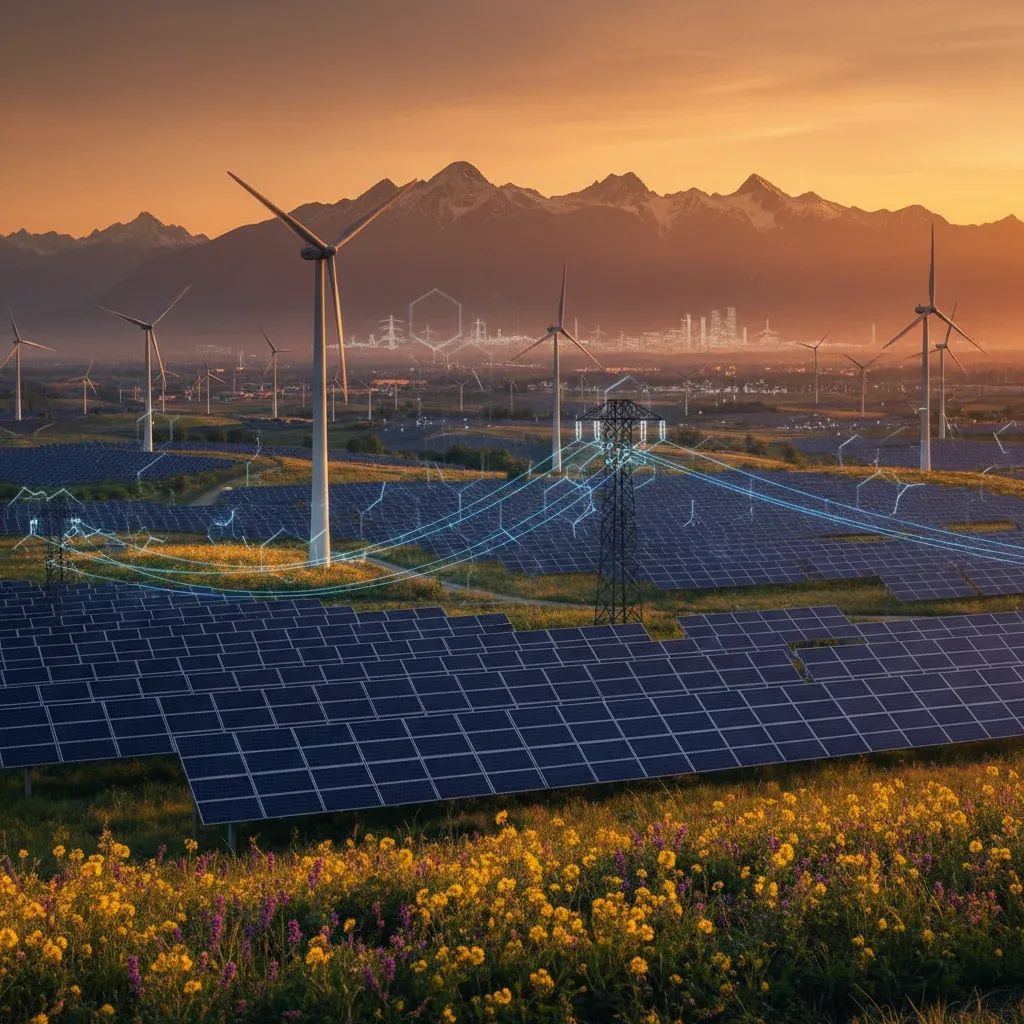
The headline figure—a 71% increase in installed electric capacity—reflects A2A's aggressive buildout of solar and wind farms, part of a broader strategic plan targeting 3.7 GW of renewable capacity by 2035. The company currently has a pipeline exceeding 1.8 GW, with 83% developed in-house rather than acquired.
Over the past five years alone, A2A has brought online 700 MW of photovoltaic and wind assets. In a notable initiative, the company is partnering with Keynesia Energy to develop Renewable Energy Communities (CER) nationwide, aiming for over 100 MW of new solar capacity by 2027. These projects will deliver 100% green power to participating SMEs at stable, competitive prices while accessing Italy's incentive frameworks for community energy.
The company is also expanding its electricity distribution grid to 77,000 km by 2026, integrating renewables, EV charging stations, and heat pumps into a smarter, more resilient network. Smart meter rollouts and grid digitalization are slated to continue through 2027, reducing losses and enabling real-time demand response.
Circular Economy and Waste-to-Energy Bet
Complementing the renewable push is a €7B commitment through 2035 to circular economy activities—positioning A2A as a leader in Italy's waste valorization sector. The group plans to recover an additional 4.5M tons of waste annually by 2030, diverting material from landfills and converting it into energy or raw materials.
Key investments include expansion and upgrades to waste-to-energy (WtE) incinerators, organic and plastic sorting plants, and biometano production facilities scheduled for 2026–2028. By treating 6.6M tons of waste by 2035, A2A aims to reduce Italy's dependence on imported gas while capturing heat from data centers and industrial processes for district heating networks.
The company is also exploring CO₂ capture technologies for its WtE plants, aligning with its Net Zero 2050 commitment—a pathway that includes a 50% cut in direct emissions by 2035 and an 80% reduction by 2040, both measured against a 2017 baseline. A2A retired all coal-fired capacity in 2022, ahead of schedule.
Strategic Plan: €23B Through 2035
The 2025 results sit within A2A's updated 2024–2035 strategic plan, which calls for €23B in total investments. Of that sum, €16B is earmarked for energy transition—including €4.9B for grid infrastructure, €3.7B for new renewable capacity, and €1.6B for data center development.
The data center play is particularly novel: A2A intends to leverage its energy infrastructure as a platform, offering low-carbon power and waste heat recovery to hyperscale and edge facilities. The company plans to deploy 16,000 public EV charging points by 2035, tapping into the electrification of transport as both a revenue stream and a grid flexibility tool.
Financing for the plan will draw heavily on sustainable finance instruments, including the group's first European Green Bond, issued to fund taxonomy-aligned projects.
Impact on Residents and Investors
For people living in Italy, A2A's trajectory matters in several tangible ways:
• Lower energy volatility: Greater renewable capacity and biometano production should moderate exposure to imported fossil fuel price swings, especially after the gas shocks of recent years.
• Improved service reliability: Network investments mean fewer blackouts and faster integration of rooftop solar, battery storage, and EV chargers.
• Waste management evolution: More waste-to-energy capacity reduces landfill use and provides a local energy source, particularly relevant for northern municipalities where A2A operates most of its plants.
• Municipal budgets: A2A is partly owned by the municipalities of Milan and Brescia; stable dividends help fund local services, while capex in local infrastructure creates jobs.
• Climate commitments: As one of Italy's largest utilities, A2A's decarbonization pace directly influences the country's ability to meet EU climate targets and avoid penalties.
For investors, the key tension is between short-term profit pressure and long-term structural positioning. The 16% net profit decline in 2025 reflects the cost of transformation: higher amortization, increased debt servicing, and the normalization of windfall hydro gains. Yet revenue growth, a strong EBITDA, and disciplined capex allocation suggest the company is building durable competitive advantages in a regulatory environment that increasingly favors low-carbon, circular business models.
Competitive Landscape
Among Italy's major utilities, A2A's 2025 performance sits in the middle tier. Enel remains the dominant force, with €80.4B in revenue and €7.01B in net profit, benefiting from scale and international diversification. Hera posted €508M in net profit (up 4.1%) and €1.03B in capex (up 20%), while Iren saw €316M in profit (up 4.2%) and €1.35B EBITDA (up 6.2%). Edison, meanwhile, grew revenue to €17.7B but saw net profit slide to €240M from €403M, hit by margin compression.
A2A's €14B revenue places it above Iren and Hera but well below Enel and Edison. Its €1.7B capex is aggressive relative to size, signaling a willingness to trade near-term margin for strategic positioning. The 71% capacity increase is unmatched among peers, underscoring A2A's focus on generation rather than just distribution or retail.
What Comes Next
Looking ahead, A2A's 2026–2027 roadmap includes completing several large-scale WtE expansions, advancing the CER solar pipeline, and beginning operations at new biometano plants. The company is also expected to finalize data center partnerships and accelerate smart grid deployment in Lombardy and northern regions.
The board's dividend proposal will be voted on today, with approval virtually certain given the high shareholder attendance and municipal backing. Barring regulatory surprises or a renewed energy price spike, the company appears positioned to continue its investment-led strategy, prioritizing capacity growth and diversification over short-term profit maximization.
For a country still navigating the complexities of energy security, climate compliance, and industrial competitiveness, A2A's transformation offers a live case study in how legacy utilities can pivot—slowly, expensively, but steadily—toward a post-carbon future.


