
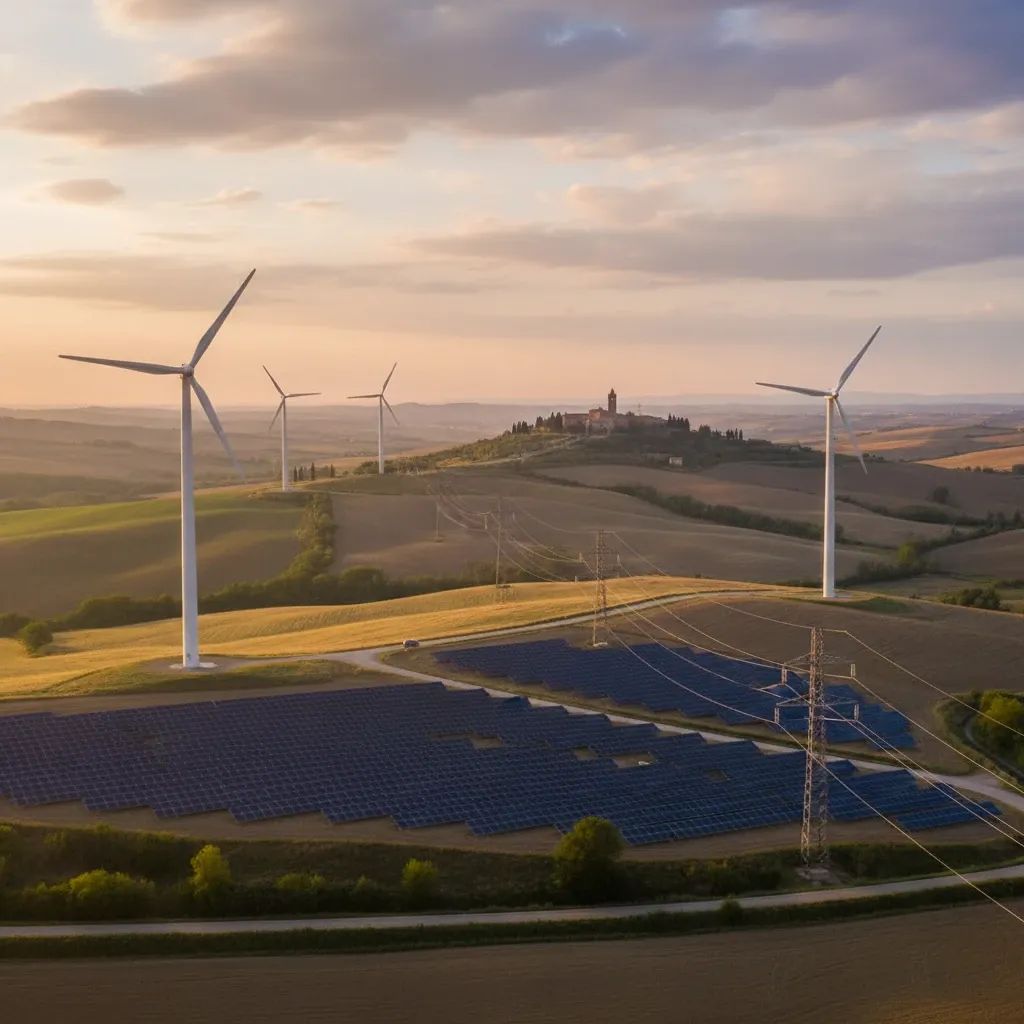
Enel, Italy's dominant energy utility, faces a €1.8 billion cumulative hit from the Italian government's new energy decree through 2028, yet investors signaled confidence that the utility giant has already priced in the regulatory headwinds.
Quick Reference: What You Need to Know
If you're a resident, here's what matters:
• Vulnerable families already receiving the social bonus: Get an extra €115 one-time payment in 2026
• Middle-income households (annual income below €25,000 ISEE): Eligible for a €60 voluntary contribution if your supplier participates
• Small business owners: Expect lower system charges on bills starting April 2026, reducing your fixed electricity costs by several percentage points
• When to act: Check with your electricity supplier in the coming weeks to confirm participation in relief programs
What the Decree Actually Does
The Italian government passed an energy decree as a multifaceted intervention to cushion households and small businesses from energy price volatility. The package channels roughly €2.2 billion in 2026 and €1.3 billion in 2027 toward three core objectives: expanding the social bonus for vulnerable families, subsidizing bills for middle-income households, and cutting system charges for non-energy-intensive SMEs.
About 2.7 million families already receiving the electricity social bonus will get an extra €115 one-time payment, lifting their total annual support to €315. A separate "voluntary" contribution of up to €60 per household targets an additional 4.5 million families with annual incomes below the €25,000 ISEE threshold who do not currently qualify for the existing bonus. The eligibility is automatic if your household meets the income criteria—contact your supplier to confirm participation.
Meanwhile, €1.5 billion in 2026 and €800 million in 2027 goes toward slashing system charges on SME bills—a move that directly reduces overhead costs for Italy's sprawling network of mid-sized manufacturers and service providers. For a mid-sized manufacturer consuming 500 MWh annually, system charges typically represent 15–20% of the total bill; this reduction improves cash flow and competitiveness.
To fund these measures, the government levied a temporary 2-point regional business tax surcharge on energy sector profits for 2026 and 2027, expected to raise roughly €433 million in 2026 and €501 million in 2027.
Impact on Your Energy Bills
Households already in the social bonus program should see the €115 supplement automatically credited to their accounts in coming months—no new application required. If your household income falls below €25,000 annually (ISEE), you should contact your electricity provider within the next two months to confirm enrollment in the €60 voluntary assistance program, as not all suppliers may opt in immediately.
Business owners, particularly operators of manufacturing plants or logistics hubs, will notice lower system charges starting with bills issued after April 2026. This is a good moment to review multi-year supply contracts: if you locked in rates before the decree, you may want to renegotiate to capture the reduced overhead.
Longer term, watch for updates on proposed changes to the EU Emissions Trading System application. These reforms aim to lower wholesale prices, but consumer advocacy groups caution that funding mechanisms may shift costs rather than eliminate them. The bottom line: expect incremental bill relief rather than transformative savings.
Why This Matters: The Financial Picture
• €1.8 billion burden: The decree will reduce Enel's net profit by roughly €150 million annually, peaking at €300 million when temporary tax relief expires
• €53 billion investment pledge: Despite the regulatory drag, Enel commits to accelerating renewables expansion and grid modernization
• Supply chain impact: Enel plans to add 15 GW of new wind and solar capacity through 2028, gradually pushing more zero-marginal-cost power into the grid—the key to long-term price relief
The company projects that over 90% of its revenue through 2028 will stem from regulated tariffs or long-term contracts, insulating cash flow from wholesale price swings.
What This Means for the Future
If you live in Italy, the immediate takeaway is incremental bill relief. Subsidies and tax shifts provide near-term cushioning for vulnerable households and competitive breathing room for small businesses, but sustainable price relief depends on expanding the renewable energy base fast enough to retire expensive fossil capacity.
Enel's 15 GW renewable addition represents roughly 10% of Italy's current installed capacity. Accelerating this buildout over the next decade would fundamentally reshape the country's cost structure and reduce exposure to global gas markets. Until then, expect a steady drumbeat of incremental policy adjustments as Rome balances fiscal discipline, industrial competitiveness, and social equity in one of Europe's most complex energy transitions.
For investment-minded residents, Enel's transparent disclosure of regulatory impacts and proactive mitigation measures demonstrate the utility's resilience—yet the broader lesson is that structural cost reduction requires structural supply reform, not subsidies alone.


