
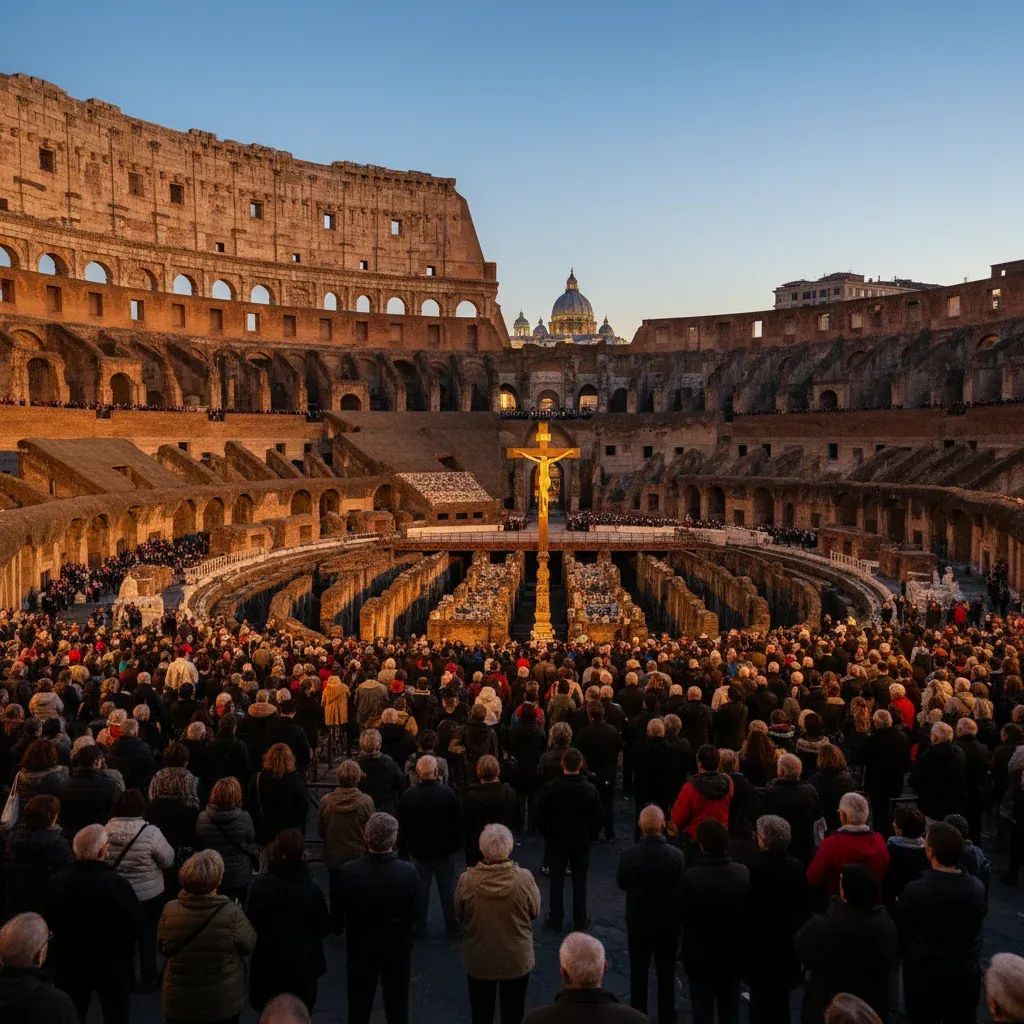
The Italian Bishops' Conference (CEI) has issued its Easter 2026 message with an unambiguous declaration: no one may invoke God to legitimize armed conflict. Signed by Cardinal Matteo Zuppi, the body's president, and Monsignor Giuseppe Baturi, its secretary general, the statement arrives as global violence intensifies and Italy's Catholic leadership seeks to reframe the moral debate around war, suffering, and communal responsibility.
Why This Matters
• Theological red line: The CEI asserts that using religion to justify warfare is a grave sin, directly contradicting nationalist or fundamentalist narratives.
• Domestic solidarity: The message calls for renewed attention to Italy's vulnerable populations—unemployed workers, prisoners, the isolated elderly, and families struggling with educational costs.
• Diplomatic pressure: Cardinal Zuppi's parallel outreach to Middle Eastern patriarchs and his coordination with Pope Leo XIV's April peace vigil signal the Church's active diplomatic role in conflict zones.
A Rejection of Normalized Violence
The bishops open with a catalog of contemporary suffering: wars tearing apart families and nations, violence targeting the defenseless, the loneliness eroding countless lives, and the exhaustion of men and women who feel lost and without a future. "We cannot grow accustomed to all this," the message reads. The CEI warns that accepting cruelty as routine, allowing harshness to triumph over compassion, and permitting indifference to supplant fraternity represent moral failures that the Easter season must confront.
This refusal to normalize violence extends beyond battlefield casualties. The bishops highlight the tears of children, the fears of young people, the abandonment of the elderly, and the suffering of those marked by poverty, illness, or marginalization. The language is deliberate: these are not abstractions or statistics but lived realities for millions across Italy and beyond.
The Resurrection as Active Hope
Central to the CEI's Easter message is the assertion that the resurrection of Christ transforms the calculus of despair. "Evil does not have the last word, death is not the end, wounds are not condemned to remain forever open," the bishops write. This theological conviction is presented not as passive consolation but as a summons to action.
The Risen Lord, they argue, invites believers to abandon the role of spectators. Instead, Catholics are called to choose light, safeguard life, care for one another, and become signs of peace. The message quotes an homily by Pope Leo XIV delivered on March 29, 2026: "Christ, King of peace, still cries from his cross: God is love! Have mercy! Lay down your arms, remember that you are brothers!"
Every gesture of kindness, word of consolation, extended hand, sought reconciliation, rejection of violence, and choice of justice is framed as a "paschal sign, a fragment of resurrection in the heart of the world." The bishops position this not as idealism but as practical theology—faith expressed through concrete acts.
God Refuses War
The most pointed section of the message addresses the weaponization of religious language. "God refuses war," the CEI declares, and "no one can use God to justify war." This statement carries weight in a global context where religious justifications for conflict remain prevalent, from ethno-nationalist movements in Europe to sectarian violence in the Middle East.
Patriarch Pierbattista Pizzaballa of Jerusalem, whose jurisdiction covers some of the world's most contested territory, has emphasized this position in recent statements to Vatican representatives and in public remarks to journalists: "Abusing the name of God to justify this or any other war is the most serious sin we can commit in this time." He added that God stands with the dying, the suffering, and the afflicted—not with those who invoke divine sanction for violence.
Cardinal Zuppi has repeatedly emphasized that war represents a failure of politics and humanity, describing it as an uncontrollable spiral that leaves the world worse than it found it. He argues that only diplomacy, dialogue, and genuine inquiry into the root causes of conflict can halt violence and construct lasting peace. Casualties, he insists, must never be dismissed as "collateral effects."
What This Means for Residents
For people living in Italy, the CEI's Easter message translates into both spiritual and practical imperatives. The bishops explicitly address domestic concerns, directing attention to the sick, prisoners, the unemployed, those struggling to educate their children, the lonely, and those who can no longer see a path forward. The Risen Christ, they write, accompanies each person like the traveler on the road to Emmaus—rekindling hearts, opening eyes, and setting people back on their journey.
This pastoral focus aligns with the CEI's broader 2026 initiatives. On March 13, the bishops convened a Day of Prayer, Fasting, and Penance for Peace, specifically targeting the escalation in the Middle East and other global conflict zones. The organization has also launched an appeal against the militarization of schools and universities, urging institutions to prioritize "work and the building of peace" over the conversion of civilian production to military purposes.
The Church's 8xmille fund—revenues from Italy's tax designation system that allows taxpayers to allocate 0.8% of their income tax to religious or social causes—continues to support projects addressing new forms of poverty, literacy programs, clinics, vocational training, sustainable agriculture, and assistance for refugees and displaced persons. The CEI's 2026 institutional campaign, titled "È la Chiesa cattolica. Ed è più di quanto credi" (It's the Catholic Church. And it's more than you think), highlights this daily solidarity network offering support, welcome, and listening to the most fragile.
Coordinated Religious Diplomacy
The timing of the CEI message coincides with intensified diplomatic activity by Pope Leo XIV, who on Good Friday, April 3, held telephone conversations with both Israeli President Isaac Herzog and Ukrainian President Volodymyr Zelenskyy. The Vatican emphasized the need to reopen all possible channels of diplomatic dialogue to end the "grave ongoing conflict" in the Middle East and ensure humanitarian aid reaches Ukraine's suffering population.
The Catholic archbishop responsible for U.S. military personnel publicly stated that the war involving the United States and Israel against Iran does not meet the Church's moral criteria for a just conflict. Meanwhile, Catholic, Jewish, and Muslim leaders have jointly signed appeals to stop hatred and weave peace, particularly in Middle Eastern contexts.
Cardinal Zuppi sent a letter to Middle Eastern patriarchs expressing solidarity and concern over worsening violence, reiterating that war is never the answer. The CEI's position reflects a broader interreligious consensus: that dialogue and peace, not dominance or force, must guide international relations.
The Scandal of Indifference
Pope Leo XIV has condemned what he terms a "globalization of indifference" to the deaths of thousands and the ripples of hatred and division that conflicts sow. He announced a prayer vigil for peace scheduled for April 11, underscoring the urgency of the moment.
The CEI's March 2026 Permanent Episcopal Council identified peace as one of four priorities, alongside missionary conversion, transmission of faith, and ecclesial co-responsibility. The Church's synodal journey itself is described as "leaven of peace and hope," a process aimed at embedding peacemaking into the fabric of Catholic life.
According to the Catechism of the Catholic Church and papal encyclicals on war and peace, total war—"any action of war that indiscriminately tends to destroy entire cities or vast regions with their inhabitants"—is defined as a crime against God and humanity. Yet the bishops acknowledge that while religion is rarely the sole cause of armed conflict (estimated at around 5% of wars), it can exacerbate violence when fundamentalist or integrist currents play a destabilizing role.
A Call Beyond Spectatorship
The CEI's Easter message is structured as a challenge to passivity. In a world where violence risks becoming routine and compassion secondary, the bishops insist that Easter faith demands active resistance to despair. The resurrection narrative, they argue, is not a private comfort but a public mandate: to care, to reconcile, to oppose violence, and to choose justice.
For Catholics in Italy, the message frames this mandate in local terms—attending to the imprisoned, the jobless, the isolated, and the fearful. For the global Church, it represents a theological line in the sand: God cannot be co-opted for nationalist agendas, sectarian hatreds, or militaristic ambitions. The Crucified One who rose, the bishops write, stands always with the victims—not the victors.
In the context of Italy's 2026 social landscape—marked by economic anxieties, demographic shifts, and debates over migration and security—the CEI's emphasis on fraternity over indifference, and dialogue over force, offers a counter-narrative. Whether that narrative gains traction beyond parish walls depends on how effectively the Church's institutional resources translate theological conviction into visible solidarity.
The bishops conclude with an image: the Risen Christ as a fellow traveler, unrecognized at first, who accompanies, listens, and ultimately reveals himself in the breaking of bread. It is an ancient story, retold for a contemporary audience, insisting that hope is not naïve but rooted in the refusal to let death, violence, or despair have the final word.


