
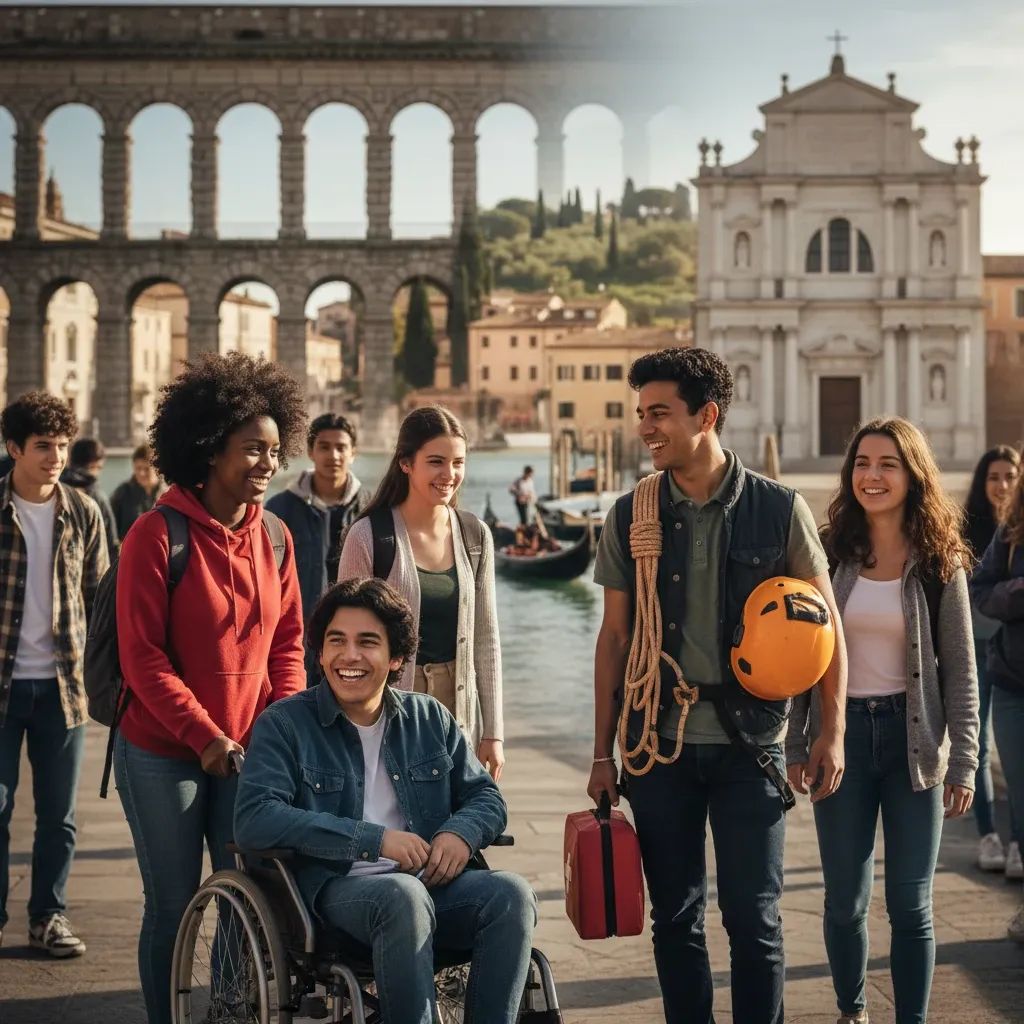
Italy President Sergio Mattarella has named 28 adolescents as the nation's newest "Alfieri della Repubblica" (Standard-Bearers of the Republic), a move that spotlights a generation rewriting the script on civic duty through acts of courage, creativity, and quiet solidarity. From a 13-year-old who pulled a drowning peer from a raging torrent to teenage poets giving voice to isolation, the 2025 cohort—chosen under the theme "Sperimentare e comunicare la solidarietà" (Experimenting and Communicating Solidarity)—offers a counternarrative to stereotypes of disengaged youth.
Why This Matters
• National Recognition: The Italy Presidency awards these honors annually to minors who model civic virtue, with recipients spanning Sicily to Friuli-Venezia Giulia.
• Direct Community Impact: Winners include volunteers supporting neonatal intensive care units, app developers fighting food waste, and scouts assisting autistic children—tangible interventions in daily life.
• Youth Mobilization: The Associazione Nazionale Alfieri della Repubblica Italiana (ANARI), founded in 2020, unites past recipients into a network aimed at sustaining their civic missions beyond the ceremony.
The Heroes Behind the Headlines
The Italy Quirinale Palace released detailed profiles of the 28 honorees, revealing stories that blend personal resilience with outward-focused action. Nicolas Treppo, 13, from Tarcento (Udine), exemplifies the raw courage: spotting a friend unconscious in a swollen creek, he dove in, dragged the boy to shore, and administered mouth-to-mouth resuscitation until paramedics arrived. Viola Menichetti, 16, from San Donato Milanese, faced a similar crucible on January 4, 2025, when her father fell 100 meters into an icy ravine. Despite losing a boot and navigating unmarked trails in darkness for two hours, she reached a signal zone and summoned rescue teams.
Medical emergencies punctuate the roster. Riccardo Cremonesi, 18, from Pavia, executed a textbook Heimlich maneuver during a math class in San Martino Siccomario, saving a classmate choking on candy. Inerio Vacca, 16, from Arbus (Sardinia), pulled an unconscious friend from the sea after a diving accident and revived him with CPR.
Beyond crisis response, several laureates channel energy into structured volunteerism. Dalila Brocculi, 17, from Rimini, volunteers with "La Prima Coccola," an organization supporting the city's neonatal intensive care unit. Born premature herself, she now comforts families navigating similar fragility. Antonio Bertoli, 13, from Brescia, participates in an AGESCI scout project for children with autism spectrum disorder, fostering communication through shared play.
Innovation Meets Altruism
Technology becomes a lever for good in the hands of Matteo Morvillo, 19, and Amedeo Valestra, 18, both from Massa Lubrense (Naples). Lifelong friends, they built "Cucinalo: ricette svuota frigo" (Cook It: Empty-Fridge Recipes), an app that scans refrigerator contents via smartphone camera and suggests meals to reduce household food waste—a digital nudge toward sustainable living in a country where food culture reigns supreme.
Leonardo Feigello, 18, from Turin, opted for analog charm. Parking his cherry-red Apecar outside school each morning, he transformed the three-wheeler into "CondividApe" (ShareApe), a mobile exchange point where students leave donated clothing and food or take what they need. A handwritten sign invites: "Help yourself if you need, otherwise leave something if you can."
Words as Weapons Against Isolation
Poetry emerged as a recurring medium. Jasmeen Kaur, 16, from Fabbrico (Emilia-Romagna), writes verse dissecting loneliness and inadequacy, winning public recognition for her ability to articulate adolescent angst. "I'm proud of myself and feel truly important receiving this award," she said. Claudia Savarino, 19, from Agira (Sicily), echoes the sentiment: "Writing makes me feel free," she noted, distinguishing pen-and-paper reflection from the scroll of social media.
Aurora Di Vanna, 18, from Santa Domenica Talao (Calabria), translated trauma into advocacy. While caring for ailing parents, she authored "Dietro un sorriso" (Behind a Smile), a book inspired by a family friend's experience of domestic violence, aimed at raising awareness of gender-based abuse in southern Italian communities where cultural silence persists.
Disability Reimagined as Strength
The Italy President's Office emphasized that several honorees "transformed fragility or disability into points of strength." Marco Mazzariol, 15, from Carbonera (Veneto), lives with Duchenne muscular dystrophy yet serves as testimonial for Parent Project APS, advocating for research funding. Since 2019, when he starred in a national awareness campaign dressed as a TV anchor, he has participated in inclusive theater workshops and scored top marks in middle school.
Sara Pignatelli, 19, from Castello d'Agogna (Pavia), battled primary mediastinal lymphoma without pausing her studies. Now cancer-free, she pursues a dream of becoming a sustainable construction engineer while remaining active in her FSE scout group.
Friendship under strain defines the bond between Emanuele Amodio, 19, and Karol Pastore, 18, both from Ostuni (Puglia). Karol, who uses a wheelchair due to a chronic condition, competes in powerchair football; Emanuele has been his constant companion since childhood, embodying what the Quirinale called "the naturalness and force of friendship."
Cross-Generational and Cross-Cultural Bridges
Salwa Ez-Zahiri, 18, arrived in Genoa from Morocco and now volunteers at Save the Children's Punto Luce (Point of Light) centers, mentoring younger migrants through linguistic and bureaucratic mazes she once navigated herself. Mariasole Di Biase, 13, from Nichelino (Turin), born in India and adopted at age 4, assists children with Down syndrome through the A.I.R. Down association, promoting anti-bullying initiatives in her school.
Environmental consciousness surfaces in unlikely places. Rocco Antonio Commisso, 11, from Roccella Jonica (Calabria), discovered a Caretta caretta turtle entangled in fishing nets during a boat trip with his father. Volunteers treated the animal and released it; his school subsequently adopted a plush turtle mascot to anchor marine conservation lessons.
Tommaso Lavecchia, 13, from San Miniato (Tuscany), shares his astronomy passion by distributing homemade booklets comparing his lunar photographs with Galileo Galilei's 17th-century sketches and frescoes by Ludovico Cardi. The initiative turns stargazing into a communal, educational act.
What This Means for Residents
The Alfieri della Repubblica program, launched in 2010 by the Italy Presidency, counters a persistent narrative that Italian youth are apathetic. The 2025 theme—"Sperimentare e comunicare la solidarietà"—acknowledges that adolescent-led solidarity now takes forms unrecognizable to prior generations: app development, Instagram poetry, mobile food pantries. The Quirinale noted that "solidarity is a color image, declining in multiple forms" for this cohort.
For families and educators, the laureates model how civic engagement doesn't require institutional affiliation. Leonardo's Apecar operates without grants; Dalila's hospital visits stem from personal history. The Associazione Nazionale Alfieri della Repubblica Italiana (ANARI), established in 2020, offers past recipients a network to sustain projects, though the state provides no formal follow-up funding or mentorship programs beyond the recognition itself.
Four school classes also received collective plaques for fostering inclusive environments and anti-discrimination initiatives—an acknowledgment that structural change complements individual heroism.
The Selection Process
A commission appointed by the Secretary General of the Italy Presidency reviews nominations submitted throughout the year, forwarding recommendations to President Mattarella for final approval. Recent themes reflect shifting priorities: "Solidarietà per la pace" (Solidarity for Peace) in 2022 amid the Ukraine conflict; "Solidarietà per l'ambiente e per la cultura" (Solidarity for Environment and Culture) in 2023; "Nuove vie per la solidarietà" (New Paths for Solidarity) in 2024.
The 2025 roster skews toward practical interventions—first aid, direct care, resource redistribution—over symbolic gestures, mirroring a generation shaped by pandemic-era scarcity and climate anxiety. Geographic diversity ensures representation: Puglia, Sicily, Veneto, Emilia-Romagna, Sardinia, Calabria, Tuscany, Lazio, Campania, Lombardy, Piedmont, Friuli-Venezia Giulia, Umbria, and Marche all claim honorees.
A Mosaic of Civic Virtue
The Italy Quirinale framed the cohort as "a mosaic of young volunteers, courageous youth, engaged writers, and adolescents who transformed fragility into strength." The phrase underscores a shift: civic duty no longer means uniform service (military conscription ended in 2005) but hyper-localized, self-initiated projects addressing visible gaps—elderly neighbors without food delivery, autistic peers lacking social connection, household food waste.
Angelica Maria Masella, 14, from Minturno (Lazio), exemplifies the everyday nature of such work. A reference point for classmates, she assists a fragile peer with daily tasks, fostering autonomy through shared games and homework sessions—"proof that peer relationships enrich everyone," per the Quirinale.
Gabriele Galal, 19, from Rome, volunteers with the Italian Red Cross, coordinating food drives and homeless outreach. Serena Zullo, 17, from Lauria (Basilicata), juggles AVIS blood donation campaigns, parish theater workshops, and traditional organetto accordion performances—a trifecta blending health advocacy, culture, and folk heritage.
The Broader Context
Italy's youth unemployment rate hovers near 20%, and emigration of educated young Italians remains a chronic policy concern. The Alfieri program offers state-endorsed validation that not all talent flees abroad or disengages. Yet critics note the honors carry no material support—no scholarships, tax breaks, or priority university admissions. The ANARI network relies on volunteer coordination, limiting its capacity to scale individual initiatives into national campaigns.
Still, the symbolic weight matters. In a country where gerontocracy often dominates political and corporate leadership, the annual ceremony at the Quirinale Palace provides a televised counter-image: teenagers solving problems their elders overlooked, using tools (apps, social media poetry, Apecars) the establishment barely comprehends.
The 2025 laureates receive their Attestati d'Onore (Certificates of Honor) in a formal ceremony, after which most return to their hometowns. Whether their projects endure depends on community buy-in and personal stamina. Leonardo's Apecar, for instance, functions as long as he parks it daily; Matteo and Amedeo's app thrives if downloads grow beyond their Naples social circles.
What Comes Next
The Italy Presidency has not announced the 2026 theme, though past patterns suggest a response to emerging crises—possibly digital literacy, mental health, or climate adaptation. Observers expect the next cohort to include more tech-driven interventions as artificial intelligence and remote work reshape youth priorities.
For now, the 28 names etched into 2025's roster stand as proof that Italian adolescents are neither disengaged nor waiting for institutional permission to act. From torrents to hospital wards, from kitchens to code, they experiment with solidarity in real time—and the Italy state, through Mattarella's pen, validates the experiment as essential to the republic's future.


