
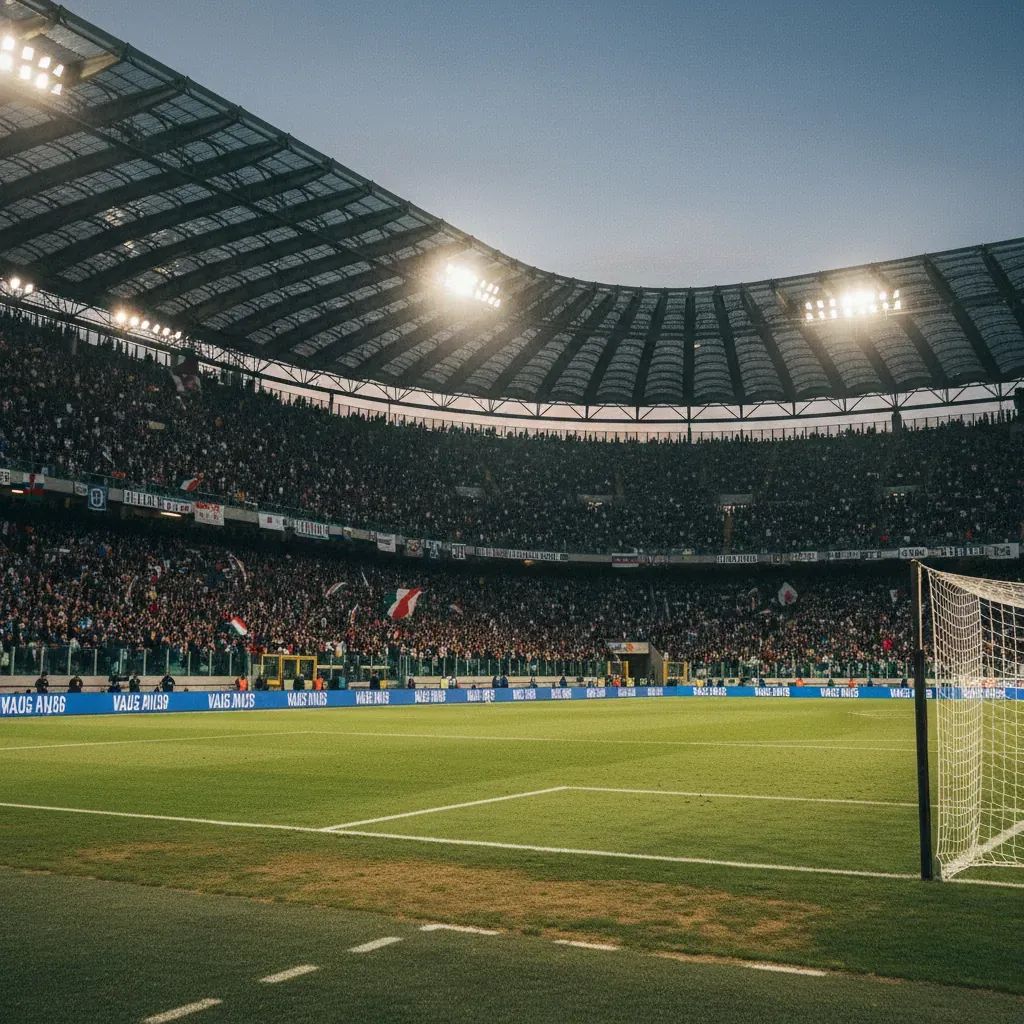
The FIFA Refereeing Committee has finalized its roster for the 2026 World Cup, and Italy will field four match officials when the tournament kicks off across the United States, Canada, and Mexico from June 11 to July 19, 2026. The selection represents the country's strongest presence in a FIFA flagship event since the sport's refereeing standards underwent a major overhaul following the introduction of VAR technology.
Why This Matters:
• Maurizio Mariani, 44, becomes Italy's sole center referee at the tournament, joining a pool of just 52 officials tasked with managing 104 matches.
• Italy's contingent includes Daniele Bindoni and Alberto Tegoni as assistant referees, plus Marco Di Bello in the VAR booth—roles critical to the tournament's technological oversight.
• All officials will convene in Miami on May 31 for a 10-day preparation camp, undergoing physical, psychological, and tactical training before the opening match.
• The selection of six female officials marks a continued push toward gender parity in elite refereeing, building on the precedent set at Qatar 2022.
The Italian Quartet
Maurizio Mariani's journey to the world's biggest stage has been methodical. The Rome native, who began refereeing at 16 while enrolled at the Francesco Morosini Naval Academy in Venice, has built a distinguished career in Serie A and earned international recognition. He was promoted to UEFA's Elite category in December 2024—a tier reserved for referees judged capable of handling Champions League knockout rounds and major international finals. Mariani also led the under-20 World Cup final earlier this year, a clear signal that FIFA rates him among the most composed officials in high-pressure environments.
Alongside Mariani, Daniele Bindoni and Alberto Tegoni will operate as assistant referees—positions that demand split-second offside judgments, often with careers on the line. Bindoni and Tegoni have worked together in Serie A and European competitions, developing the sort of nonverbal communication that becomes essential when a VAR review hinges on a shoulder or boot being a fraction ahead of the defensive line.
Marco Di Bello rounds out the Italian presence in the International Broadcast Centre in Dallas, where the VAR hub will be stationed. Di Bello, also a Serie A center referee, has extensive experience reviewing incidents remotely—a skill set FIFA values as it continues to refine semi-automated offside technology and connected-ball data for this edition of the tournament.
A Global Pool Built on Three Years of Scrutiny
Pierluigi Collina, chair of FIFA's Refereeing Committee and the face of modern officiating standards, emphasized that the 170 match officials—comprising 52 referees, 88 assistants, and 30 VAR operators—represent the culmination of a three-year monitoring program. "These are the best in the world," Collina stated. "They have been evaluated regularly in national and international matches, participated in FIFA seminars, and officiated in FIFA tournaments. Our goal is to ensure they are in optimal physical and mental condition when they arrive in Miami."
The selection spans 50 national associations and all six continental confederations. Notable names include Michael Oliver and Anthony Taylor from England, Szymon Marciniak from Poland (who refereed the 2022 World Cup final), François Letexier from France, and Wilton Sampaio and Raphael Claus from Brazil. The United States and Canada contribute 11 officials through the Professional Referees Organization (PRO), including Tori Penso and Katia García, two of the six women selected for the tournament.
What This Means for Italy Residents
For those living in Italy following the national team, the inclusion of four Italian officials signals that the country's refereeing structure meets FIFA's highest standards—a point of pride given the scrutiny Serie A referees often face domestically. It also means Italian viewers may see Mariani or Di Bello involved in key matches, possibly including knockout rounds if FIFA's performance reviews during the group stage are favorable.
The tournament itself is the largest in World Cup history, featuring 48 teams and 104 matches spread across 16 cities in three countries. Matches will be held in venues from the Azteca Stadium in Mexico City to MetLife Stadium in New Jersey, with the final scheduled for July 19, 2026. For residents planning viewing parties from Italy, the time difference ranges from 6 to 9 hours behind, depending on the host city—meaning early group-stage matches may air in the late afternoon or evening in Italy, while knockout rounds could require late-night or early-morning viewing. This timing will be especially important for those watching Mariani or Di Bello officiate.
Physical and Mental Preparation: A Military-Style Regimen
FIFA's approach to preparing referees mirrors the conditioning programs used for elite athletes. Officials selected for the World Cup undergo a comprehensive support protocol that includes fitness coaches, physiotherapists, medical staff, and a sports psychologist. The organization adopted this model after research showed that physical fatigue directly impairs decision-making accuracy—particularly in the final 15 minutes of matches, when players are also most fatigued and incidents most frequent.
The May 31 camp in Miami will serve as the final proving ground. Referees will complete fitness tests, participate in tactical seminars, and review video scenarios designed to standardize judgment on contentious issues such as handballs, penalties, and violent conduct. FIFA has also introduced three modifications to the VAR protocol and new measures approved by the International Football Association Board (IFAB) in February to speed up play and reduce time-wasting—changes referees must internalize before the tournament begins.
Mental preparation has become equally critical. FIFA's psychological support program emphasizes concentration, self-control, emotional regulation, and decision-making under pressure. Officials practice visualization techniques and receive individualized mental scouting reports based on video analysis of their on-field behavior. The goal is to ensure that a referee can maintain composure when a stadium erupts, a coach protests, or a VAR review stretches past two minutes.
Technology Takes Center Stage
This World Cup will deploy the most sophisticated officiating technology to date. Semi-automated offside technology, first tested in Qatar, has been upgraded to improve accuracy and reduce review times. The system uses 12 tracking cameras and a sensor inside the match ball to generate offside alerts in near real time, which VAR officials then confirm or override.
For the first time, FIFA will also experiment with body-camera footage stabilized by artificial intelligence, offering fans and broadcasters a referee's-eye view of key incidents. The connected-ball technology will provide data on every touch, pass, and shot, feeding into both VAR decisions and post-match performance reviews.
All VAR operations will be centralized in Dallas, where Di Bello and his colleagues will monitor multiple matches simultaneously, ready to intervene when on-field officials miss a clear and obvious error. The system has been refined to minimize interruptions: FIFA data from previous tournaments shows that VAR reviews now average under 90 seconds, a significant improvement from earlier editions.
Women Referees: A Growing Presence
The inclusion of six women in the officiating pool—double the number from Qatar—reflects FIFA's commitment to elevating female referees in men's competitions. Among them are Tori Penso from the United States, Katia García from Mexico, and several officials from Africa and Asia who have already worked in top-flight men's leagues in their home countries.
Collina noted that this trend began four years ago and will continue. Women referees now regularly officiate in the UEFA Champions League, Copa Libertadores, and major domestic leagues, and their performance metrics—on physical fitness, decision accuracy, and game management—are statistically indistinguishable from their male counterparts. The move also serves a practical purpose: expanding the talent pool ensures FIFA can maintain high standards even as the tournament grows in size and complexity.
A Milestone for Italian Officiating
Maurizio Mariani's selection as Italy's only center referee is both an honor and a test. Italy has historically produced world-class officials—Collina himself, along with Nicola Rizzoli and Roberto Rosetti, are legends of the profession—but the country's domestic league remains a flashpoint for controversy. Serie A referees face intense scrutiny from clubs, media, and fans, often over decisions that, statistically, fall within normal error margins.
Mariani's performance in the 2026 World Cup will be watched closely at home, not just by football fans but by the Italian Football Federation (FIGC) and Serie A's refereeing body. A strong showing could elevate his status further, positioning him for future Champions League finals or Olympic assignments. Conversely, a high-profile error could invite the sort of domestic backlash that has derailed promising careers in the past.
The same applies to Di Bello, whose VAR decisions will be analyzed frame by frame, and to Bindoni and Tegoni, whose offside calls will be magnified by slow-motion replays and social media. For all four, the World Cup represents the pinnacle—but also the most unforgiving stage—of their profession.


