
Italy's Defense Minister Returns After Gulf Airspace Closure
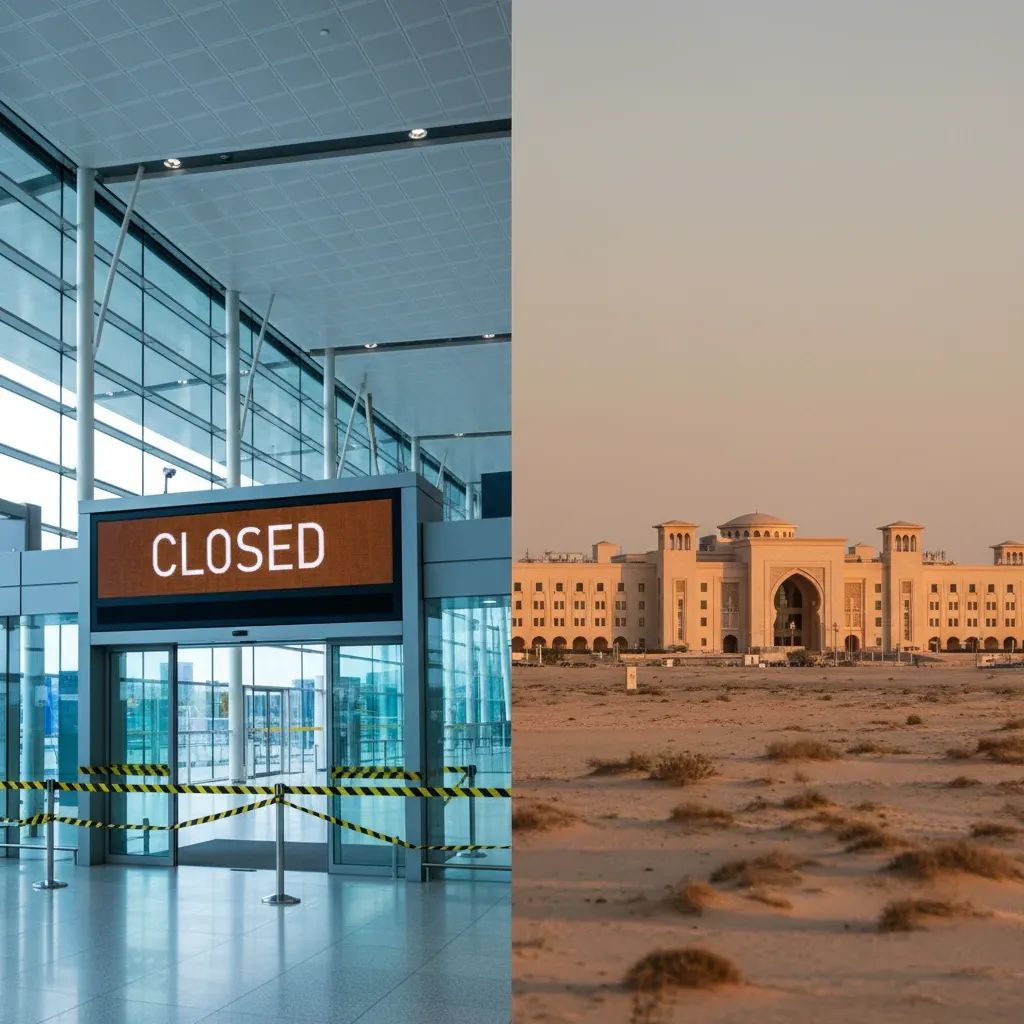
Guido Crosetto, Italy's Defense Minister, has successfully returned to Italy aboard an Italian Air Force military jet after being stranded in Dubai when Iranian retaliatory strikes forced the closure of Emirati airspace on February 28. The minister traveled approximately 500 kilometers overland to Muscat, Oman, where a military Gulfstream G550 from the 31st Wing at Ciampino retrieved him—a decision that has triggered scrutiny over the use of state resources and ministerial protocols during regional conflict.
The Escape Route
When Tehran launched coordinated strikes on military installations and airports across the region late last month, the General Civil Aviation Authority of the UAE ordered a precautionary closure of national airspace. Civilian carriers canceled thousands of flights, leaving Crosetto—who had been in Dubai with family—unable to secure a commercial seat out.
Rather than wait for airspace to reopen, the minister opted for a ground convoy to Muscat, a roughly six-hour journey by road through the desert border crossing. From the Omani capital, which remained outside the targeted zone, a Gulfstream G550 departed Pratica di Mare air base early on March 1 and collected him that afternoon.
Crosetto confirmed on social media that he traveled alone, leaving his family in Dubai after ensuring their safety. The decision to use a military aircraft—rather than a commercial booking once Omani routes reopened—immediately raised questions about the appropriateness of state resources for ministerial transport.
The "Triple Tariff" Controversy
Anticipating criticism, Crosetto announced he had reimbursed the 31st Wing's command at an amount three times higher than the standard guest fare for state flights. Italian regulations, codified in Decree Law 98/2011 and a September 2011 directive, reserve military jets for the President of the Republic, the Presidents of the Chamber and Senate, the Prime Minister, and the Constitutional Court President. Cabinet ministers may use such flights only when "proven, unforeseeable, and urgent institutional needs" arise and commercial alternatives are demonstrably unavailable.
While the government publishes flight authorizations on the Presidency of the Council of Ministers website—barring state-secrecy cases—no standardized public tariff exists for guests on state aircraft. Ministry of Defense officials suggest the baseline charge approximates a business-class ticket on equivalent routes, though exact figures remain classified. By paying triple, Crosetto effectively contributed an estimated €1,200–2,100 for a seat that might ordinarily cost €400–700 on a commercial carrier.
The gesture echoes past controversies: the government logged 165 state flights in 2023, with Foreign Minister Antonio Tajani the most frequent user. Critics have long argued that high-speed rail or scheduled aviation suffice for domestic and intra-European trips, reserving military jets for genuine emergencies.
Implications for Gulf-Based Italians
For Italians living or traveling in the Gulf, the airspace closure underscores the region's vulnerability to geopolitical disruption. The Italian Ministry of Foreign Affairs and International Cooperation (MAECI) has urged caution, and as of March 1, travel advisories recommend deferring non-essential travel to the UAE, Bahrain, Kuwait, and Qatar.
Residents in the region are advised to:
• Register with the MAECI Crisis Unit via the Dove Siamo nel Mondo portal.
• Monitor official Ministry of Foreign Affairs travel advisories for updates on airspace status.
• Maintain awareness of alternative routing via Oman or Saudi Arabia if commercial travel remains restricted.
• Keep digital and paper copies of travel documentation.
Commercial insurers often exclude "acts of war" from standard policies; travelers should verify whether their coverage addresses regional escalation scenarios.
Regional Context
The Iranian strikes, launched in retaliation for prior U.S. and Israeli operations, targeted military installations and airports across the region, triggering widespread aviation disruptions. Dubai's status as the world's busiest international transit hub amplifies the crisis: daily passenger throughput exceeds 270,000, and the closure ripples across Europe, Asia, and Africa. EU foreign ministers convened an emergency session on March 1 to coordinate responses and assess the security of European nationals.
For Italy, the episode tests logistical resilience and bilateral defense relationships. Rome maintains a small naval presence in Bahrain as part of Combined Maritime Forces and has positioned itself as a bridge between Brussels and Gulf capitals. Crosetto's safe return preserves continuity in those relationships.
What Comes Next
As of late March 1, Crosetto's Gulfstream was en route to Italian airspace, expected to land at either Ciampino or Pratica di Mare by evening. The minister's office signaled he will brief Prime Minister Giorgia Meloni and the Parliamentary Defense Committee on the operational implications of the airspace closure and the status of Italian military assets in the theater.
Civilian carriers have extended suspensions through at least March 2 at 23:59 local time, pending clearance from UAE aviation regulators. Stranded passengers face rebooking chaos, with alternate routing via Doha, Riyadh, or Istanbul adding significant travel time and costs.
For expatriates and frequent travelers, the episode reinforces a fundamental truth: geopolitical risk in the Gulf requires practical contingency planning—maintaining valid travel documentation, awareness of alternative routes, and updated information from official sources.


