
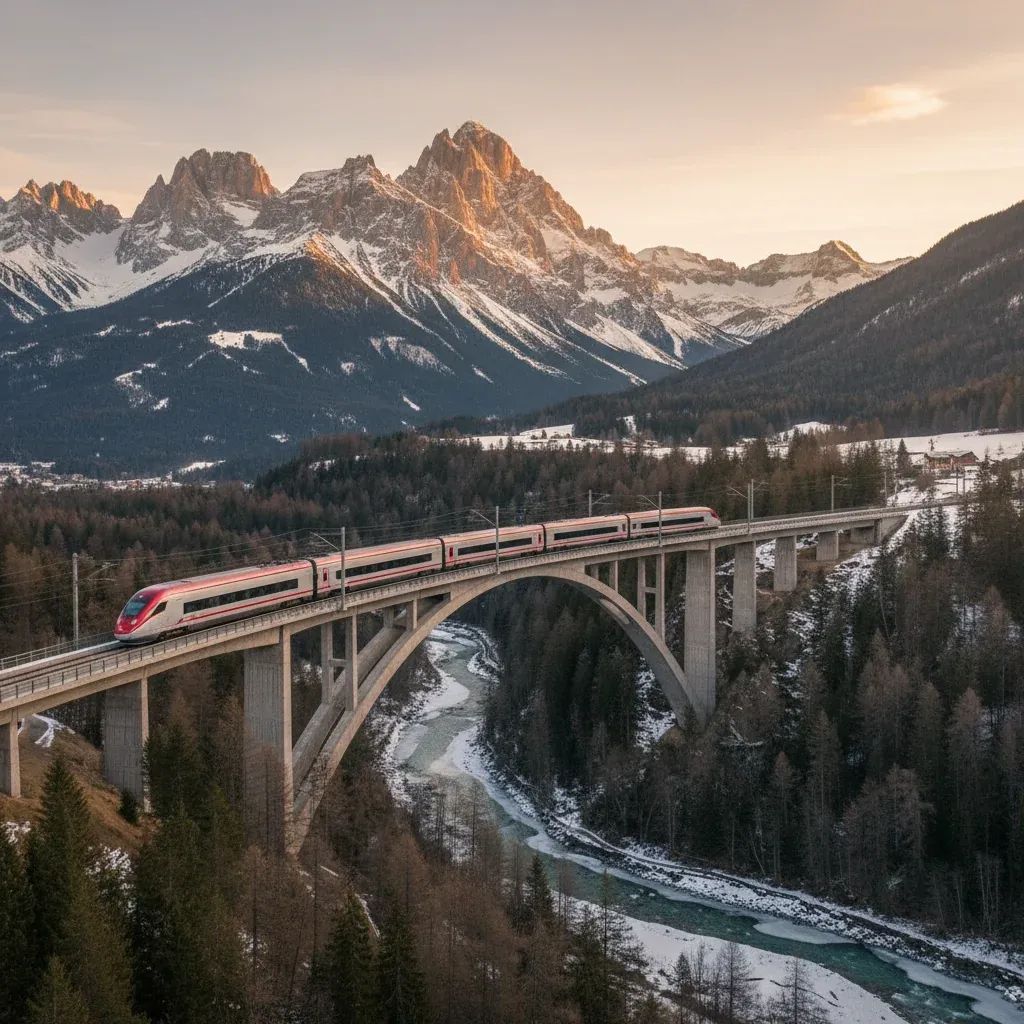
Ferrovie dello Stato’s chief executive Stefano Antonio Donnarumma has brushed aside talk of a €20 billion hole in the railway’s construction budget, saying the figure is “fantasy” and pledging that Italy’s busiest public company will finish its projects—including those linked to the Milano-Cortina 2026 Games—without asking taxpayers for a bailout.
Why This Matters
• No hidden tax bill: Donnarumma puts the real overrun at under €2 billion—roughly what FS spends in a single month—easing fears of extra levies or ticket hikes.
• Olympic deadlines intact: Despite recent acts of sabotage, the Milano-Cortina rail upgrades remain on schedule, with back-up bus fleets already chartered.
• Jobs & contracts: More than 1,200 active sites and €100 billion in work through 2029 underpin thousands of engineering and logistics posts across the peninsula.
• Investor signal: A stable balance sheet—net debt of €14 billion against assets of up to €70 billion—helps keep borrowing costs for national infrastructure low.
The Numbers Behind the Headlines
Ferrovie dello Stato (FS) closes each year with €17-18 billion in revenue and an EBITDA of roughly €2.5 billion. The current strategic plan pushes turnover above €20 billion and operating profit past €3.5 billion by 2029. That cashflow is critical because the group self-finances about €20 billion in capex annually, a figure that dwarfs the contested €2 billion Donnarumma acknowledges as “plausible cost drift.”
Where the €20 Billion Claim Originated
Contractual “reserves.” Consortia led by Webuild—Xenia, Tridentum and Triscelio 3—filed price-adjustment requests on three mega-projects worth €4.7 billion (Trento bypass, Salerno-Reggio Calabria high-speed link, Catania-Palermo line).
Inflation buffers misread as debt. Under public-works rules, builders lodge provisional figures to cover energy, steel and labor spikes. Summed across all 1,200 sites, those precautionary lines add up to about €20 billion, but FS says only a tenth is likely to be paid.
Supply chain turmoil. Global construction costs are forecast to rise 2.4 % in 2026. Rome has already set aside €2.1 billion in extra railway funding to keep projects liquid through the worst of the price peaks.
What This Means for Residents
• Ticket prices: With profitability intact, Trenitalia has no mandate to add a surcharge. Any 2026 fare changes will stem from the annual inflation review, not crisis funding.
• Commuter reliability: FS claims punctuality on regional and high-speed services improved in 2025 despite 700 new-build and 500 maintenance sites. Expect similar work-window adjustments—late-night closures, weekend diversions—rather than wholesale cancellations.
• Local economies: Municipalities hosting yards—particularly in Sicily, Calabria and Trentino—will continue to see construction-driven hiring and hospitality turnover. Delays well under the €2 billion threshold are unlikely to freeze payrolls.
• Tax exposure: Because FS “acts as a treasury for the State,” short-term debt flickers on its books. The CEO’s remarks suggest no fresh call on the public purse beyond pre-agreed PNRR tranches.
Sabotage Threat and Olympic Timetable
Acts of sabotage in Bologna, Pesaro, Lecco and along the Roma-Napoli corridor shut down or slowed several routes in early February, prompting investigations by Polfer and DIGOS for suspected anarchist terrorism. Damages included:
• Severed power cables on AV lines.
• Incendiary devices near trackside cabinets.
• Molotov cocktails along the Lecco-Tirano stretch—critical for reaching Bormio and Livigno ski venues.
FS reacted by deploying a 500-bus contingency fleet capable of relocating 100,000 spectators if rail lines are hit during the Games. The Interior Ministry has upgraded rail-node security and is pursuing civil claims for “multi-million-euro” restitution once culprits are identified.
Why Cost Pressures Keep Cropping Up
According to sector analysts:
• Design creep: EU standards on braking curves and disabled access force last-minute platform and signaling tweaks.
• Deferred maintenance catch-up: Roughly 30 % of 2024 spending—about €3.5 billion—went just to keep legacy tracks safe.
• Historic missteps: The aborted Ferrovie del Sud Est acquisition, plus rolling-stock models requiring over 1,000 retrofits, still ripple through the budget.
Donnarumma argues that acknowledging these legacy issues openly helps FS secure cheaper financing because “no surprises” feeds investor confidence.
Outlook: Will My Train Be on Time?
By summer 2026, FS must certify completion of its €13 billion slice of the PNRR, with €12 billion already booked. Meeting that milestone unlocks the EU’s final disbursement and underpins timetables ahead of the tourist season. The group insists that high-speed expansions in the South and the Alpine freight tunnels at Brenner remain “non-negotiable,” even if some secondary works slip to 2027.
Bottom line for passengers: the next two years will bring frequent engineering windows, but also the reward of newer rolling stock, faster southbound journeys and bolstered links to Olympic mountain venues.
Quick Recap: The talk of €20 billion in budget overruns is largely bookkeeping smoke; FS’s real exposure is closer to €2 billion, a sum it can absorb without new taxes or steep ticket hikes. Stay alert for night-time diversions and stepped-up security patrols, yet expect the mainline service you rely on—from daily commutes to 2026 Olympic shuttles—to keep rolling.


