
The Italy Cabinet is doubling down on energy security as fuel prices climb amid mounting tensions in the Gulf, signaling that Prime Minister Giorgia Meloni's immediate priority is protecting households and businesses from an energy shock rather than engaging in political reshuffles or early elections.
Why This Matters
• Fuel prices are rising sharply as supply disruptions ripple through global markets following escalating tensions in the Strait of Hormuz.
• Italian businesses face supply-chain disruptions from Gulf nations, with mounting cargo delays and surging insurance premiums.
• Energy bills are climbing for households as prices for gas and electricity increase across major cities.
• Defense Minister Guido Crosetto will brief Parliament Tuesday on restrictions governing US use of Italian military bases, a technically procedural but politically significant session.
Energy Crisis Takes Center Stage
Italy's reliance on Middle Eastern energy has become a critical policy issue. The Strait of Hormuz, through which a significant portion of Italy's oil and gas imports flow, has seen shipping disruptions following escalating regional conflict. The waterway is vital for global energy supply; its disruption has triggered worldwide shortages and price increases.
For Italy, the consequences are immediate. Qatar alone supplies roughly 10% of Italian gas needs, while the broader Gulf region provides approximately 15% of the country's petroleum. When tensions rise in that region, or when supply contracts, prices climb for consumers—and Italian households are feeling the impact acutely. Diesel prices have increased notably, and some analysts warn that prolonged disruptions could push prices substantially higher.
The ripple effects extend beyond the pump. Italian airports have reported fuel supply challenges, raising concerns about potential flight disruptions during travel season. Meanwhile, European gas prices have risen, and analysts warn that a prolonged crisis could result in significantly higher wholesale costs.
What This Means for Businesses and Families
Italian enterprises are facing dual pressures: higher input costs and logistical challenges. Freight companies have rerouted shipments to avoid disrupted routes, adding time to voyage schedules and inflating cargo rates and insurance premiums. Energy-intensive sectors—chemicals, metallurgy, glass—are watching margins compress as electricity and gas bills climb. Businesses report additional costs for rerouting and extended delivery times.
The overall effect is substantial. For ordinary households, utility costs are rising visibly: many consumers are seeing noticeable increases in gas tariffs. Energy costs are placing pressure on household budgets, particularly for vulnerable populations. If energy prices continue to rise, the impact on consumer purchasing power could be significant. Inflation concerns are mounting as higher energy costs feed through the economy.
Against this backdrop, the Italy government has extended fuel-excise cuts, a temporary measure that reduces pump prices but does not address fundamental supply vulnerabilities. Meloni's administration is banking on diplomatic efforts to ease tensions in the Gulf, though Rome has limited direct influence over a regional conflict it neither initiated nor controls.
Parliament Sessions and the US Base Question
On Tuesday afternoon, Defense Minister Guido Crosetto will appear before the Italy Chamber of Deputies to clarify the legal framework governing American use of Italian military installations. The briefing, ostensibly technical, carries significant political weight because it touches on Rome's obligations under NATO and bilateral treaties dating to the 1950s, updated in 1995, and still partially classified.
Under existing NATO and bilateral agreements, routine logistics and training operations do not require prior Italian authorization. Combat operations or offensive missions, however, demand explicit government approval—and potentially parliamentary consent. Recent diplomatic discussions have highlighted questions about the scope and authorization of military activities using Italian bases.
Both the Pentagon and Palazzo Chigi have publicly confirmed that Italy is adhering to treaty obligations. Still, the incident underscores a delicate balancing act. Italy is not at war, and Meloni's government has made clear it will not automatically approve offensive operations launched from Italian soil. At the same time, Rome has indicated openness to providing defensive support systems—such as air-defense equipment—to regional partners, framing such aid as defensive and consistent with international norms.
Crosetto has acknowledged concerns about recent regional developments and signaled that Italy carefully evaluates its international obligations and commitments. Meloni's upcoming parliamentary statement is expected to elaborate on this posture: full commitment to NATO and the transatlantic alliance, but strict adherence to legal protocols when it comes to using Italian territory for military operations.
Impact on Residents and Businesses
For people and businesses operating in Italy, the current situation presents three practical considerations:
Budget for higher energy costs. Utility bills are rising, and fuel expenses for commuters or delivery operations are increasing. Companies should monitor energy markets carefully and lock in rates where possible.
Expect supply-chain challenges. If your business imports goods from Asia or the Gulf, assume potential delays and brace for surcharges. Freight quotes are volatile; securing rates in advance is prudent.
Monitor policy developments. Italy's government is pursuing energy diversification strategies, accelerating LNG terminal expansion and renewable energy development. These moves signal a security-focused energy strategy that prioritizes reliable supply.
Diversification and Energy Strategy
Since 2022 exposed Italy's dependence on Russian gas, Rome has systematically rebuilt its supply mix. Algeria is now a major gas supplier, with Azerbaijan expanding shipments through established pipeline corridors. Liquefied natural gas (LNG) imports have increased significantly, arriving from multiple sources including the United States, Qatar, and North Africa. Russian gas has essentially disappeared from Italian terminals.
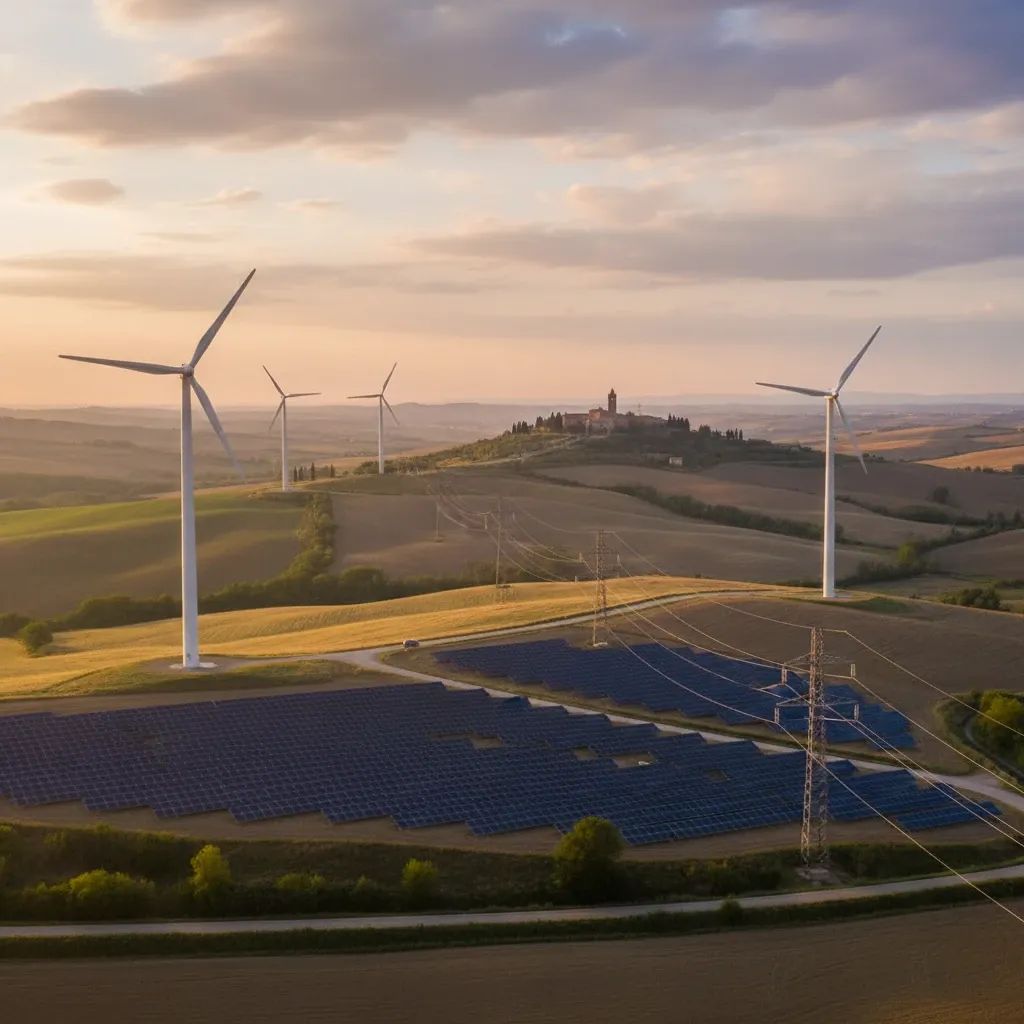
The current Hormuz tensions have underscored a key vulnerability: concentration of supply through a single strategic chokepoint. The Italian government is pursuing diplomatic and infrastructure initiatives to further diversify energy sources and strengthen Europe's energy security. Investments in renewable energy—particularly solar and wind—and plans for enhanced energy storage capacity are designed to reduce future supply-shock exposure.
For now, however, Italy remains sensitive to Middle Eastern developments. Industries dependent on stable energy costs and reliable supply chains are monitoring the situation closely. Construction, transportation, and agriculture are among the sectors most exposed to energy price volatility.
Political Calculus and Coalition Stability
Meloni's focus on maintaining government stability and managing the external crisis reflects a calculation that political disruptions would be counterproductive during a period of external economic pressure. The continuity in government appointments signals an intent to maintain operational focus.
Opposition parties have criticized the government's handling of various challenges, though there is broad agreement that Italy must navigate current geopolitical tensions carefully. Some political voices have advocated for different energy strategies, but Meloni's government has emphasized the need for "reliable partners in regions that affect our security and economy."
Her recent diplomatic engagement in the Arabian Peninsula underscored this message: when instability rises in the Gulf, Italian families pay the price at the pump and on their utility bills. The implication is clear—Rome's diplomatic efforts are not a distraction but a direct defense of national interest.
Whether that approach resonates with voters will depend largely on how the energy situation develops. If prices stabilize relatively quickly, the government's approach may be viewed as successful crisis management. If energy costs remain elevated for an extended period, political pressure will intensify. For the moment, however, the coalition appears intent on projecting stability and competence, banking on the hope that diplomatic efforts—combined with strategic diversification of energy supplies—will ease the crisis.
Looking Ahead
Tuesday's and Thursday's parliamentary sessions will offer important public articulation of Italy's strategy regarding the current regional situation. Meloni is expected to emphasize energy security, adherence to international law, and careful stewardship of the US alliance. She will likely stress that focused, competent governance is essential during periods of external pressure.
The test, ultimately, will be economic. If regional tensions ease and supply chains normalize, Italy's diversified energy network should cushion the immediate impact. If disruptions persist and energy prices remain elevated, the government will face mounting domestic pressure—both from voters concerned about household costs and from businesses struggling with higher operating expenses. How effectively Italy's government manages both the diplomatic and economic dimensions of this challenge will determine its political trajectory.


