
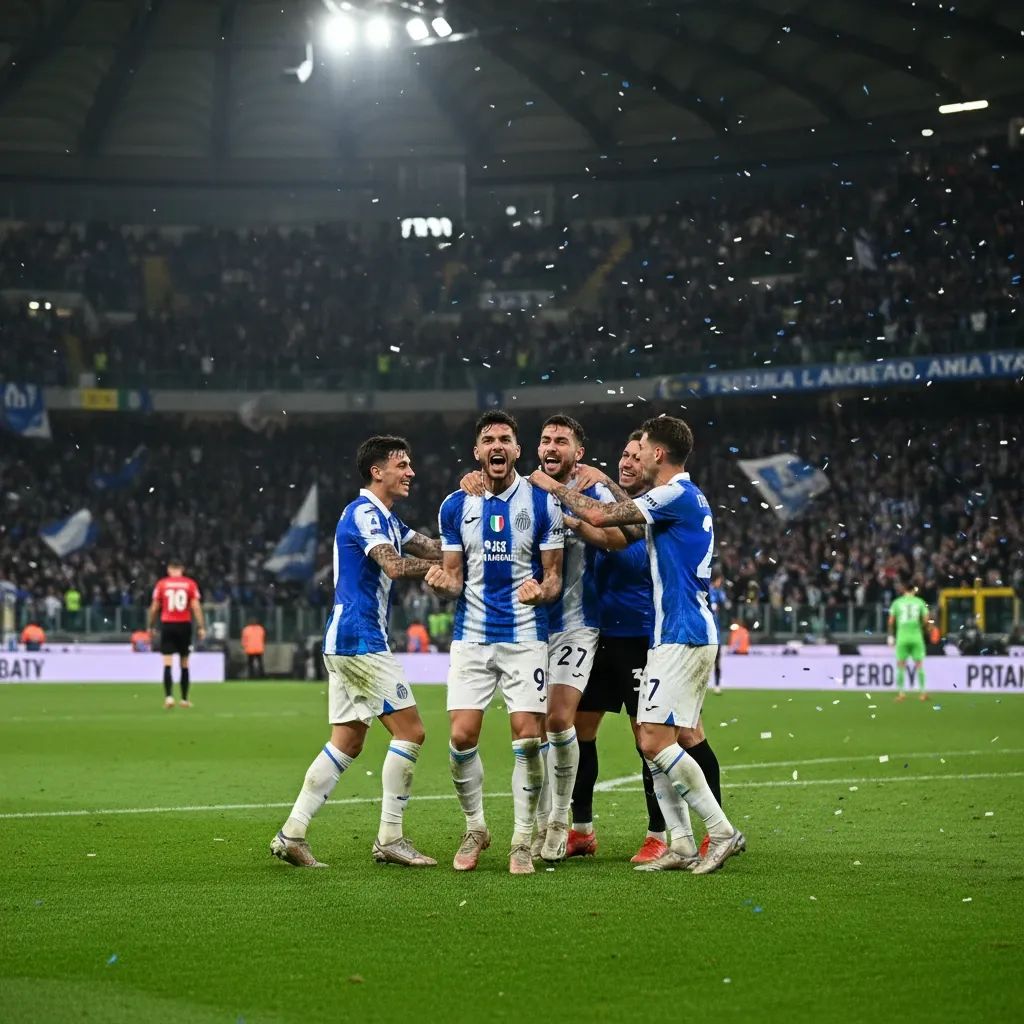
The Genoa CFC secured a critical 2-1 victory over Sassuolo at the Stadio Luigi Ferraris, moving the Ligurian club further from the relegation zone and offering manager Daniele De Rossi tangible proof that urgency can outweigh individual skill. With 36 points from 32 matches, Genoa now holds a 9-point cushion above the third-from-bottom spot, though De Rossi insists the mathematics of survival remain uncomfortable.
In Serie A, only the three lowest-finishing teams face relegation—a critical distinction as Genoa builds distance from the relegation zone. Currently, Cremonese and Lecce sit at 27 points, Hellas Verona and Pisa further back, leaving Genoa in a more secure position than the crowded fight below.
Why This Matters
• Survival not secured: Despite the win, 6 matches remain with 18 points still available—relegation remains a mathematical possibility.
• Tactical disruption: Both teams played the entire second half with 10 men after a tunnel scuffle led to red cards for Sassuolo's Domenico Berardi and Genoa's Mikael Ellertsson.
• Psychological shift: De Rossi's philosophy centers on desire over talent, a mindset that produced the decisive goal from substitute Caleb Ekuban in the 84th minute.
• Relegation context: The battle for Serie A survival is expected to intensify through May 24, with three teams ultimately facing demotion to Serie B.
What This Means for Genoa Residents and Fans
For supporters who have endured a turbulent season marked by managerial changes and inconsistent form, this victory offers tangible relief but not closure. Genoa's 9-point advantage over the relegation zone provides breathing room, yet De Rossi's refusal to declare survival mathematically secured reflects the reality that 18 points remain available across the final six fixtures.
For Genoa's local economy and community, Serie A status carries significant financial and cultural weight. The club's presence in Italy's top flight ensures revenue from broadcasting rights, sponsorships, and matchday income, while relegation would trigger salary reductions, potential player departures, and diminished visibility. The city's identity remains intertwined with its football club, and De Rossi's steady hand has stabilized a campaign that appeared destined for catastrophe under predecessor Patrick Vieira.
The Match That Defined Genoa's Season
Genoa entered the fixture knowing that anything less than three points would prolong their uncomfortable proximity to the Serie A relegation zone. De Rossi deployed a 3-4-2-1 formation, handing a starting berth to Tommaso Baldanzi, whose mobility and unpredictability were designed to unsettle Sassuolo's disciplined backline. Fabio Grosso's visitors, already safe from relegation concerns, lined up in a 4-3-3 with Andrea Pinamonti leading the attack.
The opening exchanges reflected two contrasting mindsets: Genoa pressed with the desperation of a team fighting for survival, while Sassuolo played with the fluidity afforded by mid-table security. Yet the contest remained evenly matched and entertaining, a rarity when a relegation-threatened side faces a comfortable opponent.
Baldanzi justified his selection in the 18th minute, linking with Ruslan Malinovskyi on the edge of the box. The Ukrainian midfielder unleashed a strike that left Sassuolo goalkeeper Andrea Consigli with no chance, marking Malinovskyi's sixth goal of the campaign. The Ferraris erupted, but the celebration was tempered by the knowledge that one goal rarely decides matches of this magnitude.
Sassuolo responded with sporadic threats—Berardi forced a save from Justin Bijlow, and defender Muharemovic tested the Dutch goalkeeper with a header—but the visitors lacked the cutting edge that defined their earlier season form. As the halftime whistle approached, tension boiled over in the tunnel leading to the dressing rooms. The confrontation resulted in straight red cards for Berardi and Ellertsson, neither of whom had been on the pitch at the time. Both squads would resume play with numerical parity, but the psychological impact was uneven.
Tactical Adaptation Under Pressure
The second half began with both managers recalibrating their strategies to account for the 10-versus-10 dynamic. De Rossi made a triple substitution in the 55th minute, withdrawing Baldanzi, Malinovskyi, and Lorenzo Colombo for Aarón Martín, Patrizio Masini, and Ekuban. The moves signaled a shift toward solidity and fresh legs, anticipating a physical battle in the final third.
Yet it was Sassuolo who struck first after the break. In the 57th minute, Ismaël Koné pounced on a loose ball following a corner, tapping home the rebound after Bijlow's initial save. The equalizer silenced the home crowd and exposed Genoa's vulnerability from set pieces, a recurring issue throughout De Rossi's tenure.
Grosso responded with his own substitutions, introducing Cristian Volpato and Woyo Coulibaly to inject pace and creativity. But De Rossi's final tactical adjustment proved decisive: Junior Messias entered the fray and immediately altered the dynamic down the right flank. In the 84th minute, Messias beat his marker, shielded the ball under pressure inside the area, and squared to Ekuban, who converted from close range. The Ghanaian forward's goal, his third of the season, sent the Ferraris into celebration and effectively sealed the outcome.
De Rossi's Philosophy: Hunger Over Talent
In his post-match remarks, De Rossi articulated a philosophy shaped by pragmatism and psychological insight. "I didn't need to explain how important this was—everyone already knew," he said. "What I asked for was not to see a team that plays necessarily better than them. I know the limits we have. What I wanted to see was a team that wanted it more than them, and today we had too many reasons, too much need compared to them."
This approach reflects De Rossi's awareness of Genoa's limitations. He acknowledged that individual duels—Sabelli versus Doig, Malinovskyi against Koné, Baldanzi challenging Muharemovic—might not favor his players on technical merit alone. Instead, he demanded intensity, desire, and collective will, qualities that cannot be quantified in scouting reports but often determine outcomes in relegation fights.
De Rossi also praised Sassuolo's performance, describing them as "individually strong and collectively cohesive." He noted that the first half featured two teams playing attractive football, a rarity in matches where survival stakes typically stifle creativity. "We didn't overwhelmingly deserve to win," he admitted, "but the second goal showed me that this team understood what it needed to do—want it more."
De Rossi's emphasis on self-reliance rather than hoping for rivals' failures signals a mature approach to the run-in. "I want us to earn the points we need, not sit here constantly worrying about Cremonese or Lecce," De Rossi said. "This phase of the season is 'your death, my life,' and we have to pull ourselves out of this situation."
The Road Ahead
Genoa's remaining fixtures include matchups against mid-table opponents and direct relegation rivals, each carrying distinct challenges. De Rossi's tactical flexibility—evidenced by his willingness to shift to a 3-5-2 system and make bold substitutions—will be tested as fatigue and pressure accumulate. The coach's focus on developing young talent while securing survival also suggests a longer-term vision, though immediate concerns dominate the current landscape.
The involvement of Messias and Ekuban in the decisive goal underscores the value of squad depth. Both players entered as substitutes and delivered when the match remained in balance. De Rossi's ability to manage egos, rotate effectively, and extract maximum effort from every squad member will determine whether Genoa's April triumph translates into May survival.
Cremonese and Lecce, both on 27 points, face equally daunting schedules. Hellas Verona and Pisa, languishing on 18 points, appear destined for Serie B unless they stage improbable recovery runs. Genoa's cushion offers comfort, but the coach's insistence on vigilance reflects an understanding that football rarely respects form books or projections.
A Victory Worth Its Weight
The scenes at the Ferraris—Ekuban's celebration, De Rossi's measured relief, the fans' roar—captured a moment of collective exhale. Yet the manager's post-match words served as a reminder that the work remains incomplete. "This is a giant victory," De Rossi said, "but we are not safe. The truth is there's no mathematical certainty. We can't think we're safe—not yet."
For a club that has endured managerial upheaval, tactical uncertainty, and the pressure of relegation, this victory represents progress but not resolution. The final six matches will determine whether De Rossi's philosophy of desire, discipline, and self-reliance can carry Genoa across the survival threshold, or whether the cushion they've built proves insufficient against the unforgiving mathematics of Italy's top division.


