
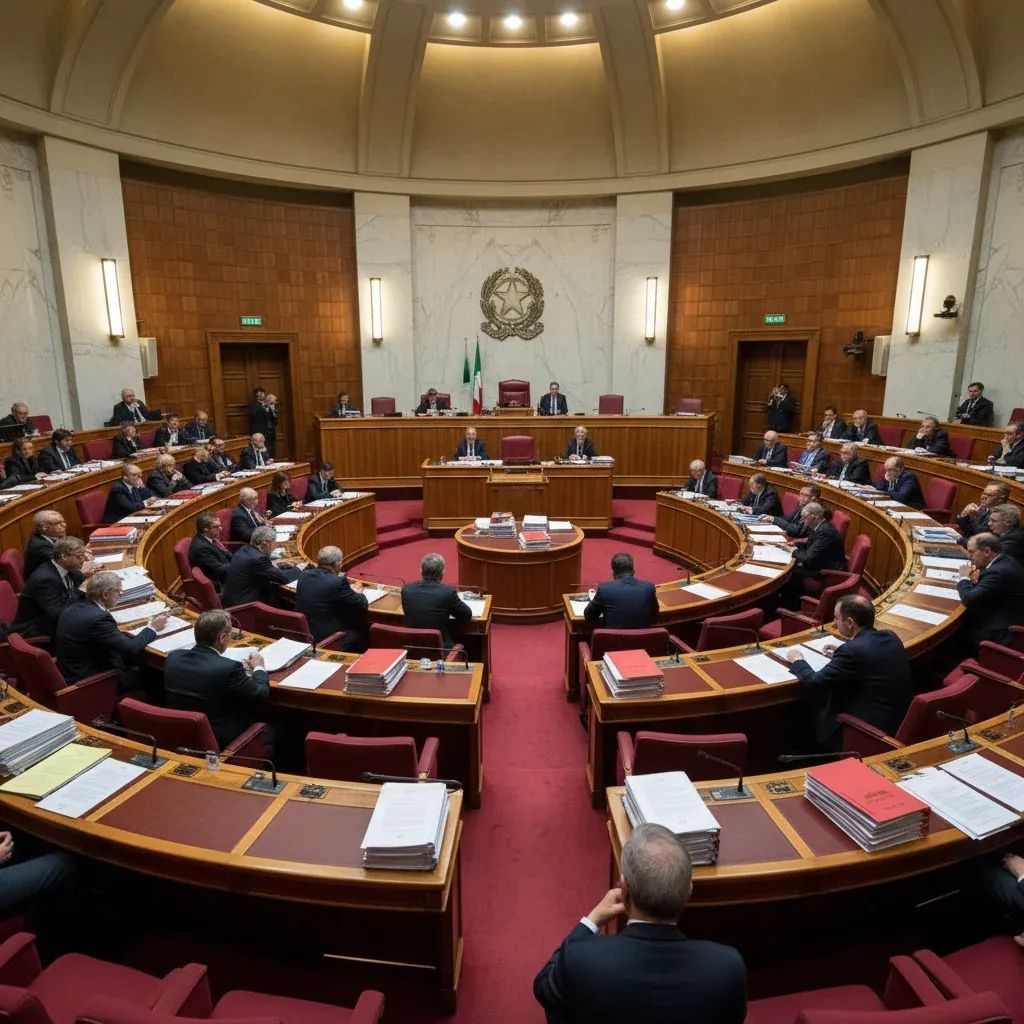
Forza Italia has installed Enrico Costa as its new parliamentary group leader in the Italian Chamber of Deputies, a reshuffle that signals deeper fractures within the center-right party and raises questions about the government's cohesion as it navigates a volatile legislative agenda. The appointment—confirmed on April 14 during a meeting at Palazzo Montecitorio—comes as former group leader Paolo Barelli prepares to take up a newly created role as vice minister for Parliamentary Relations, a move widely seen as addressing a longstanding complication in his dual responsibilities.
Why This Matters:
• Policy continuity at risk: Internal party tensions could stall votes on key legislation currently before parliament.
• Barelli's new posting: The vice minister role allows him to retain his long-held presidency of the Italian Swimming Federation—a position incompatible with portfolio ministries under Italian law due to conflict-of-interest provisions.
• Family-driven renewal: Marina and Pier Silvio Berlusconi are driving a generational overhaul of the party following electoral momentum, with more leadership changes likely.
Pressured Succession in Montecitorio
Costa, a 56-year-old lawyer from Cuneo with a two-decade career in Italian politics, was elected by acclamation—meaning no formal vote was held, effectively avoiding a public count that could have exposed the depth of division among Forza Italia's deputies. In his brief inaugural address, Costa invoked the memory of Silvio Berlusconi, emphasized "liberal values and rights," and pledged to prioritize "competence and cohesion" within the fractious caucus. The language was deliberate: a nod to the reformist wing that wants the party to lean harder into civil liberties and away from the conservative social agenda of coalition partner Lega.
Party Secretary Antonio Tajani, who issued a statement praising both Barelli's loyalty and Costa's experience, has found himself walking a tightrope. While Tajani's own leadership is not formally in question, behind-the-scenes negotiations with the Berlusconi family have intensified as part of the broader party renewal. Multiple sources within the party describe the current climate as one of "fibrillazioni"—tremors that could escalate into open revolt if the promised renewal stops at the group leader level.
Barelli's Transition and the Portfolio Problem
Barelli, who has led the Forza Italia deputies since 2022, had been under mounting pressure to step aside. His simultaneous role as president of the Federazione Italiana Nuoto (FIN) created a symbolic and legal complication: Italian law bars the head of a major sports federation from holding ministerial posts "with portfolio" due to conflict-of-interest provisions. The solution—creating a vice minister position without a dedicated budget or department—allows Barelli to keep his FIN role while formally entering the government.
When asked directly about his future during the group meeting, Barelli remained coy: "I have made no requests. If the government asks something of me, I will respond." Yet qualified sources within the governing coalition confirmed that the appointment is a done deal, pending only the formality of a Cabinet decree. He will join other junior ministers in the sprawling apparatus of undersecretaries that supports Prime Minister Giorgia Meloni's administration.
The choreography of Barelli's transition underscores a broader pattern: Forza Italia has struggled to balance internal ambitions with coalition discipline, often resulting in compromises that satisfy personalities but leave policy direction unclear.
What This Means for Residents
For Italians watching the maneuvering in Rome, the immediate stakes are legislative. Forza Italia holds 45 seats in the Chamber of Deputies—a modest but pivotal bloc in a coalition government that includes Fratelli d'Italia and Lega. When the party is internally divided, key votes can stall or require last-minute negotiations that complicate the legislative process.
Costa's appointment is intended to stabilize the caucus, though questions remain about his ability to unify competing factions within the party, particularly those demanding deeper structural changes.
The Minority's Unfinished Business
The installation of Costa has not quieted the dissenters within Forza Italia. A vocal minority faction is demanding a "total reset" of the party's organizational chart, including potential changes to various senior positions. "If the goal is renewal, then renew everything," one deputy told journalists off the record.
Deputy group leader Raffaele Nevi deflected questions about his future with studied nonchalance: "We'll see. Everyone must be available for the general cause." The internal power struggle reflects broader divisions within the party over its strategic direction and organizational structure.
Coalition Implications and Cabinet Maneuvering
The government's reshuffle will formalize Barelli's appointment as vice minister and address other outstanding undersecretary positions. The breadth of contingency planning underscores how fragile the coalition's equilibrium remains.
For Prime Minister Giorgia Meloni, managing these centrifugal forces is an ongoing challenge. Her government holds a comfortable majority on paper, but Forza Italia's ideological drift toward economic liberalism and civil rights—embodied by Costa's rhetoric—sits uncomfortably alongside Lega's nationalist and protectionist impulses. Any major legislative initiative must thread that needle.
A Waiting Game
The next test will come quickly as parliament returns with a full agenda. Costa will need to demonstrate that his "competence and cohesion" mantra translates into actual party unity and legislative results, not just talking points.
The minority's warning is clear: "This is not over." Whether Costa can broker a durable peace or merely buys time before the next eruption will determine not only his own political future but the stability of Italy's ruling coalition in the months ahead.


