
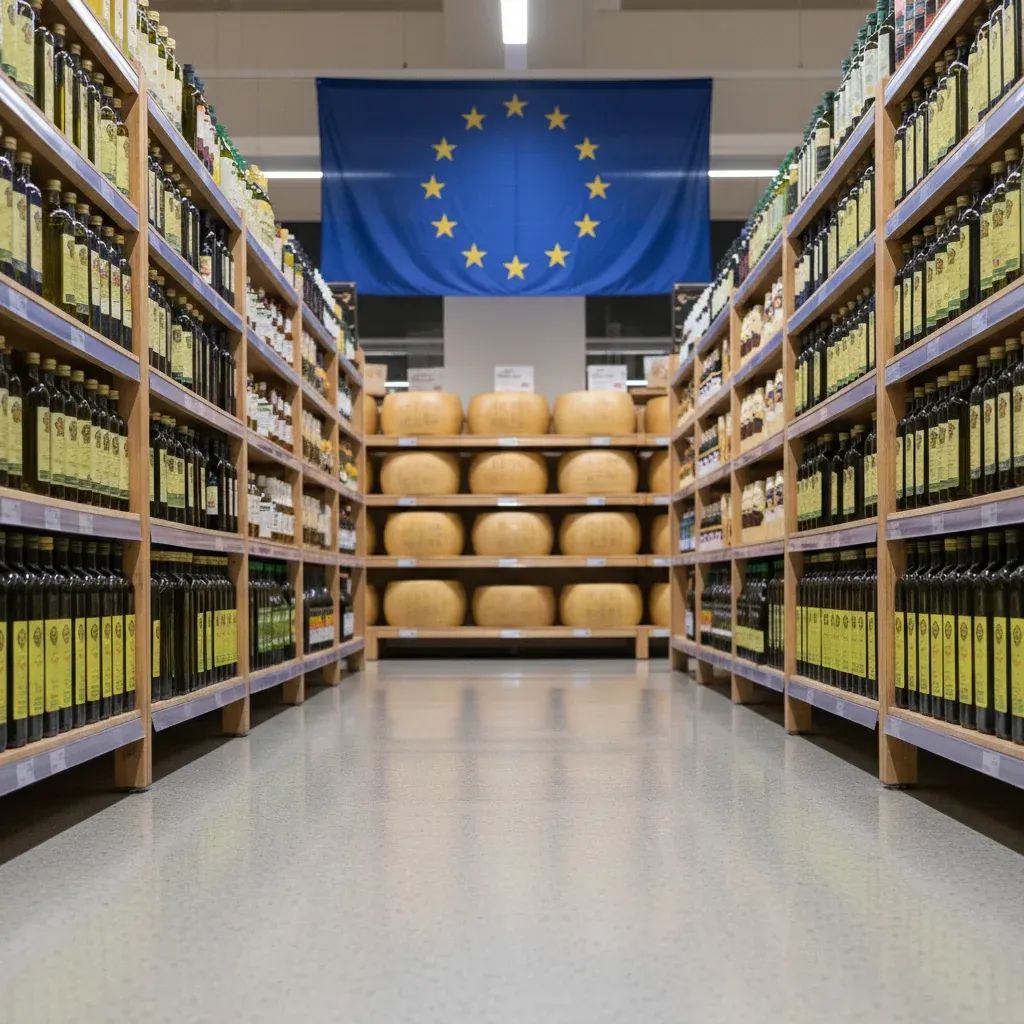
The European Commission has quietly abandoned plans to roll out the Nutri-score traffic-light label across the bloc, a move that spares flagship Italian foods such as Parmigiano Reggiano and extra-virgin olive oil from receiving the dreaded orange-or-red marks.
Why This Matters
• Made-in-Italy products protected – no EU-wide red labels on olive oil, Parmigiano, prosciutto.
• No new sticker on shelves this year – Brussels has binned the idea of a single mandatory front-of-pack logo.
• Italian Nutrinform Battery gains ground – Rome’s portion-based alternative stays compliant and available.
• Voluntary status remains – countries like France and Germany can still use Nutri-score domestically, but it will not be forced on Italian exporters.
Brussels Hits the Brakes
For almost a decade, the EU Farm-to-Fork strategy pointed toward a single, colour-coded nutrition label. An internal note from Director-General Wolfgang Burtscher, obtained by the NGO Foodwatch, shows that the draft law "will not copy any existing scheme." Translation: Nutri-score – already printed on 7 national markets – is off the table. Officials blame "complexity and lack of consensus" among member states.
How Italy Won the Argument
Rome’s push was relentless. From Prime Minister Giorgia Meloni to the Italy Ministry of Agriculture, every administration – Left, Centre or Right – framed Nutri-score as an attack on the Mediterranean diet. Farm groups Coldiretti and Federalimentare organised tasting events in Brussels, while trade diplomats highlighted that a 100-gram reference penalises foods normally eaten in small portions. The pressure campaign coincided with rising doubts inside the Commission after France itself tweaked the algorithm, proving the model was still experimental.
Science vs. Simplicity
Supporters of the French-born label cite 100+ peer-reviewed papers showing people pick healthier items when a green-to-red letter is on the pack. Italian researchers counter that the system can be misleading: rapeseed oil scores an "A" while PDO olive oil sits at "B". A 2023 study in the European Journal of Public Health confirmed Nutri-score’s clarity, yet a pan-EU survey in Nutrients found the portion-based Nutrinform Battery more appreciated by consumers who dislike being "graded".
What This Means for Residents
• Supermarket shelves unchanged – Italian chains are under no obligation to add colour codes. Products carrying Nutri-score imported from France or Germany will remain legal, but retailers may place explanatory leaflets nearby.
• Export relief for SMEs – Parma ham producers feared dual packaging costs of up to €12 000 per product line. That bill disappears.
• Label literacy still matters – With Brussels stepping back, shoppers should rely on the traditional nutrition table or the optional Nutrinform Battery icon. Nutritionists recommend scanning for salt (<6 g/day) and saturated fat (<20 g/day) figures regardless of logos.
The Road Ahead for Producers
Brussels is drafting a "lighter regulatory package" focused on reducing red tape rather than prescribing a logo. Insiders expect guidance, not mandates, in 2027. Meanwhile, France’s upgraded Nutri-score 2.0 became voluntary national law last year; makers have until early 2027 to adapt. Italian exporters selling in those markets must still comply or risk fines up to €150 000 per infringement.
Consumers’ Toolkit: Decoding the Battery
Nutrinform presents five little blue battery icons showing the % of daily energy, fat, saturates, sugars and salt a portion provides. Dietitians at the Italy National Institute of Health suggest aiming for no single battery above 30% per serving. The scheme is optional, but Ferrero, Mutti and a handful of dairy co-ops already print it. Expect more adopters now that the playing field is clear.
Business & Investment Angle
Investors watching Italy’s €58 B packaged-food sector feared mandatory Nutri-score would trigger costly recipe reformulations. Removing that prospect lifts a minor cloud. However, healthier formulations remain a trend: Coop Italia reports a 17% increase in sales of reduced-salt cheeses after voluntary targets were publicised.
Bottom Line
Brussels’ retreat hands Rome a symbolic win and buys time for a broader rethink on front-of-pack nutrition. For residents, the real homework stays the same: read the back of the pack, mind the portion, and keep the pantry balanced.


