
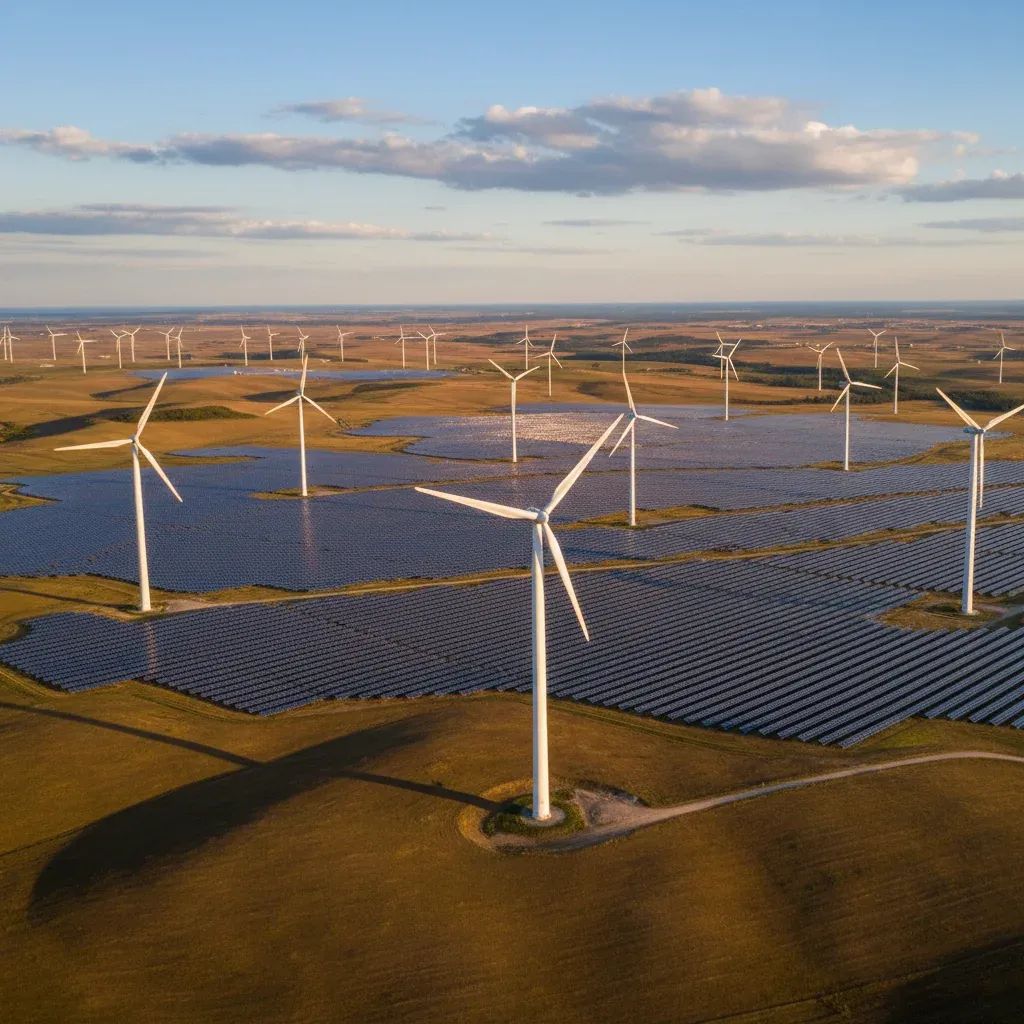
Italy's Enel Group is pushing $1B deeper into the U.S. renewable energy market with a strategic acquisition that will significantly boost its North American clean power profile and strengthen the financial base that funds dividends to shareholders.
Why This Matters
• Earnings impact: The deal is expected to add roughly €125M annually to Enel's consolidated EBITDA once operational, strengthening cash generation from renewable assets.
• North American expansion: Enel's renewable capacity in the U.S. and Canada will climb to approximately 13 GW across wind, solar, and battery storage—cementing its position among the top five renewable operators on the continent.
• Closing timeline: Regulatory approvals pending, the transaction should finalize in Q3 2026, with immediate cash flow financing from existing operations (no equity dilution).
• Strategic shift: The move underscores Enel's pivot toward utility-scale renewables and away from fossil fuels, aligning with the group's 2040 net-zero emissions commitment.
The Deal Architecture
The Italy-based energy giant, operating through its wholly owned subsidiaries Enel Green Power North America and EGPNA Project Holdco 2, has inked agreements with U.S.-focused infrastructure fund Excelsior Energy Capital to acquire a portfolio of operating wind and solar plants scattered across American states. The purchase price stands at approximately $1B (€850M), subject to customary closing adjustments, while the total enterprise value for 100% of the portfolio assets is pegged at around $1.3B.
The portfolio brings 830 MW of installed capacity to Enel's books, with an expected average annual output of roughly 2.1 terawatt-hours (TWh)—enough electricity to power hundreds of thousands of homes. Enel will fund the acquisition entirely from operational cash flow, avoiding any need to tap debt or equity markets, a detail likely to reassure analysts monitoring the company's leverage ratio.
Closing hinges on standard regulatory clearances under applicable U.S. federal and state statutes, including reviews by energy and investment authorities. Both parties anticipate wrapping up formalities by the third quarter of 2026, barring unforeseen regulatory hurdles.
What This Means for Enel Shareholders in Italy
For investors holding Enel shares—whether individual savers or pension funds—the acquisition translates into a predictable annual earnings uplift from a new revenue source. The estimated €125M annual EBITDA contribution represents a meaningful increment to consolidated earnings, given the current environment in the European energy market.
Enel's strategy of asset rotation—acquiring mature, cash-generating renewable portfolios while divesting legacy thermal plants—aims to smooth earnings volatility and reduce exposure to fossil fuel price swings. For retirees and pension schemes relying on Enel's dividend stability, the shift toward contracted renewable revenue (often underpinned by long-term power purchase agreements) represents a more predictable income stream compared to merchant power generation.
North American Renewable Market Position
Enel Green Power North America currently operates more than 12.5 GW of renewable capacity across the United States and Canada, placing it among the continent's leading clean energy developers. With this latest acquisition, the group's North American footprint will reach approximately 13 GW, spanning onshore wind farms, utility-scale solar installations, and grid-connected battery storage systems.
The competitive renewable energy market in North America includes several major operators, reflecting the continent's significant shift toward decarbonization and the attractiveness of operational renewable assets.
Regulatory and Permitting Timeline
U.S. regulatory review for foreign acquisitions of energy infrastructure involves multiple layers. The Committee on Foreign Investment in the United States (CFIUS) scrutinizes transactions that could affect national security, although renewable generation assets typically face less intense review than transmission or critical grid infrastructure. State-level public utility commissions may also need to approve changes in asset ownership, particularly if the projects sell power under regulated tariffs or have interconnection agreements with incumbent utilities.
Enel's legal advisers will coordinate filings with the Federal Energy Regulatory Commission (FERC) if any of the acquired projects participate in organized wholesale power markets, as well as with state authorities in the jurisdictions where the wind and solar plants are physically located. The third-quarter 2026 closing target suggests the parties expect a routine approval process, though regulatory timelines can shift based on evolving policy environments.
Strategic Context: Enel's Global Decarbonization Roadmap
The North American acquisition fits within Enel Group's broader 2024–2027 strategic plan, which allocates approximately €2.3B for North American renewables out of a total global capital expenditure budget. The group has pledged to reach net-zero carbon emissions by 2040, ten years ahead of the 2050 target set by many European utilities. Meeting that goal requires both the buildout of new renewable capacity and the accelerated retirement of coal and natural gas plants.
Enel's executive team has signaled a shift toward financial discipline and asset rotation: rather than chasing every available development opportunity, the company is prioritizing projects with strong returns, established offtake contracts, and potential for third-party co-investment. This approach aims to limit balance sheet risk and preserve credit ratings, which in turn keeps borrowing costs low—a critical advantage in a capital-intensive industry.
In Italy, where Enel operates the country's largest electricity distribution network, the company is also investing heavily in grid digitalization and electric vehicle charging infrastructure. The North American renewable acquisitions free up European capital for these domestic priorities, while diversifying revenue sources across multiple regulatory regimes and currencies.
Implications for Italy's Energy Transition
Although the acquired wind and solar plants are physically located thousands of kilometers from Italy, their financial performance will contribute to Enel's overall financial health. Enel's dividends constitute a meaningful income source for millions of Italian retail shareholders, many of whom hold shares inherited from the company's partial privatization decades ago. Higher earnings from North American renewables can support dividend sustainability even if European power prices face headwinds from regulatory pressures or sluggish demand.
Moreover, the operational expertise and technological know-how that Enel gains from managing utility-scale wind, solar, and storage projects in the competitive U.S. market can inform best practices applied to operations in Italy and other European markets. Battery storage integration, for instance, is critical to balancing intermittent renewable generation, and the U.S. market has become an active environment for renewable energy innovation.
Risks and Contingencies
No cross-border renewable energy acquisition is without risk. Equipment suppliers for wind turbines and solar panels have faced supply chain disruptions, tariff uncertainty, and component quality issues in recent years. Enel will inherit any existing warranties and maintenance contracts, but equipment failures could impact output and margins.
Regulatory risk also looms: U.S. federal tax credits for renewable energy have historically been subject to policy changes. Any legislative shifts that affect these incentives could influence project economics, though most operational assets have already locked in their credit eligibility.
Market risk is another factor. While many renewable projects operate under long-term power purchase agreements with creditworthy buyers, some portion of output may be sold into wholesale electricity markets. Market price fluctuations could affect revenues, though Enel's scale and diversified geographic footprint should provide resilience against localized market downturns.
Looking Ahead: Enel's North American Growth Pipeline
Beyond this immediate acquisition, Enel has disclosed a significant development pipeline across the United States and Canada for the coming years, encompassing wind, solar, and storage projects in various stages of permitting and financing. The scale of the pipeline signals Enel's long-term commitment to North American growth.
The company is also expanding its demand-response capacity, which allows large commercial and industrial customers to reduce electricity consumption during peak periods in exchange for compensation. This business line complements renewable generation by providing grid flexibility and earning ancillary service revenues.
For Italy-based analysts and institutional investors, the key question will be execution: Can Enel integrate the acquired assets smoothly, maintain high operational availability, and convert the projected EBITDA uplift into cash dividends? The third quarter of 2026 will bring the first concrete answers, as the deal closes and the combined portfolio's performance becomes visible in quarterly financial reports.
The Bottom Line for Residents and Investors
Enel's $1B bet on U.S. wind and solar is fundamentally a bet on contracted, low-carbon cash flow—exactly the kind of asset profile that appeals to dividend-focused investors and risk-averse pension managers. The Italy-based energy giant is navigating a global energy transition by diversifying away from European regulatory uncertainty and capturing growth in North America's dynamic renewable market. For Italian shareholders, that means a more resilient earnings base and potentially more stable dividends. For the broader Italian economy, it means one of the country's largest companies is positioning itself as a global clean energy operator, with the scale and geographic reach to weather regulatory shifts and market changes across multiple continents.


