
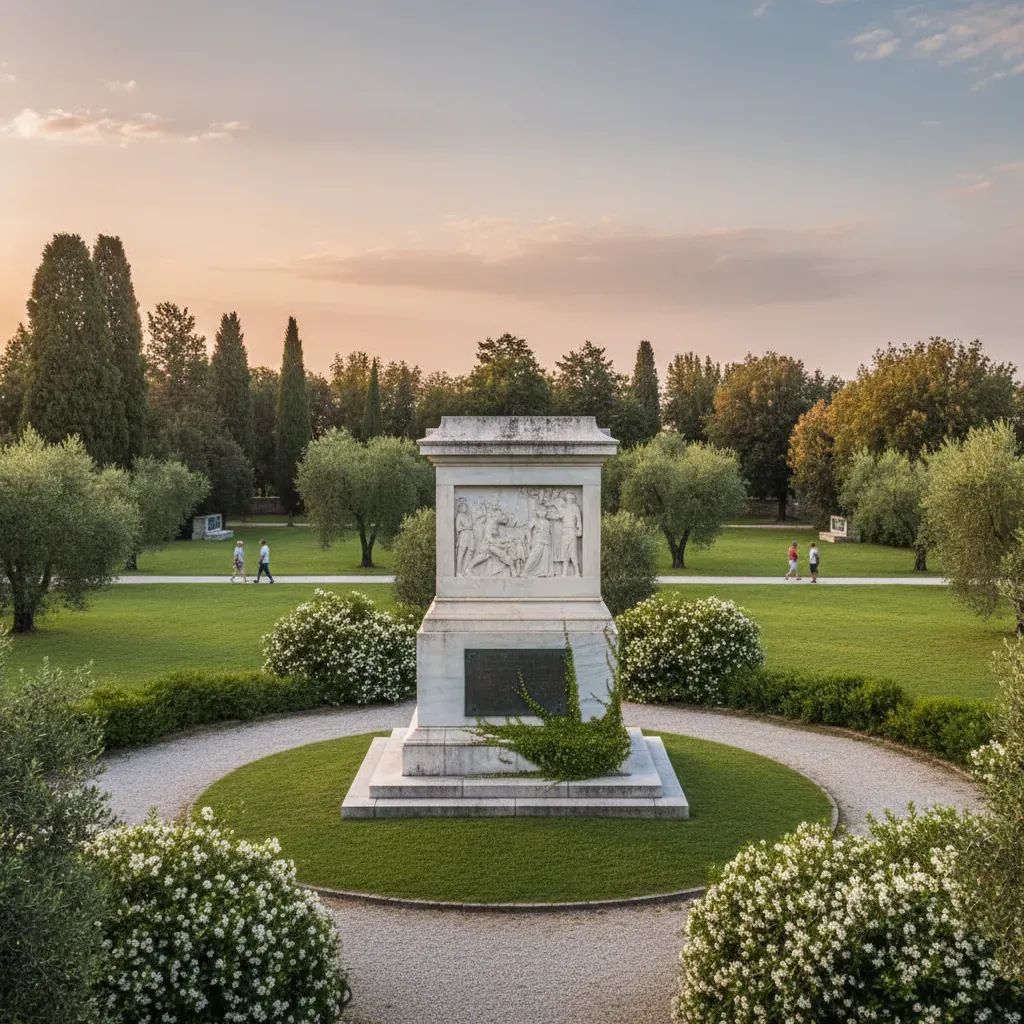
The Emilia-Romagna Region has pledged to fully absorb national budget cuts targeting Italy's most iconic Resistance memorial sites, setting up a political confrontation with Rome just days before the April 25 Liberation Day commemorations.
Why This Matters
• National heritage sites in Emilia-Romagna face cumulative funding reductions of up to €87,000 each for 2026—a 20% drop compared to 2025 allocations.
• Three affected sites are located in Emilia-Romagna: the Cervi Institute, the Fossoli Foundation, and the Marzabotto Memorial Committee.
• The regional government's intervention ensures uninterrupted operations for educational programs and preservation projects despite Rome's budget reallocation.
Regional Government Steps In
Michele de Pascale, president of the Emilia-Romagna Regional Council, announced that his administration would guarantee full compensation for the funding cuts. "We send a strong appeal to the government: reverse the cuts to historic Resistance sites. Otherwise, the Region will do its part, covering them entirely," de Pascale stated. The commitment positions the regional treasury as a backstop against what local officials characterize as a symbolic retreat from antifascist memory.
De Pascale appeared alongside the directors of the three Emilia-Romagna sites: Vasco Errani of the Cervi Institute in Gattatico, Manuela Ghizzoni of the Fossoli Foundation in Carpi, and Valter Cardi of the Marzabotto Fallen Memorial Committee. All three institutions face operational disruptions as the funding shortfall threatens ongoing educational tours, archive digitization, and site maintenance budgets.
What Triggered the Cuts
The reductions stem from the "Fuel Decree" (Decreto Carburanti), a measure designed to offset retail fuel price volatility by reallocating resources from multiple ministries, including the Italy Ministry of Culture. The decree contributed to significant reductions affecting multiple nationally recognized Resistance sites.
The cumulative effect is stark. Until 2023, each major national site received substantial annual funding from a dedicated fund established in December 2017. By 2024, allocations had already begun declining, with further reductions announced for 2026. For the Fossoli Foundation, which manages the former transit camp where Italian Jews and political prisoners were processed before deportation to Auschwitz, the shortfall translates to nearly €87,000 less in 2026 compared to the previous year. Similar deficits hit the Cervi Institute, dedicated to the memory of seven anti-fascist brothers executed by Fascist militias in 1943, and the Marzabotto Committee, which oversees Europe's largest civilian massacre site from World War II.
National Sites Under Pressure
Other nationally significant Resistance sites also face budget pressures, including:
• Sant'Anna di Stazzema National Peace Park (Tuscany), where Nazi troops massacred 560 civilians in August 1944.
• Risiera di San Sabba (Trieste), the only Nazi extermination camp on Italian soil, now a national monument.
These institutions serve dual functions: they preserve physical sites of wartime atrocity and operate as educational hubs, hosting thousands of Italian and international students annually. The budget squeeze threatens school visit subsidies, multilingual guide services, and conservation of fragile structures exposed to weather and time.
Mixed Signals from Rome
Culture Minister Alessandro Giuli announced that efforts were underway to address funding concerns for multiple Resistance sites. He stated that interventions to mitigate budget effects would protect ordinary and extraordinary activities at historically significant institutes, citing the Museum of the Shoah and the National Museum of Italian Judaism as examples.
Yet specifics remain elusive. De Pascale noted that detailed information about restoration efforts remains unclear. "We hope these interventions apply to all national symbolic places of the Resistance," de Pascale emphasized, signaling the need for clearer communication from Rome.
Political Fallout
The Democratic Party has seized on the reductions as evidence of ideological hostility. Local officials labeled the cuts "unacceptable" and argued the budget maneuver undermines Italy's constitutional commitment to antifascist values enshrined after the 1946 referendum and 1948 Constitution.
The timing amplifies the friction. The cuts surfaced in public debate in advance of April 25, the national holiday marking Italy's 1945 liberation from Nazi occupation and the collapse of the Fascist regime. The anniversary traditionally features official ceremonies at Resistance memorial sites, making the funding dispute a flashpoint in broader cultural debates about memory and national identity.
Impact on Residents and Visitors
For residents of Emilia-Romagna, the regional pledge offers immediate reassurance. School groups from Bologna, Modena, and Reggio Emilia districts that book educational visits to Fossoli, Marzabotto, or the Cervi Museum will see no disruption to their programs. The Region's intervention also stabilizes employment at these facilities, whose budgets depend on predictable public funding.
Visitors from other Italian regions and abroad benefit indirectly. The three Emilia-Romagna sites collectively draw substantial visitor numbers, including university delegations, international groups, and private tourists. Preservation budgets fund climate-controlled archive spaces, multilingual exhibit panels, and accessible pathways—all at risk without compensatory financing.
For expatriates and foreign residents in Italy, the episode highlights a recurring tension: regional governments often act as policy buffers when national budgets shift priorities. Understanding which services fall under regional versus national jurisdiction can clarify who to petition when funding disputes arise.
What Happens Next
The Emilia-Romagna Regional Council must formalize its funding commitment through a budget amendment during the next scheduled session. The exact mechanism—whether a direct transfer to each site or an umbrella grant administered through the regional culture office—remains to be detailed.
Meanwhile, pressure mounts on the Italy Ministry of Culture to clarify its plans for supporting affected Resistance sites nationwide. If national budget cuts proceed, Emilia-Romagna's intervention would mark an important instance of regional government protecting cultural heritage when national priorities shift.
The controversy underscores a broader question for Italy's decentralized governance model: when national budgets change, which layer of government bears responsibility for protecting sites of collective memory? For now, Emilia-Romagna has delivered an answer—at least within its own borders.


