
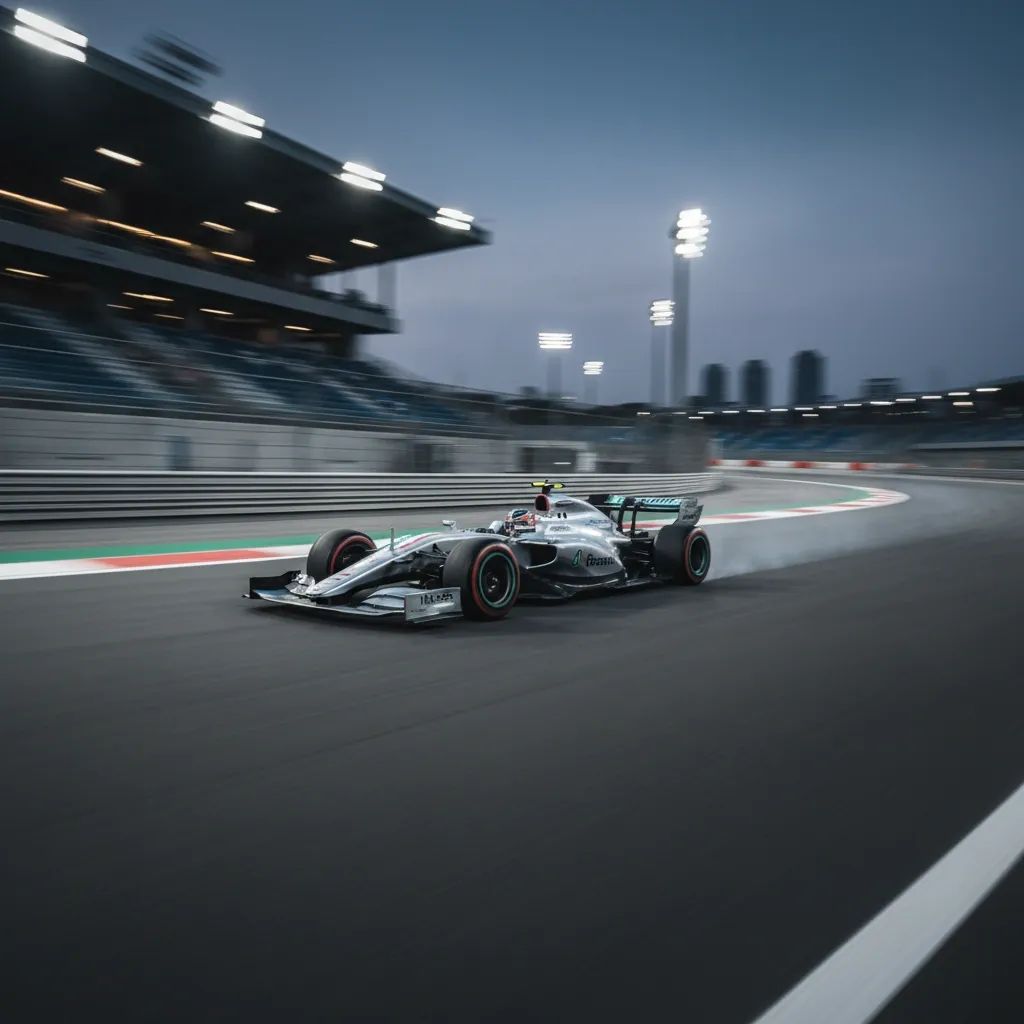
Italy's 19-year-old Andrea Kimi Antonelli has claimed his 2nd consecutive Formula 1 victory at the Japanese Grand Prix, dominating at Suzuka to seize the 2026 World Championship lead with 72 points—a milestone that makes him the youngest driver ever to top the standings this early in a season.
Why This Matters:
• Championship momentum: Antonelli leads teammate George Russell by 9 points after just 3 races, putting Mercedes firmly in control.
• Historic achievement: The win marks the first time an Italian has won consecutive F1 races since Alberto Ascari in 1952.
• Month-long break ahead: With the Bahrain and Saudi Arabian GPs cancelled, Antonelli will hold the lead through a crucial development period.
• Ferrari competitive but trailing: Charles Leclerc's 3rd place keeps the Scuderia in the hunt, but Mercedes' pace advantage is widening.
The Race That Redefined the Season
What began as a nightmare start for the Bologna-born prodigy transformed into a masterclass in composure and racecraft. Antonelli dropped from pole position to 6th by the first corner, overtaken by both McLarens (Oscar Piastri and Lando Norris), his Mercedes teammate Russell, Ferrari's Leclerc, and Lewis Hamilton in the second Scuderia car.
Yet the teenager refused to panic. By lap 20, after systematically passing Hamilton and methodically closing gaps, Russell had brought Mercedes back to the front. Then fortune intervened: Oliver Bearman's high-speed crash into the barriers—triggered when the Haas driver swerved to avoid a crawling Franco Colapinto—brought out the safety car on lap 22.
The timing proved catastrophic for Russell, who had pitted just moments before the yellow flags and tumbled down the order. Antonelli, still running on his original tyres, immediately ducked into the pits for hard compound rubber and emerged still leading the pack. From that point, the race became a procession.
Mercedes W17: Built for Brilliance
With clear track ahead, Antonelli unleashed the full potential of the Mercedes W17—a machine that appears tailor-made for his driving style. He extended his advantage to 13.7 seconds over Piastri by the chequered flag, consistently posting fastest laps and prompting an exuberant radio transmission: "Wow, che macchina che ho!" ("What a car I have!").
The performance gap between Antonelli and Russell—both driving identical machinery—has become the paddock's most debated topic. While Russell finished 4th, nearly 16 seconds behind his teenage teammate, observers note that only Antonelli seems capable of extracting the W17's maximum performance at the limit. The implication is uncomfortable for the British driver: is he being outclassed, or is the car simply better suited to Antonelli's aggressive style?
What This Means for Italian Motorsport
Italy's motorsport landscape hasn't celebrated a homegrown F1 star of this calibre in generations. Antonelli's ascent carries symbolic weight beyond the track—he's reviving a national racing identity that once defined the sport's golden era through icons like Ascari and Nuvolari.
For Italian sponsors and brands, the timing couldn't be better. Early reports suggest major Italian corporations are already positioning to capitalize on Antonelli's marketability, with luxury automotive and fashion sectors particularly interested in associating with the young champion's clean image and technical prowess.
The Italian Automobile Club (ACI) has noted a 15% surge in youth racing program applications since Antonelli's debut season, signalling renewed grassroots interest in motorsport among Italian families.
Ferrari's Calculated Competitiveness
Charles Leclerc salvaged a podium finish in 3rd, demonstrating defensive mastery as he held off a charging Russell in the closing laps. The SF-26 showed improved balance compared to earlier rounds, though Ferrari team principal Fred Vasseur acknowledged post-race that outright pace still lags behind Mercedes.
Hamilton, now in Rosso colors after his blockbuster transfer, struggled to 6th place after reporting tyre degradation issues. The seven-time champion was eventually passed by McLaren's Norris, raising questions about whether the 41-year-old is adapting quickly enough to Ferrari's technical philosophy.
With Ferrari sitting 2nd in the Constructors' standings on 90 points (45 behind Mercedes), the month-long break becomes critical. Maranello's engineers have a rare extended window to develop aerodynamic upgrades and close the performance deficit before the championship resumes in May.
The Verstappen Paradox
Perhaps the most jarring storyline from Suzuka was Max Verstappen's continued decline. The reigning world champion limped home in 8th place, now sitting 9th in the drivers' standings with just 12 points from 3 races—an unprecedented collapse for the Dutchman.
Red Bull Racing appears unable to solve fundamental balance issues with their 2026 challenger, leaving Verstappen visibly frustrated in post-race interviews. He now trails Antonelli by 60 points, a chasm that historically requires near-perfect execution to overcome.
Impact on Expats & Investors
The Antonelli phenomenon extends beyond sports headlines. Italy's Formula 1 visibility is translating into tangible economic activity:
• Tourism sector: The Emilia-Romagna region, home to both Ferrari and Antonelli's birthplace, is already reporting increased international bookings for the Imola Grand Prix in June, with hotel reservations up 22% year-over-year.
• Automotive stocks: Shares in Pirelli, F1's tyre supplier and Milan-listed company, have climbed 4.3% since Antonelli's first win, buoyed by renewed Italian interest in the sport.
• Broadcasting rights: Italian public broadcaster RAI reports viewership for F1 coverage has doubled compared to 2025, potentially increasing advertising revenue and justifying higher rights fees in future negotiations.
For expats and foreign investors in Italy, Antonelli's success offers conversational currency and cultural touchstones. Understanding the historical context—Italy's motorsport heritage and the 74-year gap since consecutive Italian wins—provides valuable social capital in business and personal settings.
The Road Ahead
The cancellation of both Middle Eastern races creates an unusual five-week gap before the championship resumes. Mercedes will use the time to refine the W17's already formidable package, while rivals scramble to find performance gains.
For Antonelli, the break offers a chance to address his only visible weakness: race starts. Both in China and Japan, he lost positions off the line despite securing pole—a pattern that could prove costly against more experienced rivals as pressure intensifies.
Russell, meanwhile, faces mounting questions about his status as Mercedes' de facto number one driver. The 9-point deficit to his teenage teammate represents more than a statistical gap—it signals a potential hierarchy shift within one of F1's most storied teams.
McLaren's resurgence, with Piastri reclaiming form after missing Australia and China, adds another variable. The Woking-based squad sits 3rd in the Constructors' battle, just 44 points behind Ferrari, and has shown race-winning pace when circumstances align.
As the paddock disperses for the extended break, one fact remains undeniable: a 19-year-old from Italy has rewritten the championship narrative. Whether Antonelli can sustain this form across a grueling 23-race calendar remains the season's defining question. For now, he's making history—and doing it with a swagger that recalls Italy's golden age of speed.


